
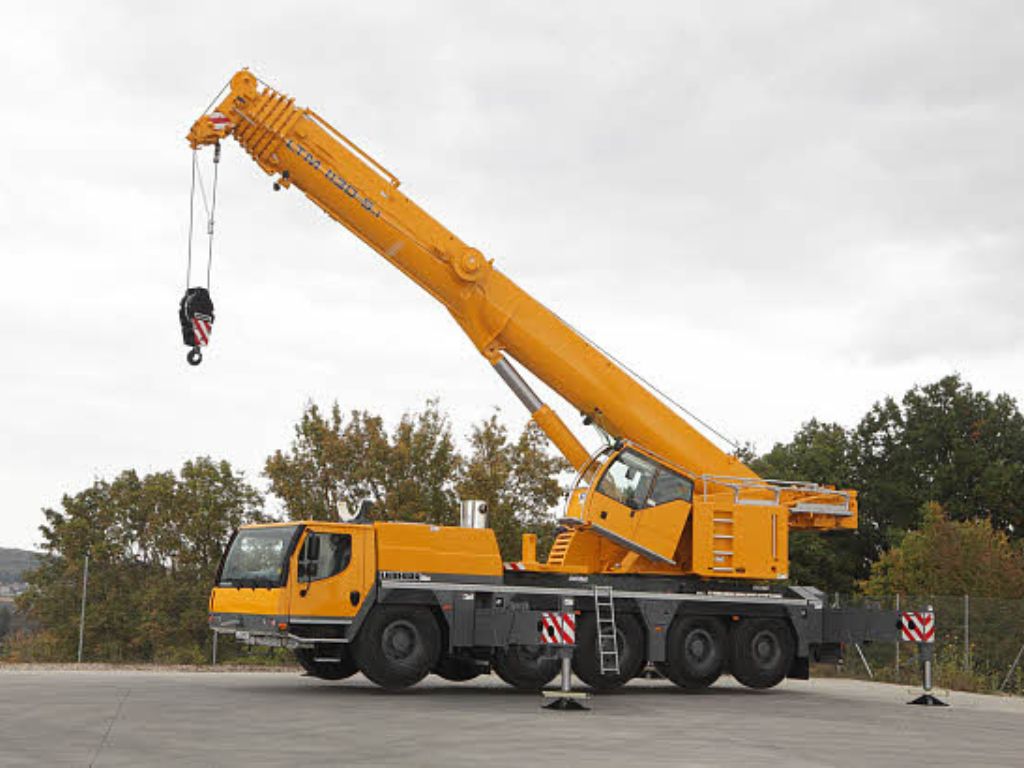
There is no single crane service cost per day that works for every project. For 2026 New England budgeting, operated mobile crane service can run from a few hundred dollars per billable hour for smaller equipment to $500–$1,000+ per hour for larger all-terrain cranes, before project-specific mobilization, rigging, permits, support equipment, or other charges.
Those are planning ranges, not Aerial Crane Service’s rate sheet.
At Aerial Crane Service, we quote the actual lift. We need to know what you are lifting, what it weighs, how far we have to reach, where the crane can set up, what rigging is required, and how the work will be scheduled.
Our mobile crane rental service is operated service, with equipment ranging from a 23.5-ton boom truck to 145-ton all-terrain cranes.
If you are trying to build a budget, the useful number is not just the advertised hourly or daily rate. It is the total cost of getting the right crane to the site, setting it up, making the lift, and getting it back out.
What Does Crane Service Cost in 2026?
For early planning in New England, current regional market information gives us a rough starting point:
| Crane Class | 2026 Regional Planning Range | Aerial Fleet Example |
|---|---|---|
| Boom truck / smaller mobile crane | About $200–$275 per hour | National 800D, 23.5 US tons |
| 40–60 ton operated mobile crane | About $235–$315 per hour | Grove TMS500E, 40 US tons |
| Around 100-ton class | About $310–$405 per hour | Planning comparison for larger mobile equipment |
| 120–145 ton all-terrain crane | About $500–$1,000+ per hour | Liebherr all-terrain fleet |
These figures are regional budgeting references. They are not a promise that your project will be billed at one of those rates.
A simple lift can have a different minimum, travel requirement, and crew arrangement from a large all-terrain crane project.
If you want our actual price, send us the project information and we will quote the job.
Why We Do Not Publish One Crane Rental Price Per Day
Consider two projects that each need a crane for what the contractor calls “one day.”
The first is a rooftop HVAC unit beside an open commercial parking lot. The delivery truck arrives on time. The crane has a clear setup. The unit has known lifting points. The roof crew is ready.
The second unit weighs about the same, but it has to cross a wide building from a public street. The crane needs more reach. Traffic has to be controlled. Counterweights travel separately. The load needs a spreader bar. The delivery truck shows up late.
Calling both of those a one-day crane rental hides almost everything that determines the price.
That is why our crane booking process starts with project details rather than a request for the cheapest crane on a rate sheet.
A “Day” May Actually Be an Hourly Minimum
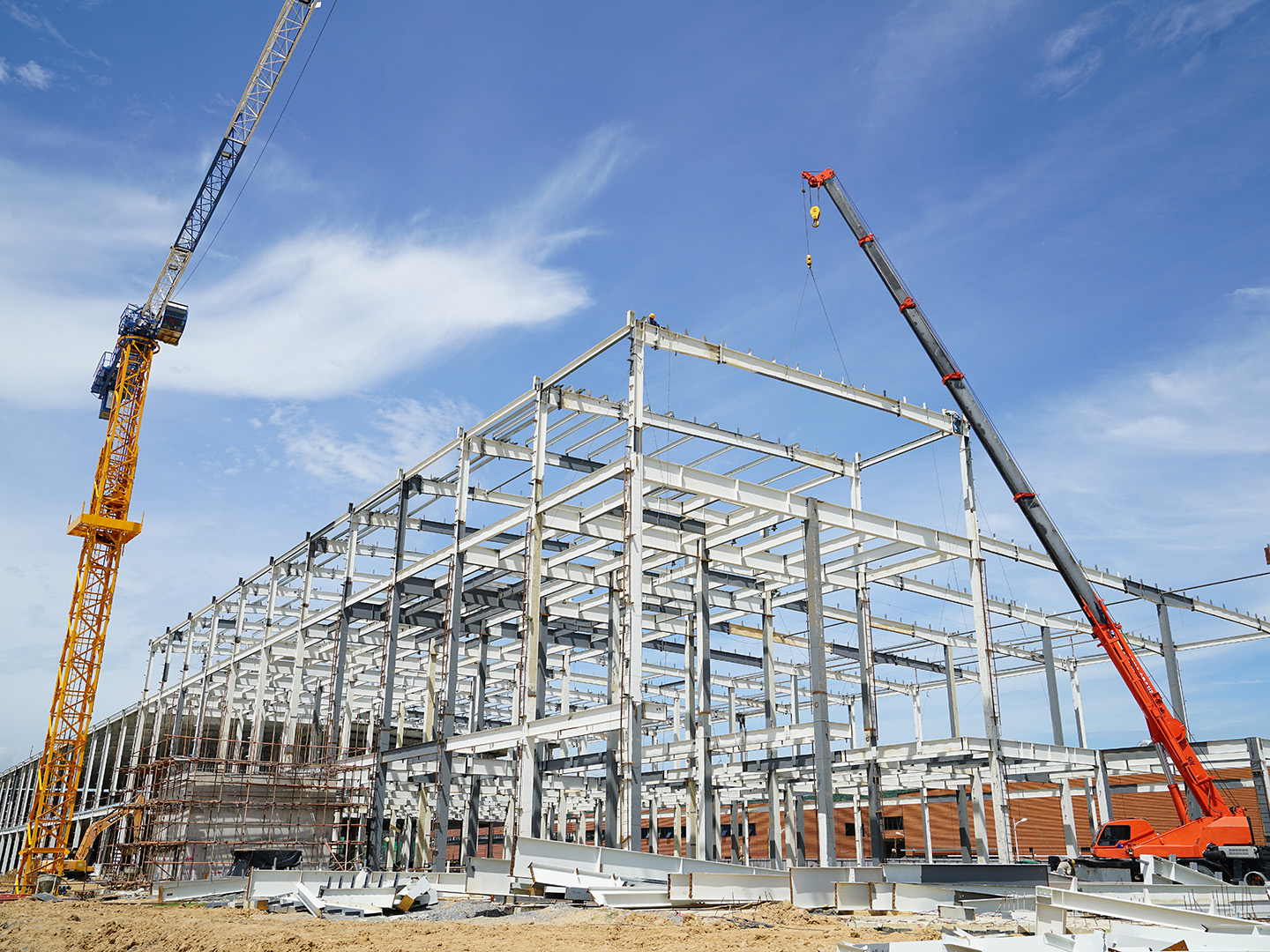
Short mobile crane projects are often billed by time with a minimum rather than a flat eight-hour day.
The minimum compensates for work that happens even when the hook is carrying a load for only a few minutes.
We still have to schedule the crane, mobilize to the site, establish the setup, deploy outriggers where applicable, complete operating checks, prepare the lift area, make the pick, break down, and leave.
A thirty-minute rooftop lift can occupy several hours of crane and operator time.
Aerial does not publish one universal minimum-hours policy because the requirement can depend on the equipment and job.
Ask about the minimum that applies to the crane being quoted rather than assuming a one-hour lift produces a one-hour invoice.
A Simple Example of How a Minimum Changes the Budget
Suppose a contractor finds a regional planning rate of $250 per hour.
If the provider has a four-hour minimum for that crane, the minimum crane-and-operator portion would be $1,000 before any separate travel, rigging, permits, traffic control, support equipment, or other charges.
If the actual pick lasts forty minutes, that does not reduce all of the other time committed to the project.
This is why a low hourly number can be misleading when contractors compare bids.
Ask about the minimum and what starts the clock.
Some Companies Bill Travel Time Too
You may hear the terms portal-to-portal, yard-to-yard, or travel time.
The details vary by company.
In one pricing model, billable time may begin when the crane leaves the yard and continue until it returns.
Another company may show mobilization and demobilization as separate charges.
A third may provide a lump-sum quote that includes travel within a defined scope.
Those invoices can look very different even when the total cost is similar.
When comparing crane rental rates, ask how travel is handled.
Mobilization Is Small on Some Jobs and a Major Cost on Others
Our smaller road-ready equipment can travel to many jobs as one unit.
Larger all-terrain cranes can involve a different mobilization plan.
Counterweights or other components may require additional trucks.
Large equipment may also face route restrictions, permitting requirements, or more setup time once it reaches the project.
That is why the crane mobilization cost can change sharply as crane size increases.
Our trucks and trailers support crane projects that require additional material, components, or equipment to move with the lift operation.
Crane Size Changes the Price
A larger crane generally costs more to mobilize and operate.
That does not mean we choose the smallest crane that can lift the object’s weight on paper.
We choose a crane that can make the actual lift within its load chart.
Aerial’s published fleet includes:
- a 23.5-ton National 800D boom truck;
- a 40-ton Grove TMS500E truck-mounted crane;
- Liebherr all-terrain cranes in the 120- to 145-ton range.
Those capacity numbers describe crane classes.
They do not tell you what each machine can lift at your required radius.
A 100-Ton Crane Does Not Lift 100 Tons Everywhere
This is one of the most common pricing misunderstandings we see.
A contractor tells us the load weighs 12,000 pounds and assumes that any crane with a rating above six tons should work.
But the load may need to be placed one hundred feet from the crane.
As horizontal radius increases, the crane’s available lifting capacity changes.
Boom length, counterweight, outrigger setup, lifting direction, rigging weight, and other chart factors can change it again.
Our guide on what size crane you need explains why load weight is only the starting number.
Long Reach Can Cost More Than Heavy Weight
A relatively light rooftop unit can require a large crane when the setup is far from the placement point.
Imagine a 5,000-pound unit.
If the crane sits beside the building, the job may fit smaller equipment.
If the same unit has to travel across a wide roof because the crane cannot get closer, the required crane can change substantially.
The unit did not get heavier.
The lift geometry changed.
That is why we ask for both pick and set locations before quoting crane size.
Height Matters, but Radius Often Changes the Quote Faster
Building height is easy to notice, so it tends to get most of the attention.
Horizontal distance can be just as important.
We need to know where the crane’s center of rotation can be positioned relative to the load.
A rooftop placement on a five-story building does not tell us enough.
Can the crane sit ten feet from the building?
Or is there a parking deck, landscaping, underground vault, overhead wire, or public street pushing us sixty feet away?
Those differences show up in the load chart and eventually in the price.
The Load Weight Should Come From a Reliable Source
Accurate pricing starts with accurate lift information.
If a manufacturer lists the unit at 8,240 pounds, give us 8,240 pounds.
Do not round it down to “about four tons.”
Useful sources can include manufacturer data, equipment drawings, fabrication documents, shipping paperwork, or engineering information.
Also tell us whether anything is being added to the unit before the lift.
Accessories, framing, fluids, temporary supports, and other components can change the lifted weight.
The Crane Also Carries the Rigging
The object is not the only weight suspended from the boom.
Depending on the crane and load-chart instructions, hook blocks, slings, shackles, spreader bars, lifting beams, and other load-handling equipment may also affect available capacity.
This becomes more noticeable as rigging gets heavier or the lift approaches chart limits.
Tell us what rigging arrangement is expected when you request the quote.
Standard Rigging and Specialty Rigging Are Different Cost Questions
A straightforward load with approved lifting points may use a relatively simple sling arrangement.
A long steel member, tank, transformer, delicate rooftop unit, bridge component, or unusual industrial machine may require more.
Our spreader bars and specialty rigging can include lifting beams, multi-point systems, specialty slings, hardware, or another configuration designed around the load.
That equipment and the planning behind it can affect the quote.
When comparing crane service pricing, find out whether each company is quoting the same rigging scope.
The Operator Is Included in Aerial’s Crane Service
Crane pricing articles often divide the market into “wet hire” and “dry hire.”
Wet or operated rental includes the crane and operator.
Bare or dry rental provides the machine and leaves the customer responsible for supplying qualified operating personnel and taking on additional equipment responsibilities.
Aerial Crane Service provides operated crane service.
We do not advertise a crane-only rental where a contractor picks up our machine and supplies an operator.
That distinction matters when you compare our quote with an equipment-only rental number found online.
The Operator May Not Be the Only Person the Job Needs
The crane operator handles the crane.
The lift may still require other personnel.
Depending on the project, that can include riggers, a signal person, drivers, traffic personnel, or workers responsible for receiving and securing the load.
Some of those people may come from the crane provider.
Others may be supplied by the contractor.
Confirm who is responsible for each role before comparing commercial crane rental rates.
Setup Time Is Still Crane Time
The hook can be empty while the crane is doing work that the job cannot happen without.
The operator may need to position the machine, deploy outriggers, establish adequate support, configure the boom, install counterweights, check the work area, and prepare for the planned pick.
That setup takes time.
Larger cranes generally require more preparation than a straightforward boom-truck setup.
If a contractor budgets only for the minutes when material is physically moving through the air, the budget starts with the wrong number.
Ground Conditions Can Add Work Before the Lift Begins

A flat-looking parking area does not automatically give us an acceptable crane setup.
We need to consider what supports the crane.
Recently disturbed fill, soft ground, underground utilities, vaults, septic systems, basements, buried tanks, excavations, and pavement conditions can affect where the crane can sit.
Additional blocking, cribbing, mats, engineering, or site preparation may be required depending on the conditions and crane.
Our safe lift planning starts with the setup area before the crane is carrying the load.
A Difficult Setup Can Require a Bigger Crane
Sometimes the ground problem does not add a mat charge.
It moves the crane farther away.
Suppose the closest paved area has an underground structure that prevents us from setting outriggers where initially planned.
If we have to move the crane back, the working radius increases.
A larger radius can require a different crane.
That is how a site condition can change the equipment price without changing anything about the object being lifted.
Permits Are Usually Site-Specific
A crane working entirely inside a private industrial site can have a different permit path from one occupying a downtown street.
Public-way work may involve street occupancy, parking restrictions, lane closures, pedestrian control, police details, flaggers, or other municipal requirements.
Larger equipment may also require transportation permits while traveling to the site.
Permit costs are not well represented by one national add-on percentage.
They depend on the jurisdiction and project.
Traffic Control Can Cost More Than the Permit Fee
The permit itself may be one of the smaller lines in a public-street crane operation.
The project may also need cones, barricades, signage, a traffic plan, flaggers, police details, or changes to pedestrian routing.
A street setup can also restrict the hours when the crane is allowed to work.
That affects both crane scheduling and crew cost.
Tell us early if the planned setup occupies a public roadway.
Standby Time Can Make a Short Lift Expensive
A crane that is ready to lift but cannot work is still committed to the project.
We see standby develop when:
- the delivery truck arrives late;
- roof or steel crews are not ready;
- access is blocked by another contractor;
- the placement area has not been prepared;
- a facility shutdown has not happened;
- the load paperwork or lifting points are unresolved.
The actual crane movement may take twenty minutes after two hours of waiting.
Ask how standby time is handled in the quote.
HVAC Lifts Show Why Scheduling Matters
Rooftop HVAC work often involves several crews working toward the same time window.
The crane needs access.
The delivery truck has to arrive.
The old equipment may need to be disconnected.
Roof crews need to be ready.
The mechanical contractor needs the curb and final placement area prepared.
Electrical work may have its own sequence.
Our HVAC contractor work is planned around that coordination because delays on one side can turn into crane standby on the other.
Off-Hours Work Can Change Labor Costs
Some lifts cannot be performed during a normal weekday schedule.
A hospital may need an overnight window.
A retail property may require work before customers arrive.
A downtown project may receive a street permit for only a narrow weekend period.
Those conditions can create overtime, weekend, holiday, or specialty scheduling charges.
Ask for those terms when you request the quote rather than assuming the standard-time rate applies around the clock.
Weather Delays Need to Be Discussed Before Lift Day
Wind can stop a lift even when every contractor is ready.
Lightning, snow, ice, poor visibility, or unsafe ground can do the same.
The acceptable operating conditions depend on the crane, manufacturer limits, load, configuration, and work being performed.
Ask how weather rescheduling or delays are handled commercially before the project date.
A planned cost is easier to manage than a surprise after a storm front moves in.
All-Terrain Crane Cost Has More Moving Parts
A large all-terrain crane may have a higher hourly rate, but that is only part of why the daily project cost increases.
It can require more counterweight.
Counterweights may need separate transport.
The crane may require more setup area.
Support vehicles may be involved.
Travel permits may change.
The setup itself can take longer.
For Aerial’s 120- to 145-ton all-terrain equipment, current New England planning guidance is roughly $500–$1,000+ per billable hour before project-specific extras.
That figure is for budgeting. We price the actual project after reviewing the lift.
A Boom Truck Can Be Less Expensive When It Fits the Job
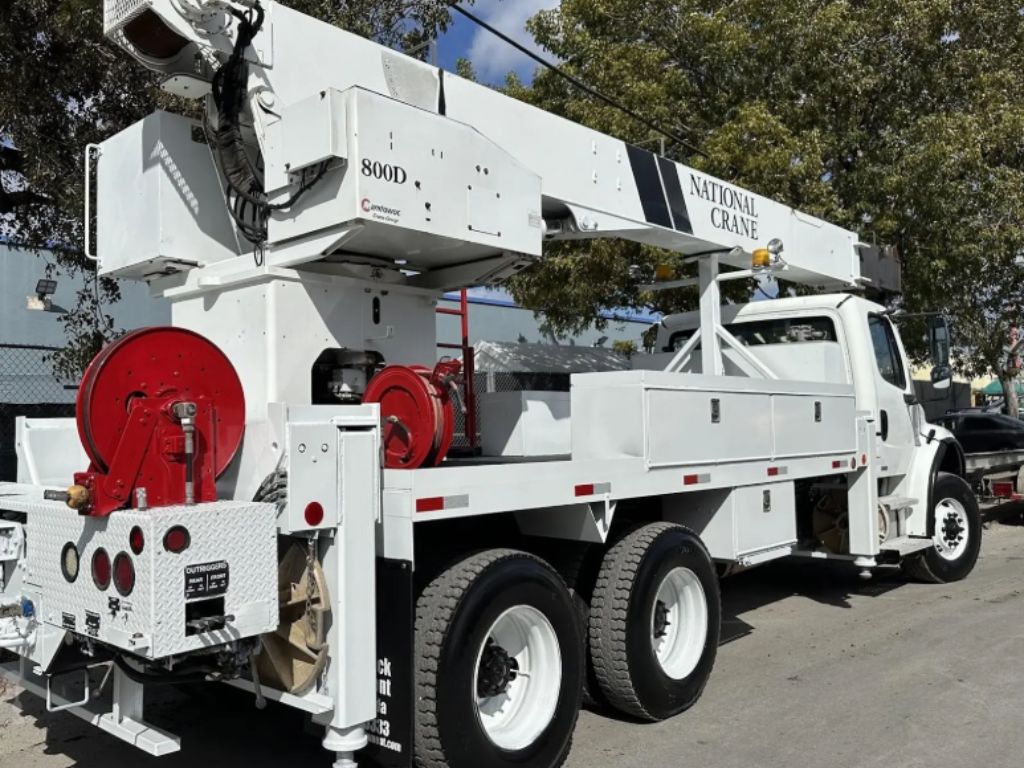
Our National 800D boom truck has a smaller footprint and road mobility that can make it a good fit for lighter commercial work.
It can be useful for mechanical equipment, generators, utility work, signs, telecom equipment, and building materials when the required radius and load are within the chart.
A smaller crane can reduce mobilization and setup compared with large all-terrain equipment.
It is not cheaper if it cannot make the pick.
We size the crane from the job rather than selecting the machine from the price column first.
A 40-Ton Truck Crane Sits in a Different Part of the Budget
Our Grove TMS500E is rated at 40 tons and has road mobility that works well for many commercial lifts.
It can bridge the gap between boom-truck work and larger all-terrain projects when the load chart fits the job.
A contractor replacing rooftop mechanical equipment might save on mobilization compared with a much larger crane if the Grove has enough capacity at the required radius.
That is why confirmed dimensions and working radius can save money before the quote is written.
Do Not Order Extra Crane Capacity “Just to Be Safe”
Using a crane with appropriate capacity margin is part of sound planning.
Ordering a substantially larger crane because nobody confirmed the radius is different.
A larger crane can bring higher hourly cost, more mobilization, more setup area, more support equipment, and different transportation requirements.
The better solution is to give us accurate lift information so we can review the correct load chart.
Our crane sizing guide shows the measurements that matter.
Do Not Undersize the Crane to Chase a Lower Rate Either
A smaller crane with a lower advertised rate provides no savings if it cannot complete the lift.
If the lift is outside the applicable load chart, the plan has to change.
Discovering that problem on site can turn a low quote into a costly delay.
Crane selection should be settled before mobilization.
Multiple Picks Can Reduce the Cost per Lift
If several compatible loads can be handled during one mobilization and setup, coordinating them together can reduce the cost per individual pick.
For example, a contractor may have several rooftop units or multiple structural members ready within the same work window.
That can be more efficient than bringing the crane back on separate days.
The loads still have to fit the crane configuration and schedule.
Tell us the complete pick list during planning rather than adding major lifts after the crane has been selected.
One Delayed Load Can Erase Those Savings
Combining lifts works only when the work is ready.
If four pieces are scheduled and the fourth truck does not arrive for three hours, the crane may sit waiting.
We would rather see an accurate sequence than an ambitious schedule that depends on everything going perfectly.
Coordinate deliveries before crane day.
How Much Does a Crane Operator Cost?
Online articles sometimes show crane operator labor as a separate hourly number.
That can make sense for bare rental comparisons.
It is not the way to compare an operated service quote from Aerial.
Our mobile crane service includes the operator.
Look at the complete quoted crane-and-operator scope rather than trying to subtract a generic operator wage from the rate.
How Much Does Crane Rigging Cost?
There is no single rigging charge either.
A straightforward load may need standard rigging already contemplated in the lift.
A large tank or long steel member may need spreader bars.
A delicate machine may need a lifting beam or a multi-point arrangement to control how forces enter the equipment.
Rigging labor may also vary with the operation.
We need to know the load geometry, lifting points, center of gravity, and final placement before we can determine what the rigging side of the job requires.
Transportation Support Can Become Part of the Crane Quote
Some projects involve more than lifting a component from a delivery truck to its final position.
The load or supporting crane equipment may also need transport.
Aerial provides transportation support with trucks and trailers for jobs that require coordinated delivery or removal.
When transportation is part of the scope, give us both the origin and destination information so the logistics can be priced with the lift.
Compare Quotes by Scope, Not the First Hourly Number
If Company A quotes $250 per hour and Company B quotes $300, Company A is not automatically cheaper.
You still need to compare:
- minimum billable hours;
- operator inclusion;
- travel or mobilization;
- setup and breakdown;
- rigging;
- counterweight and support trucks;
- additional crew;
- permits and traffic control;
- standby;
- overtime;
- weather and cancellation terms.
Our contractor booking guide goes through the same comparison because the lowest headline rate can still produce the higher final invoice.
How to Lower Crane Service Cost Without Cutting the Wrong Thing
The biggest savings often come from preparation rather than negotiating a few dollars off the hourly crane rate.
Confirm the load weight.
Measure the job.
Clear the setup area.
Resolve permits before mobilization.
Have the receiving crew ready.
Coordinate deliveries.
Identify overhead and underground hazards early.
Tell us about specialty rigging before lift day.
Those steps reduce the kind of delay that keeps expensive equipment sitting still.
Sending Site Photos Can Improve the First Quote
We do not expect photos to replace every site visit or technical review.
They do give us better information than a project address alone.
Useful photos show the proposed crane area, building, load location, placement area, surrounding streets, overhead lines, fences, slopes, and other obvious restrictions.
Plans or marked-up aerial views can help establish approximate geometry as well.
The clearer the site information, the less guessing we have to do when choosing equipment.
HVAC Contractors Should Send Both Old and New Unit Information
Replacement projects often involve two different loads.
The existing rooftop unit may not weigh the same as the replacement.
The lifting points can differ.
The center of gravity may change.
If both units are part of the crane scope, send us information for both.
That prevents a lift plan built around the new unit from overlooking the equipment coming off the roof.
General Contractors Should Coordinate the Whole Work Window
For our general contractor crane work, we want to understand what else is happening around the lift.
Delivery trucks, steel crews, mechanical contractors, roofing crews, traffic control, shutdowns, and inspections can all affect when the crane can work.
A delayed crane pick can delay the next trade.
A delayed trade can leave the crane waiting.
Good lift-day sequencing controls both.
What Information Do We Need for a Crane Quote?
Send us the project information you already have.
The most useful starting package includes:
- project address;
- what is being lifted;
- verified weight;
- load dimensions;
- lifting points or manufacturer lifting instructions;
- pickup location;
- final placement location;
- building or placement height;
- approximate horizontal reach;
- proposed crane setup area;
- site photos;
- known ground or underground restrictions;
- overhead utility information;
- requested date and work window;
- number of planned picks;
- known street or access restrictions.
You do not need to tell us which crane to send.
Give us the lift information and we can work from the applicable equipment and load charts.
So How Much Does It Cost to Hire a Crane for a Day?
For a contractor building a 2026 New England budget, the useful answer is a range plus the project variables.
Smaller operated boom-truck and mobile-crane work currently sits in regional planning ranges around a few hundred dollars per billable hour.
Large 120- to 145-ton all-terrain equipment can reach roughly $500–$1,000+ per billable hour before project-specific costs.
The final daily crane rental cost can be higher once minimum hours, travel, mobilization, counterweights, setup, rigging, crew, permits, traffic control, standby, or overtime are included.
That is why we do not take an online crane rental price per day and force your project into it.
We price the lift.
Get a Crane Service Quote Based on the Actual Job
Aerial Crane Service has been lifting throughout New England since 1983. We provide operated crane service for HVAC equipment, steel, generators, industrial machinery, bridge work, modular construction, utilities, and other commercial and specialty projects across New Hampshire, Massachusetts, Maine, and Vermont.
Call us at (603) 491-1268 for a quote.
Tell us what the load weighs, where it needs to go, how far we may have to reach, and what the setup area looks like. We can use those details to select the right equipment and give you a crane service price built around the project instead of a generic daily average.