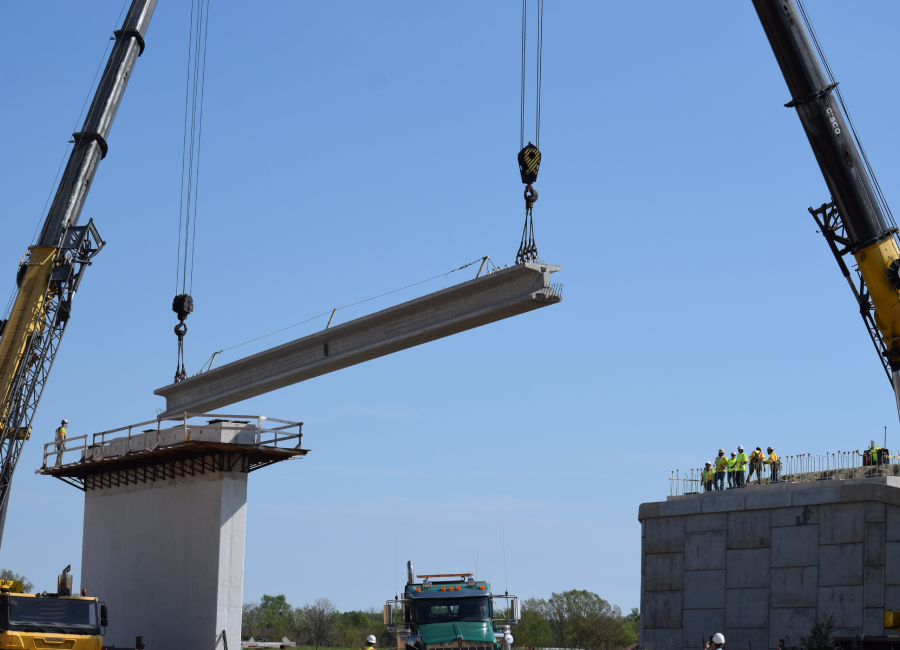
Crane Services for Bridge Beam Placement in New Hampshire
For contractors looking for a crane for bridge construction in Hooksett, NH, Aerial Crane Service provides operated crane support for steel girders, precast concrete beams, bridge components and related infrastructure work. Aerial Crane Service is based in Bow, New Hampshire and has served New England since 1983.
Bridge beam placement starts with five numbers: beam weight, beam length, pick radius, set radius and required placement height. Those numbers establish the crane class before access, ground conditions, traffic control, rigging and delivery sequence are added to the lift plan.
Aerial supports contractors, project managers, structural teams, transportation projects and municipal crews across New Hampshire, Massachusetts, Maine and Vermont. Call (603) 491-1268 with the beam weight, dimensions, project address and proposed erection date to start planning the lift.
Bridge Construction Crane Services in Hooksett, NH
Hooksett bridge work can place a crane beside Interstate 93, Route 3, local roads, the Merrimack River corridor or constrained construction areas where delivery trucks, traffic and the crane all need room at the same time. Aerial Crane Service provides crane service in Hooksett, NH for bridge, infrastructure, steel, precast and construction lifting.
A bridge lift near I-93 or Route 3 requires a different setup from a small municipal bridge with an open staging area. Highway work can be controlled by lane-closure windows, traffic-control phases and limited shoulder space. Sites closer to the Merrimack River can introduce slopes, uneven approaches, water-side restrictions and fewer practical crane setup positions.
For contractors searching for bridge construction crane services in Hooksett NH, the fastest way to get a workable crane recommendation is to send the erection drawings, beam schedule, individual member weights, pick and set locations, proposed crane pad location and traffic-control restrictions before lift day.

Recent Bridge Beam Projects in Hooksett and Surrounding Areas
Aerial Crane Service’s public website does not identify a named recent Hooksett bridge project with a published beam weight, crane model and completion date. Rather than attach invented details to a local bridge, the strongest published bridge-project evidence is the customer review displayed on Aerial’s bridge and fleet pages.
Michael A. Bean of M. A. Bean Associates, a design/build bridge contractor, states in a Google review displayed on Aerial’s website that his company worked with Aerial for more than 25 years and that Aerial installed approximately 100 bridges with them across New England.
Hooksett itself has active bridge infrastructure that illustrates the type of conditions contractors face locally. New Hampshire Department of Transportation plans identify bridge work in the Manchester-Hooksett I-93 corridor, including Hooksett Bridge 095/048 carrying I-93 southbound over US 3/NH 28. Project materials for Manchester and Hooksett include phased construction, ramp closures, detours, lane closures and shoulder closures.
Those NHDOT projects are local infrastructure examples, not claims that Aerial Crane Service performed the work. Contractors who need a project reference matching a specific beam type or span can call (603) 491-1268 and ask Aerial about relevant bridge-installation experience.
Professional Crane Services for Bridge Beam Placement
Aerial Crane Service supports public, private, municipal and infrastructure bridge work throughout NH, MA, ME and VT. Typical lifting scope includes:
- Steel bridge beam placement
- Steel girder erection
- Precast concrete beam placement
- Precast concrete girder placement
- Bridge rehabilitation work
- Highway bridge construction
- Roadway bridge replacement
- Pedestrian bridge components
- Temporary bridge components
- Deck forms and construction materials
- Utility infrastructure near bridge projects
- Structural components and temporary works
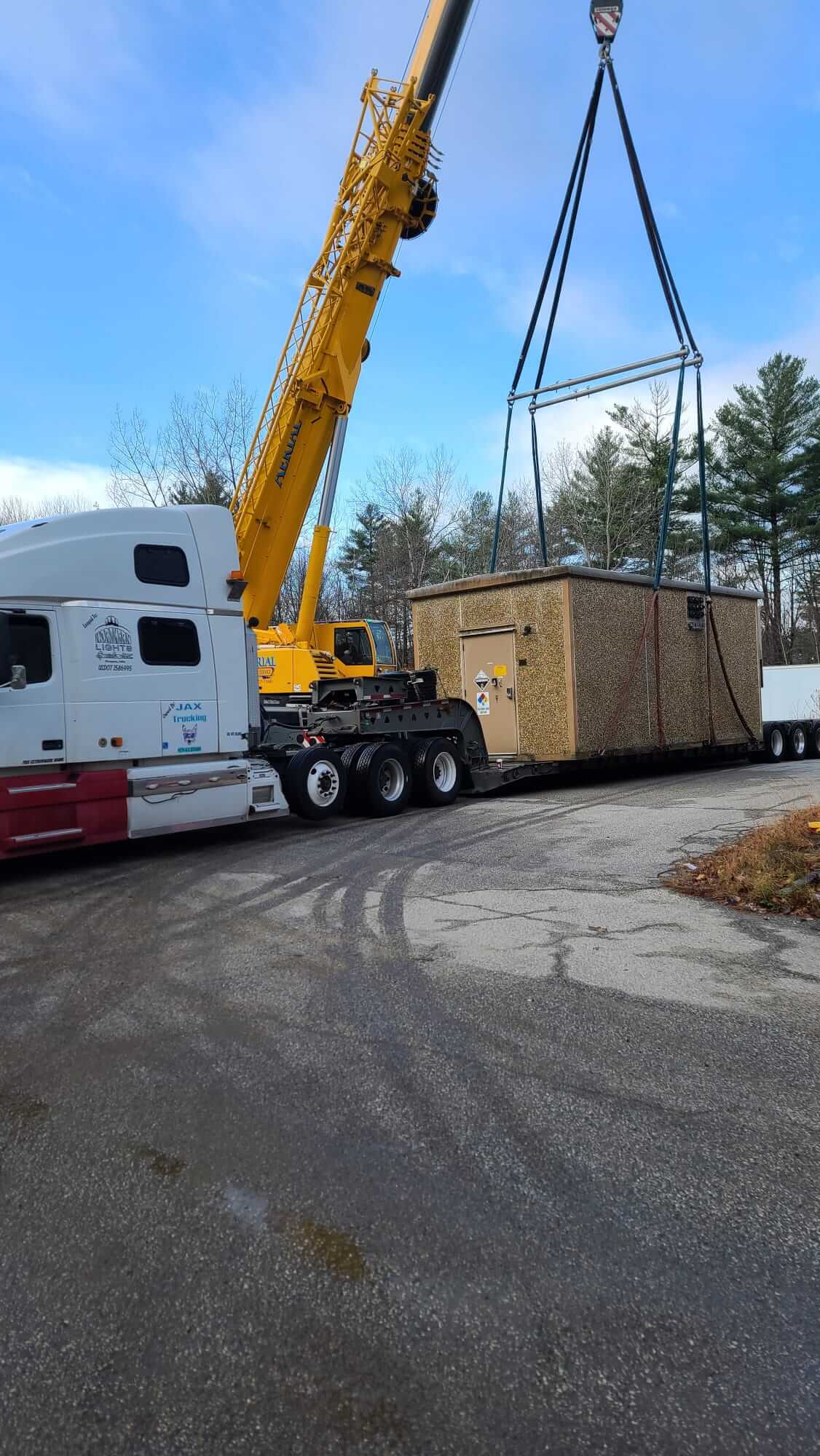
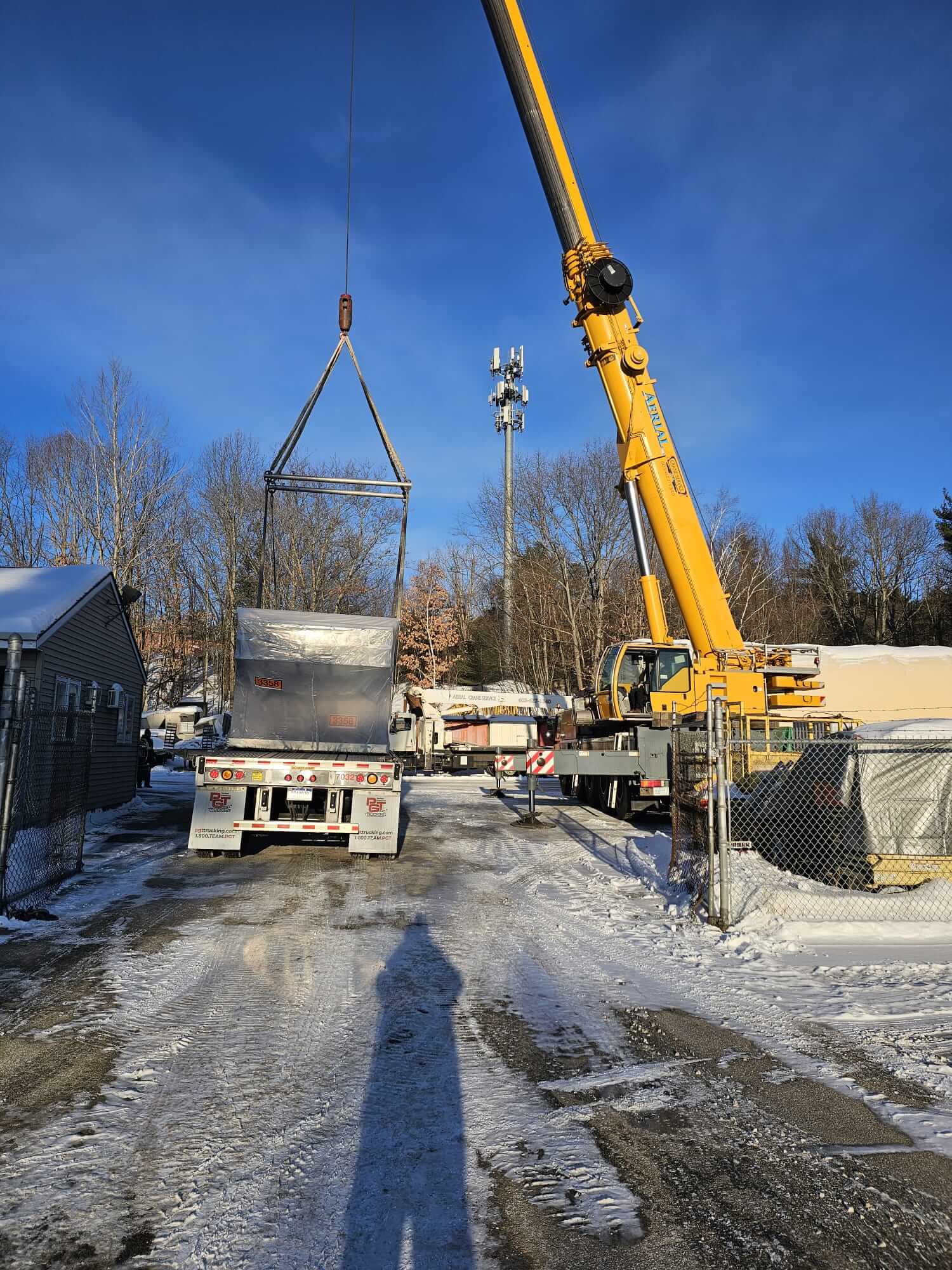
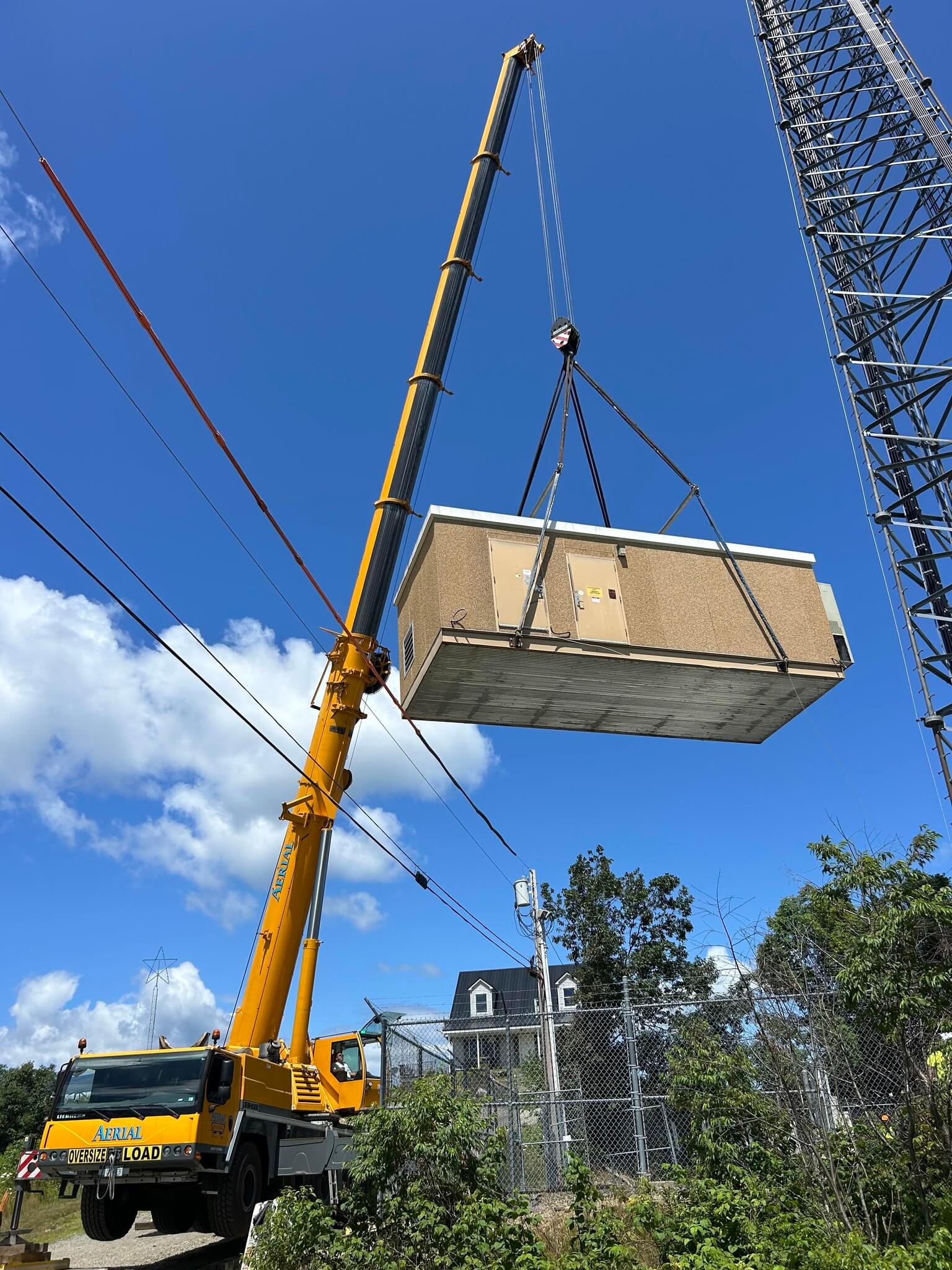
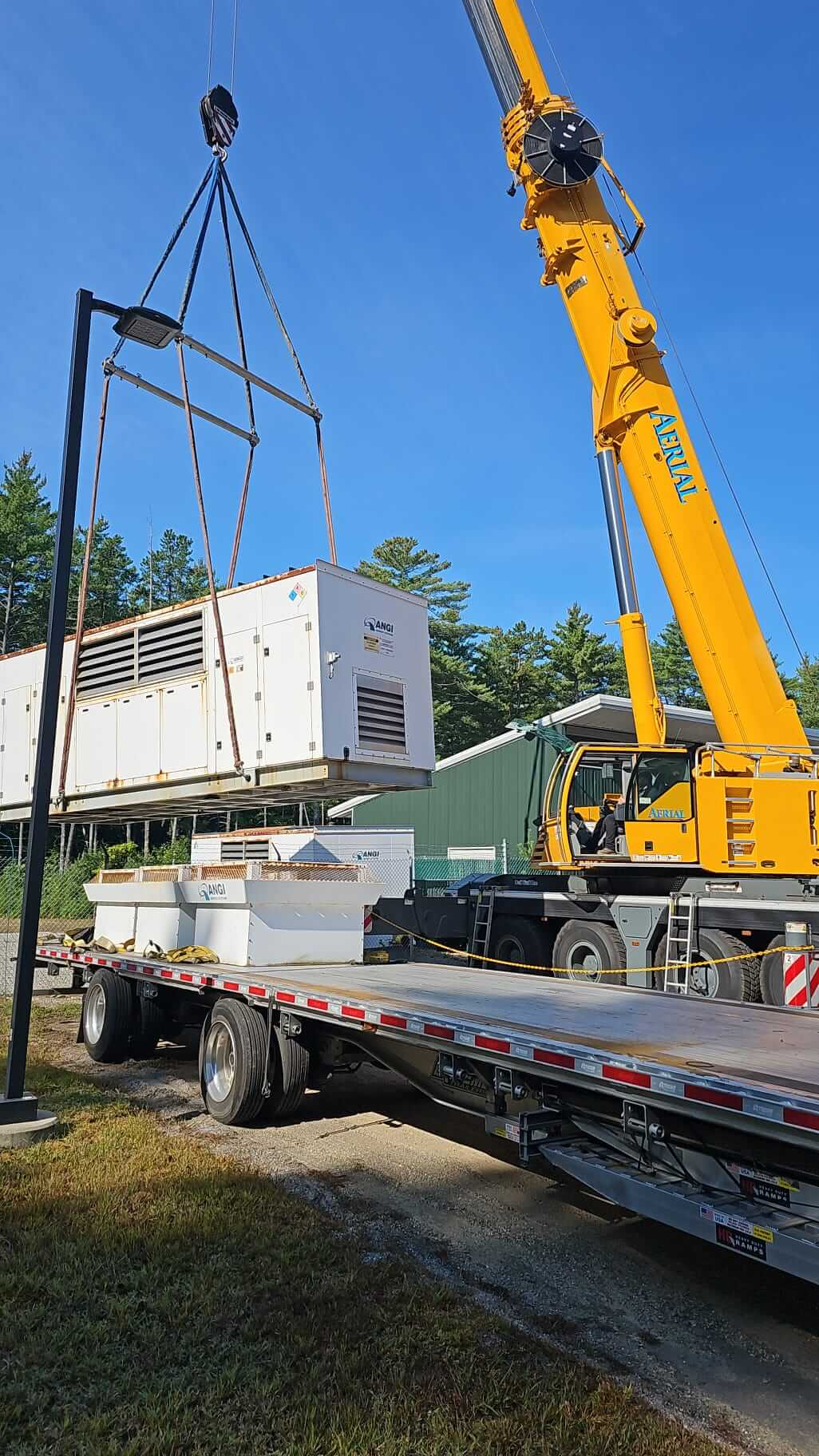
A bridge beam arriving by trailer may be picked directly from the delivery position, rotated through a controlled swing path and set onto bearings or temporary supports. Truck sequence matters. Rigging configuration matters. The crane position matters. Those decisions need to be made before a traffic window begins.
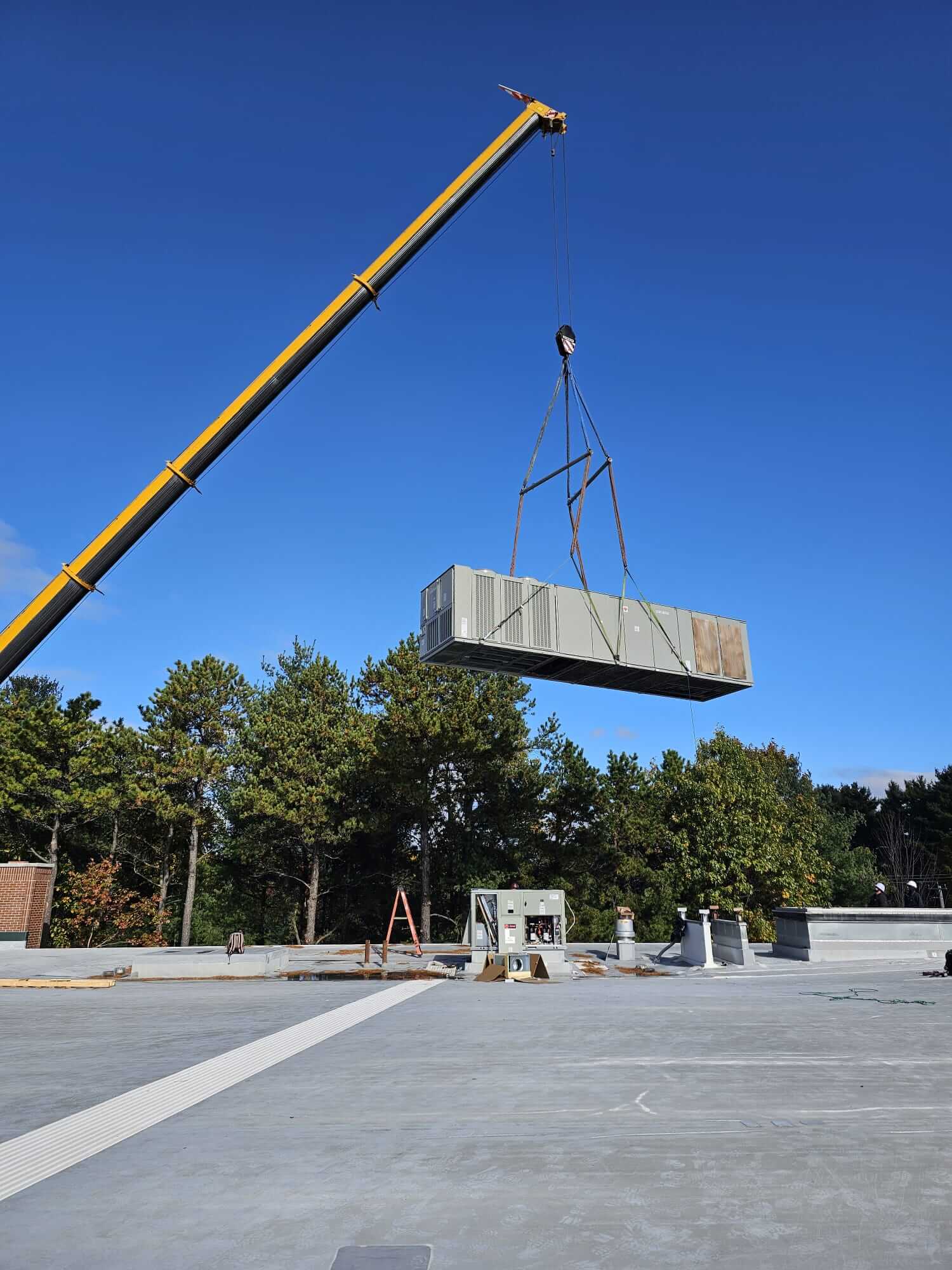
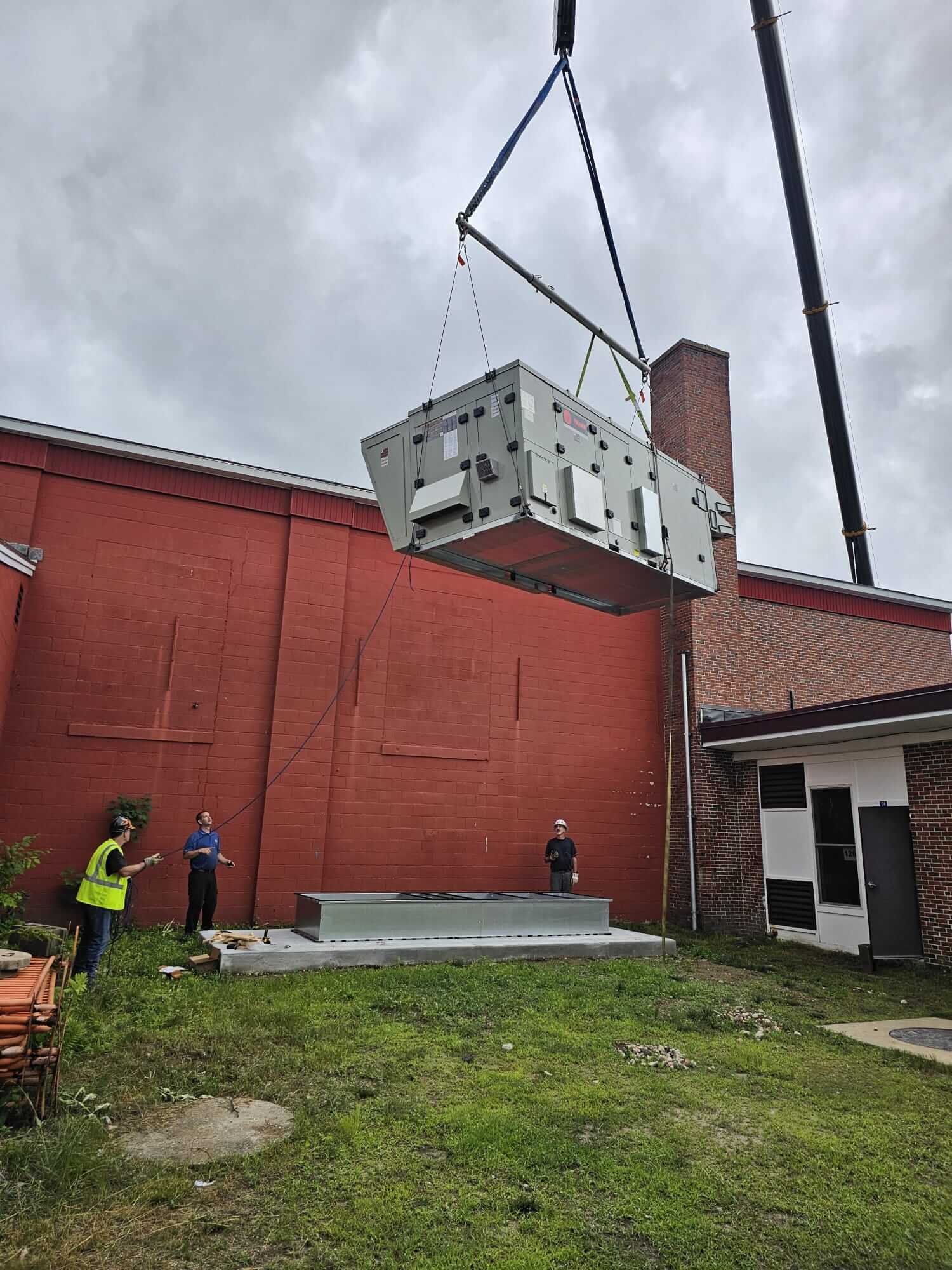
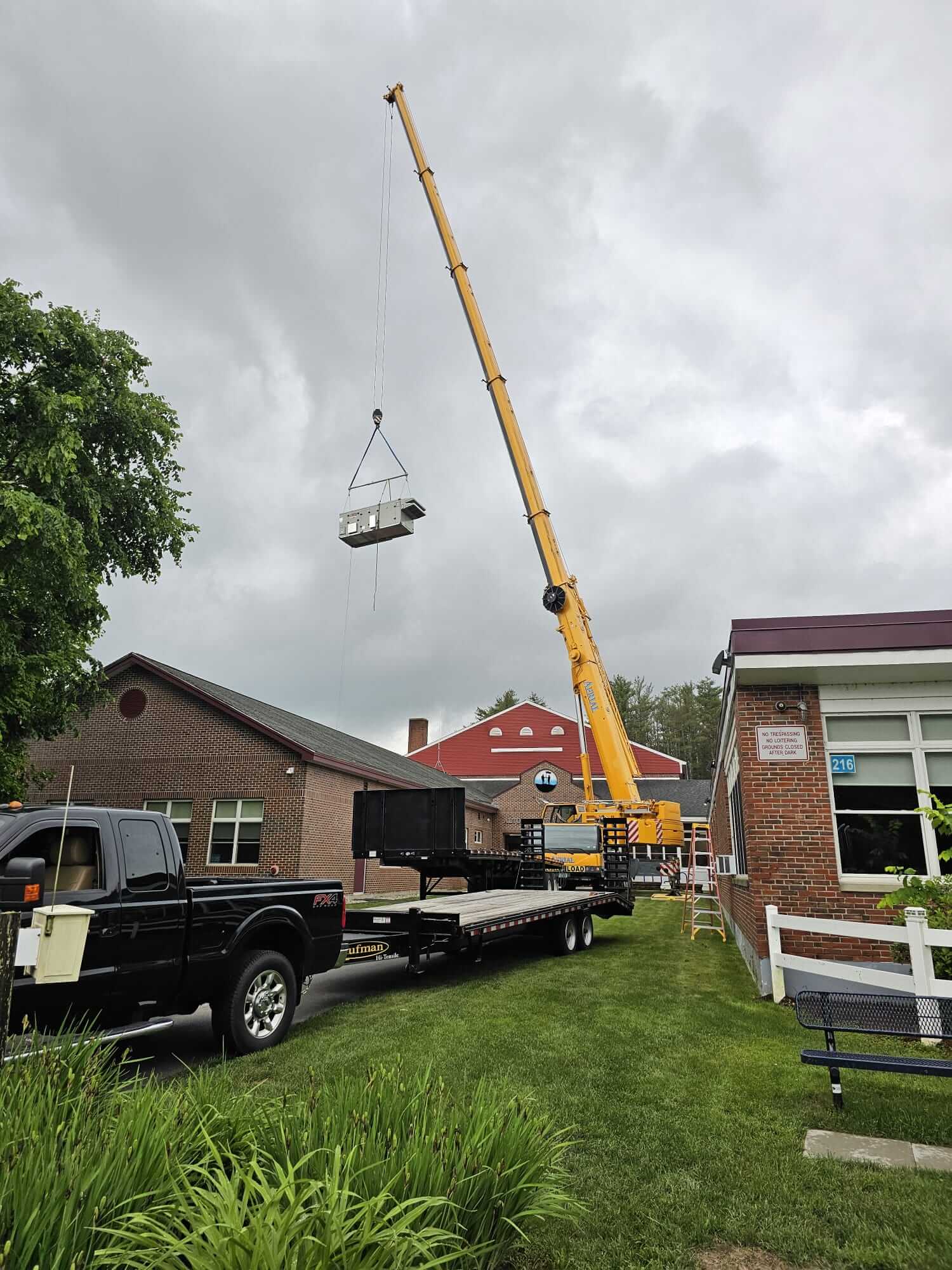
Related work on the same project can include steel erection, precast concrete lifting, generator placement, transformer work and HVAC lifts.
Crane Types for New Hampshire Bridge Projects
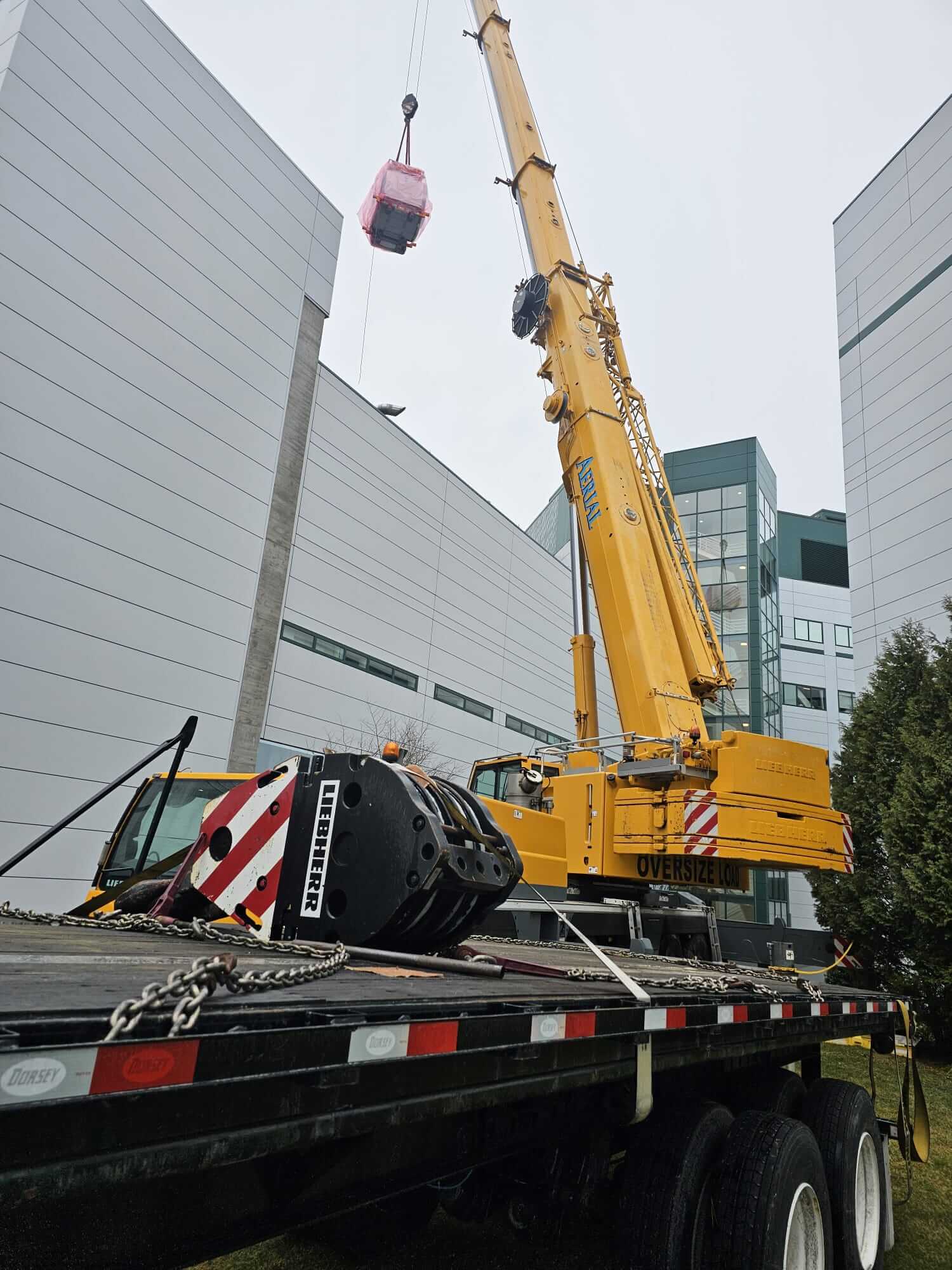
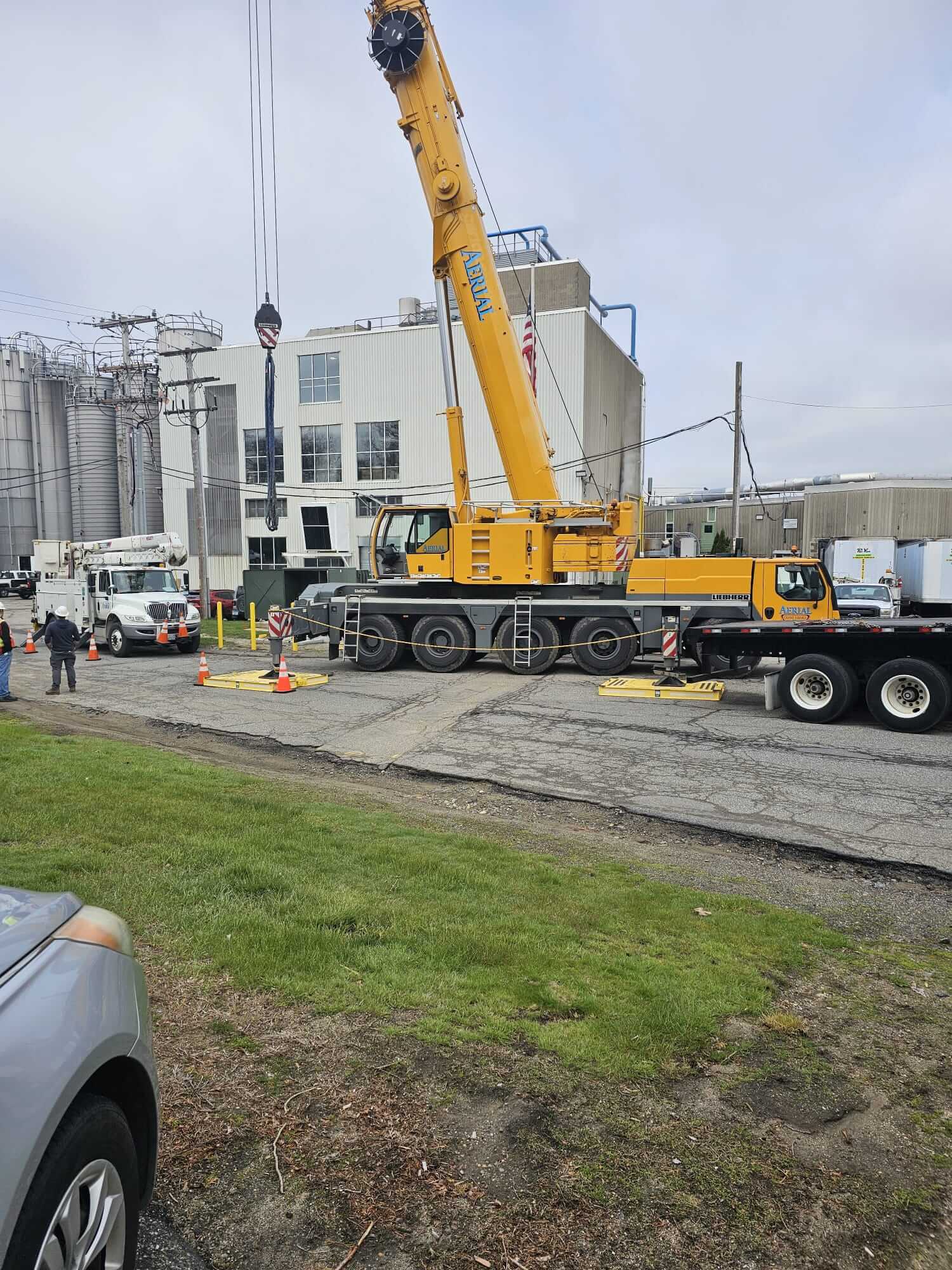
Bridge construction uses several crane types across the industry. Aerial Crane Service’s published fleet is centered on all-terrain cranes, a hydraulic truck crane and a boom truck.
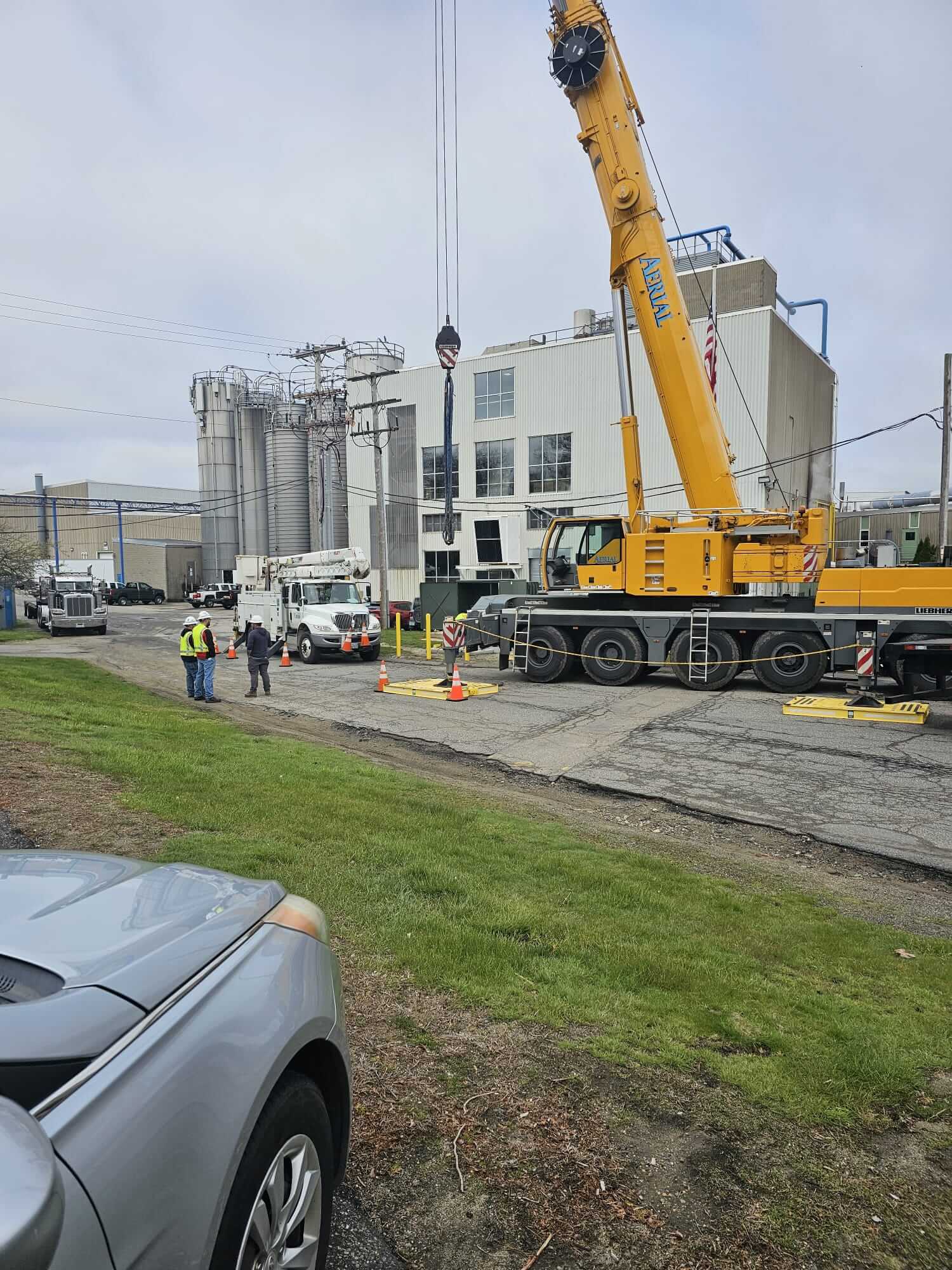
Liebherr LTM 1130-5.1 — 145 US Tons
The LTM 1130-5.1 is the largest crane currently listed in Aerial’s fleet. It has a maximum rated capacity of 145 US tons and a 197-foot telescopic boom. For bridge work, it provides the highest published capacity in the Aerial fleet for heavier precast members, steel girders and longer-radius structural picks.
Liebherr LTM 1090-4.2 — 120 US Tons
The LTM 1090-4.2 is a 120 US ton all-terrain crane with a 197-foot boom. Aerial specifically lists bridge beam placement and precast concrete among its applications.
Liebherr LTM 1100-5.2 — 120 US Tons
The LTM 1100-5.2 is a five-axle, 120 US ton all-terrain crane with a 171-foot telescopic boom. It provides road mobility with capacity suitable for structural, precast, utility and construction work.
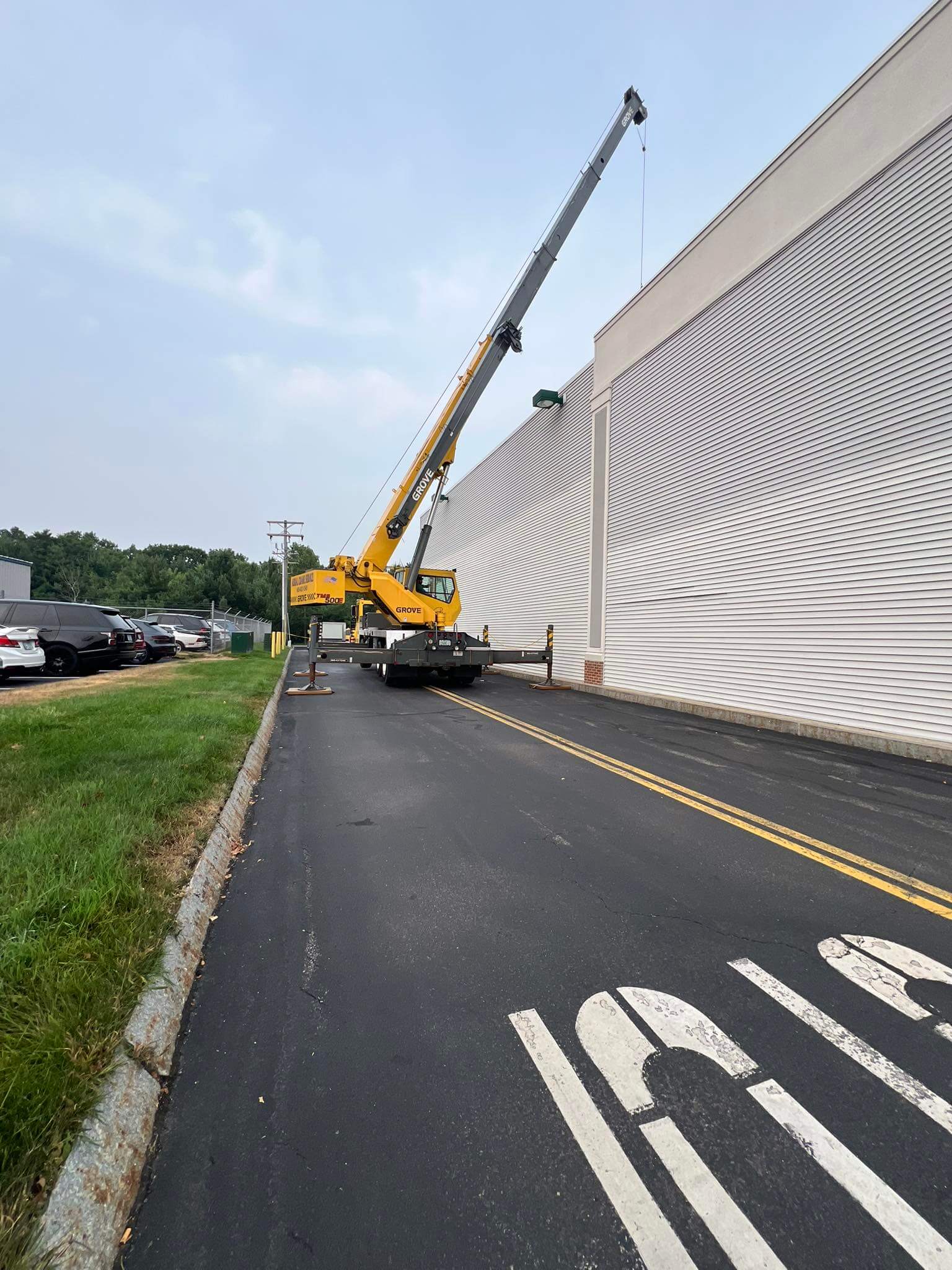
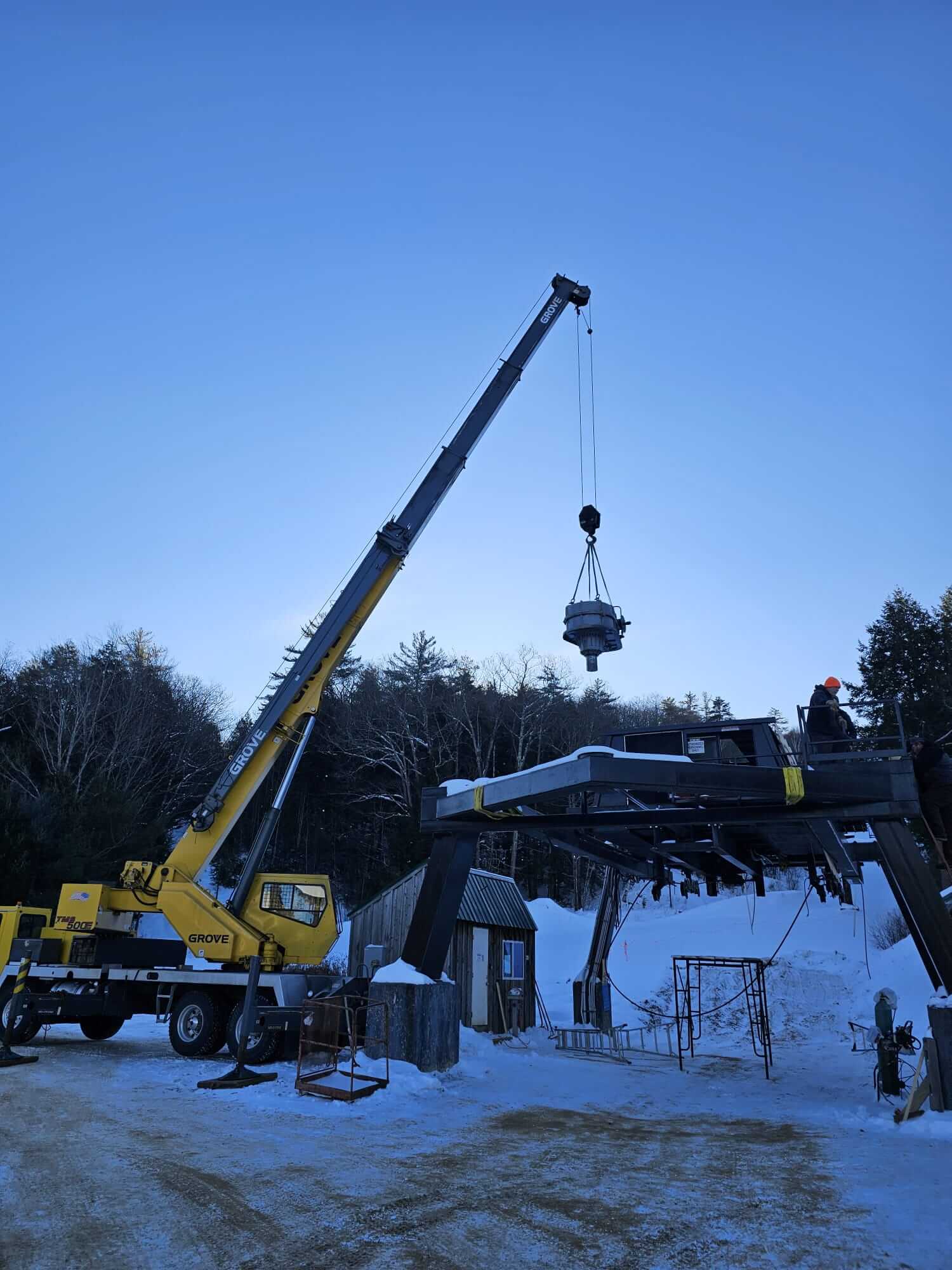
Grove TMS500E — 40 US Tons
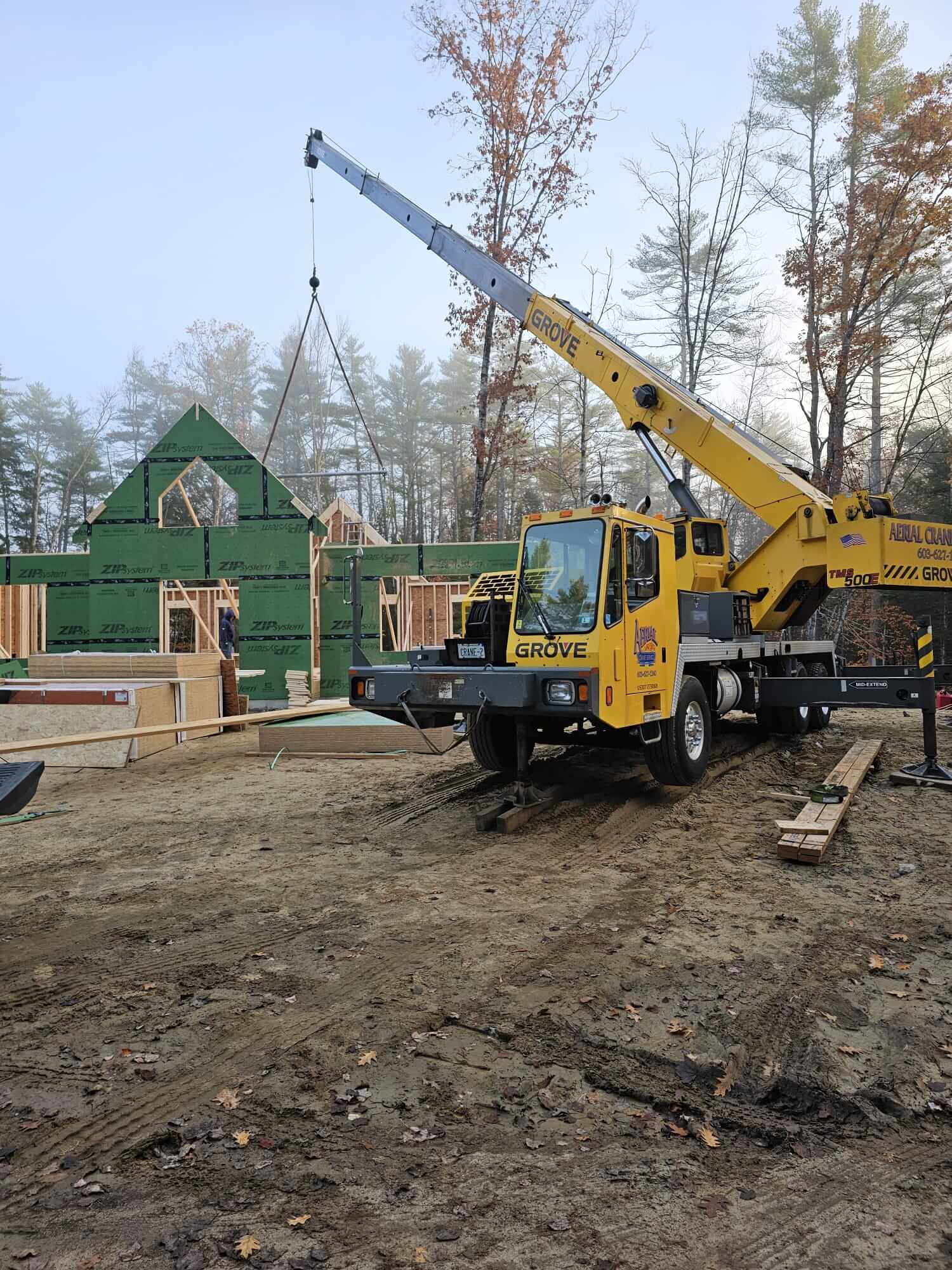
The Grove TMS500E is a hydraulic truck crane rated at 40 US tons with a 95-foot main boom and an available jib. It is better suited to lighter bridge components, support picks, temporary works and material handling than the heavier single-girder lifts handled by the Liebherr fleet.
National 800D Boom Truck — 23.5 US Tons
The National 800D has a maximum published capacity of 23.5 US tons and an 80-foot hydraulic boom. It can support lighter material handling, smaller structural components and bridge-site support work.
Where Crawler Cranes Fit
Crawler cranes are used throughout the bridge industry for very heavy picks, long-duration erection work and projects where large-capacity equipment remains on site for an extended period. Aerial Crane Service does not currently list a crawler crane in its published fleet. Its bridge equipment is based on mobile all-terrain cranes, a hydraulic truck crane and a boom truck.
What Crane Capacity Is Needed for Typical New Hampshire Bridge Beams?
A practical first screening calculation starts with the weight of one girder before rigging. A Federal Highway Administration prestressed-concrete bridge design example uses a girder self-weight of approximately 1.13 kips per foot, equal to about 1,130 pounds per linear foot.
| Example Girder Length | Approx. Girder Weight at 1.13 kip/ft | Practical Fleet Screening |
|---|---|---|
| 60 ft | About 33.9 tons | 40-ton crane is already close to its nameplate limit before rigging or radius reduction; larger crane is normally the practical starting point. |
| 80 ft | About 45.2 tons | Exceeds Aerial’s 40-ton Grove nameplate capacity; evaluate the 120- or 145-ton all-terrain fleet. |
| 100 ft | About 56.5 tons | Evaluate 120- or 145-ton all-terrain crane load charts at the actual pick and set radius. |
| 120 ft | About 67.8 tons | 145-ton class becomes the stronger first screening choice within Aerial’s published fleet. |
These are planning examples, not assumed weights for a specific New Hampshire beam. Actual precast sections and steel girders can be substantially lighter or heavier. Rigging, hook block and lifting devices are added to the gross suspended load.
A crane’s 120-ton or 145-ton nameplate rating is not the weight it can lift at every radius. The project team selects the crane by checking the manufacturer’s load chart at the actual pick radius and set radius. A 56-ton beam at a long working radius can require far more than a nominal 60-ton crane.
Crane Selection for Different Bridge Span Lengths
Span length gives contractors an early clue about the scale of the lift, but the beam schedule provides the actual working numbers.
Shorter Bridge Spans
For shorter beams and smaller structural components, the Grove TMS500E or a Liebherr all-terrain crane may provide an efficient setup. Once a member approaches the 40-ton range, the 120-ton all-terrain cranes provide much more usable load-chart margin.
Medium Highway Spans
For prestressed beams in the 80-to-120-foot range, the FHWA example above produces theoretical self-weights around 45 to 68 tons. Aerial’s 120-ton LTM 1090-4.2 and LTM 1100-5.2 or its 145-ton LTM 1130-5.1 are the logical machines to evaluate first.
Long or Heavy Spans
Long steel girders, deep prestressed sections, long working radii and multi-beam erection sequences can exceed the practical chart capacity of a 145-ton mobile crane. The erection engineer may then call for a larger crane, tandem-crane procedure, different setup location, different delivery orientation or another erection method.
AASHTO standards and project-specific erection requirements also address stability during construction. Long girders may need temporary bracing and engineered erection procedures rather than simply a larger hook capacity.
Working with NH DOT and Local Municipalities
For an NHDOT bridge project, contractors should start with the contract plans, special provisions and project traffic-control plan. NHDOT bridge documents commonly reference Sections 618 and 619 of the Standard Specifications together with the Manual on Uniform Traffic Control Devices.
The New Hampshire Department of Transportation, often shortened to NH DOT or NHDOT, can establish project-specific lane-closure periods, traffic-control phases, construction sequencing, uniformed officer requirements, detours and notification procedures.
Aerial’s crane planning can be coordinated around those project requirements. The general contractor or construction manager should provide the approved work window, crane setup area, delivery sequence, engineer restrictions and traffic-control constraints before the crane is dispatched.
Municipal bridge work follows the same basic approach: identify the road owner, identify who controls the right-of-way, obtain the required approvals and give the crane company the approved operating window before mobilization.
Traffic Control and Site Access Planning for Bridge Lifts
A bridge lift over or beside an active roadway is a traffic operation as well as a crane operation. The traffic management plan should establish where the crane sets up, where beam trailers wait, which travel lanes remain open, how workers are separated from traffic and when the suspended load can cross an active roadway.
FHWA bridge-construction guidance gives a useful benchmark: conventional beam placement can occupy roughly 25 to 90 minutes per beam and may use rolling roadblocks or detours. That makes delivery sequencing and crane readiness important before traffic is stopped.
For a Hooksett lift near I-93 or Route 3, contractors should have the following resolved before the first beam arrives:
- Approved crane setup location
- Beam trailer staging area
- Pick and set radii
- Lane and shoulder closure limits
- Traffic-control devices and personnel
- Police or uniformed officer requirements when specified
- Emergency vehicle access
- Work-zone entry and exit routes
- Beam delivery order
- Clear swing and load-control area
- Communication between operator, signal person and erection crew
Permitting and Road Closure Requirements in Hooksett
For work on a state-controlled highway such as I-93 or US Route 3, NHDOT project requirements control the roadway work window and traffic-control operation. The project contractor should have approved traffic-control documents and any required road closure permits or lane-closure authorizations in place before scheduling the beam erection window.
For a municipal road in Hooksett, the contractor should confirm right-of-way and closure requirements with the Town of Hooksett and identify the responsible municipal department during preconstruction. Permit responsibility should be written into the project plan rather than left for lift day.
The crane company needs the approved closure or restriction information before mobilization because the available road width directly affects outrigger position, crane radius and beam trailer access.
Coordination with Structural Engineers and General Contractors
Bridge erection requires direct coordination between the crane company, general contractor, structural engineer, precast supplier or steel fabricator, erection crew, rigging personnel, transportation crew and traffic-control team.
The engineer’s erection requirements should identify the beam support conditions, required temporary bracing, erection sequence and any restrictions on handling. FHWA guidance referencing AASHTO bridge construction specifications notes that precast girders must be protected against instability during handling and erection and that temporary construction carrying calculated stresses can require engineering calculations.
Before crane mobilization, the project team should confirm:
- Certified beam or girder weights
- Member lengths and center of gravity information
- Approved lifting points
- Rigging configuration
- Pick and set sequence
- Bearing and temporary support readiness
- Temporary bracing procedure
- Crane setup location
- Ground-support requirements
- Delivery-truck sequence
- Signal and communication method
- Traffic-control window

Weather and Seasonal Considerations for NH Bridge Construction
New Hampshire bridge work has to account for wind, freezing temperatures, snow, ice, reduced visibility, rain and changing ground conditions.
High wind stops a bridge beam lift when the crane manufacturer’s operating limit or the project’s lift-plan limit is reached. Long beams and girders expose a large surface area to wind, so load control can become unacceptable before the crane itself reaches a general shutdown threshold.
Other conditions that can stop or postpone bridge placement include:
- Lightning in the work area
- Snow or ice affecting crane access or outrigger setup
- Poor visibility that prevents reliable signaling
- Flooding or saturated ground that changes support conditions
- Freezing precipitation on beams, rigging or work surfaces
- Wind that prevents controlled alignment of the girder
New Hampshire’s state crane rules require employers to follow the manufacturer’s specifications and operating limitations. Weather decisions should therefore use the actual crane manual, load configuration and erection plan rather than a generic wind number copied from another project.
Night-Time Bridge Crane Service in New Hampshire
Aerial Crane Service advertises 24/7 support, so contractors can request night-time crane service for bridge work. Night erection is often considered when the road owner wants traffic disruption moved outside peak travel hours.
A night bridge lift needs adequate work-zone lighting, an approved traffic-control window, a clear signaling method, delivery timing and enough visibility for the operator and erection crew to maintain control of the load.
Contractors planning an overnight I-93 or Route 3 beam placement should call (603) 491-1268 early in the scheduling process and provide the approved closure hours.
Emergency Bridge Repair Crane Services
Aerial Crane Service also advertises emergency crane support. For bridge work, an urgent request may involve storm damage, damaged structural components, temporary stabilization, emergency material handling or an infrastructure repair where a crane is needed outside the original construction schedule.
For an emergency bridge lift, call (603) 491-1268 and provide:
- Exact project location
- Road or bridge identification
- Known load weight
- Load dimensions
- Photos of the site
- Available crane setup area
- Required response window
- Contact information for the engineer or project authority
Emergency mobilization still requires a safe crane setup and a confirmed lifting plan before the load moves.
Access Challenges on Rural Bridges vs. Highway Overpasses
Rural Bridge Sites
Rural New Hampshire bridge work can involve narrow approach roads, soft shoulders, steep grades, uneven ground, limited trailer-turning space and long distances between the staging area and bridge. A contractor may have open airspace but very little suitable ground for crane outriggers.
Sites along rivers or low areas can also have saturated soils or restricted access. A crane positioned near the Merrimack River or another waterway needs a setup area verified for the loads imposed by the machine.
Highway Overpasses
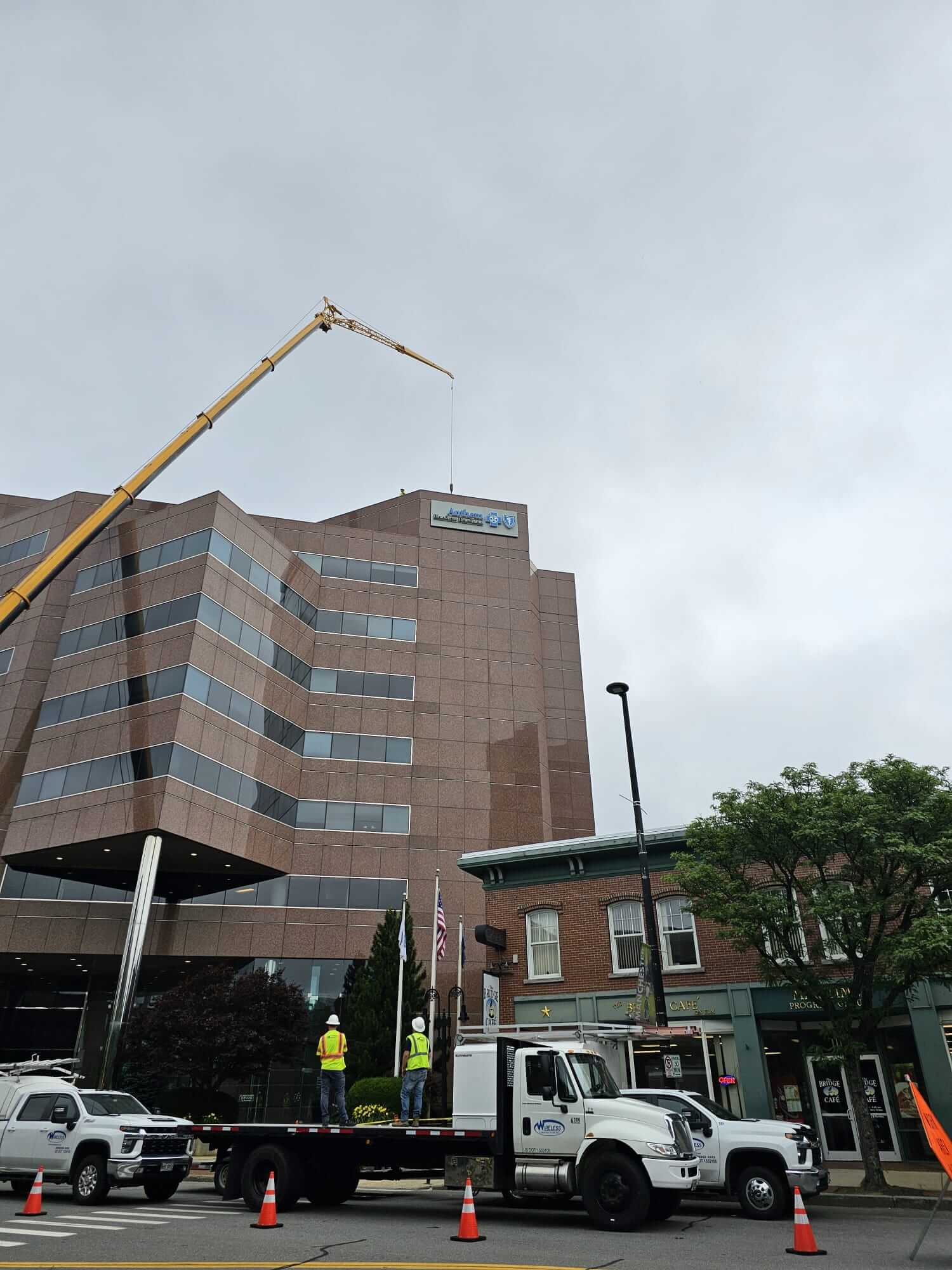
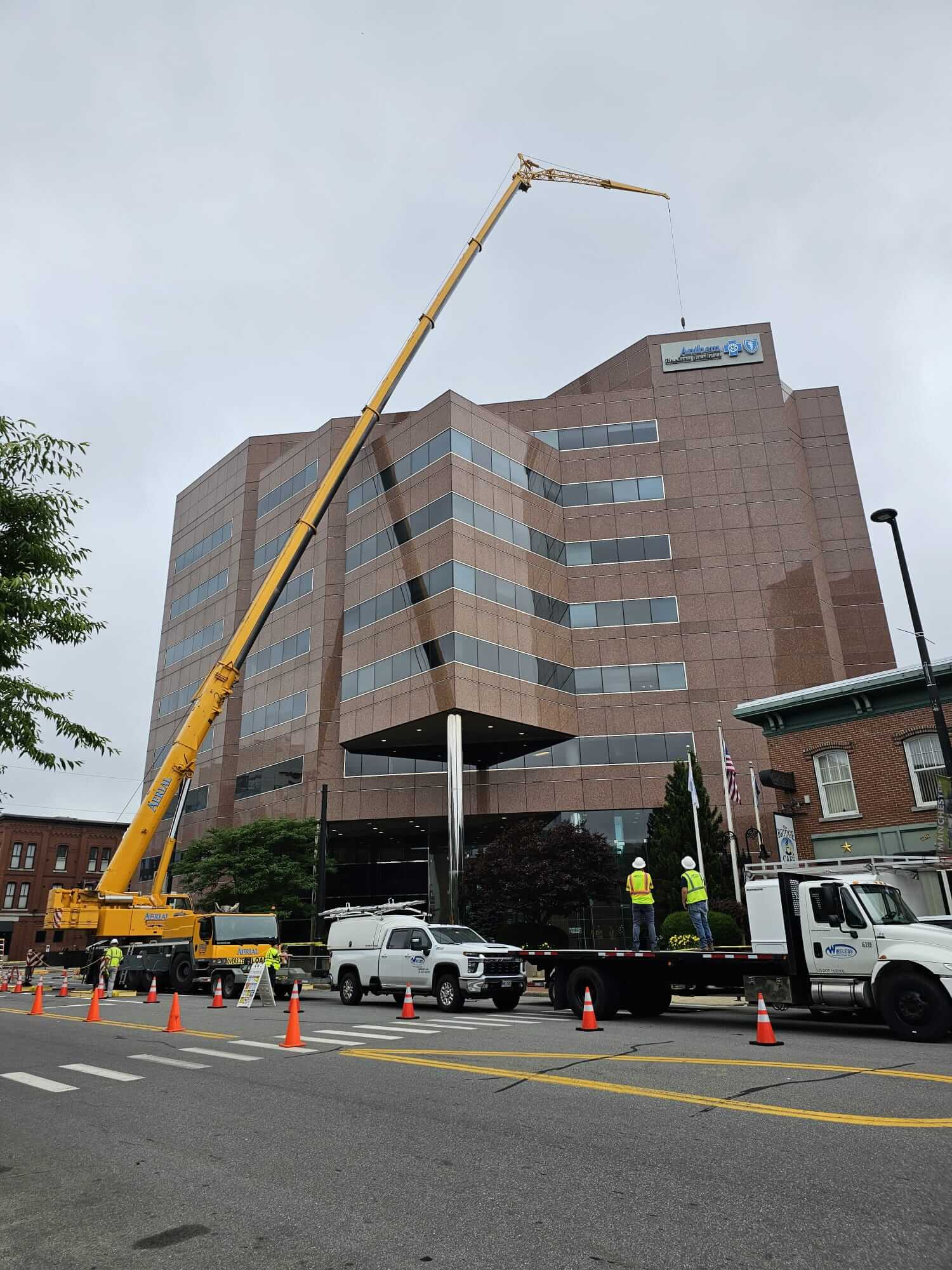
Highway work near Manchester, Hooksett, I-93 or Route 3 presents another problem: the ground may be paved and accessible, but the crane is working inside a controlled traffic envelope. Lane width, barrier placement, overhead structures, bridge rails and moving traffic can limit the crane position.
Highway overpasses also place more pressure on timing. If a closure lasts three hours, beam delivery, crane setup, rigging and erection need to fit inside the approved period.
Documentation and Certifications for Bridge Crane Operations in NH
Federal OSHA rules require operators of covered construction cranes to be trained, certified or licensed, and evaluated by their employer before operating the equipment. OSHA also requires signal persons to meet qualification requirements before giving signals.
For a bridge project, contractors should be ready to verify or collect the documentation required by the owner, general contractor and project safety program, including:
- Crane operator certification or licensing documentation required by applicable rules
- Employer operator evaluation records
- Signal person qualification documentation
- Crane inspection records
- Manufacturer load charts
- Lift plan or critical-lift documentation when required
- Rigging inspection and identification records
- Insurance certificates required by the project
- Engineered erection or temporary-work calculations when specified
- Traffic-control plan and closure approvals
New Hampshire Lab 1403.15 also requires compliance with manufacturer specifications and limitations, posted rated capacities and equipment inspection by a competent person before and during use.
Rigging and Support Equipment for Bridge Beam Placement
Bridge beams often require more than a crane and hook block. Aerial Crane Service also provides rigging services, spreader bars and specialty rigging and trucks and trailers for delivery and removal.
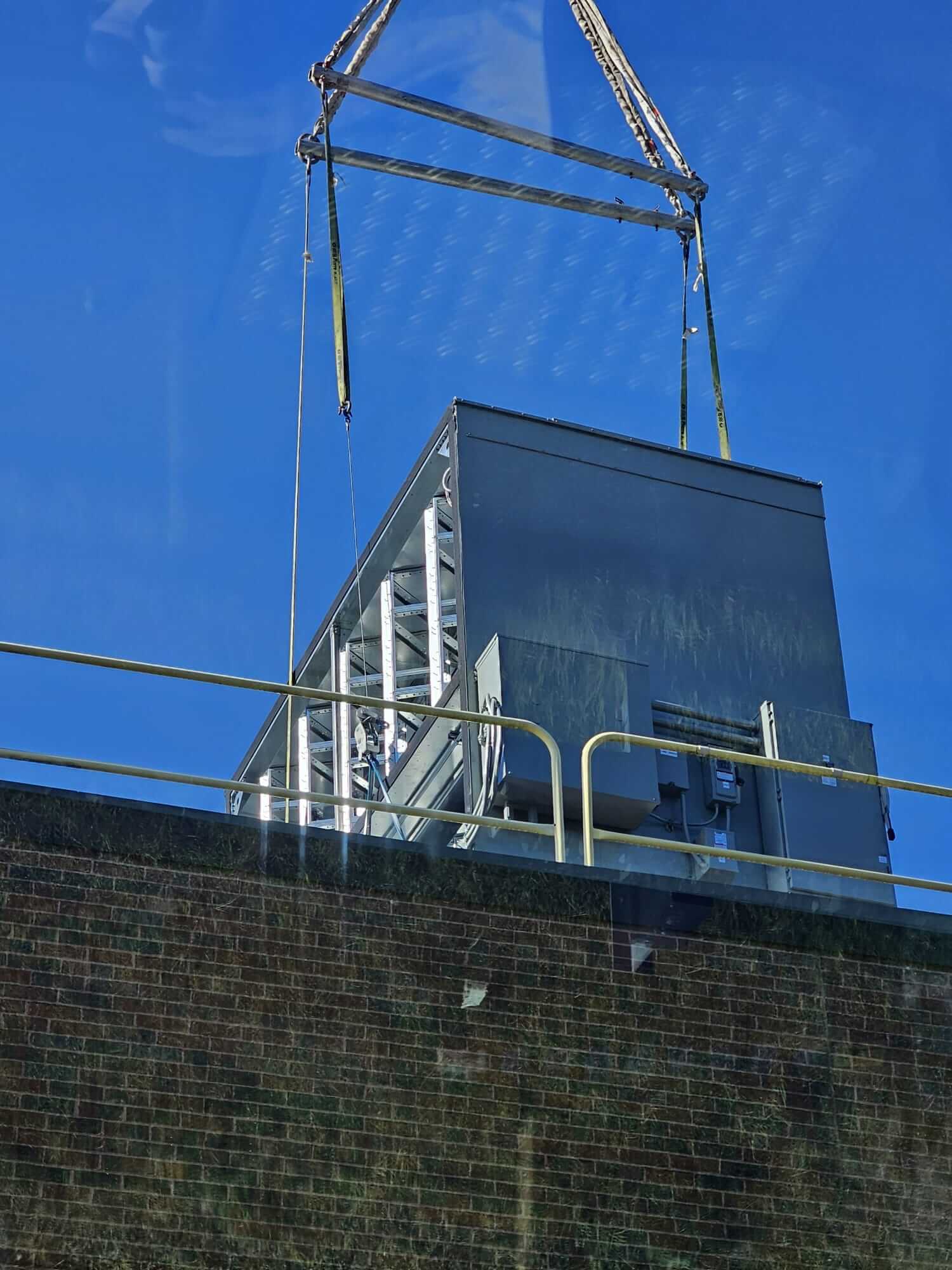
A spreader arrangement can help maintain the lifting geometry specified for a long member. Rigging selection should follow the engineered lifting points, member geometry and required sling angles rather than a generic arrangement reused from another beam.
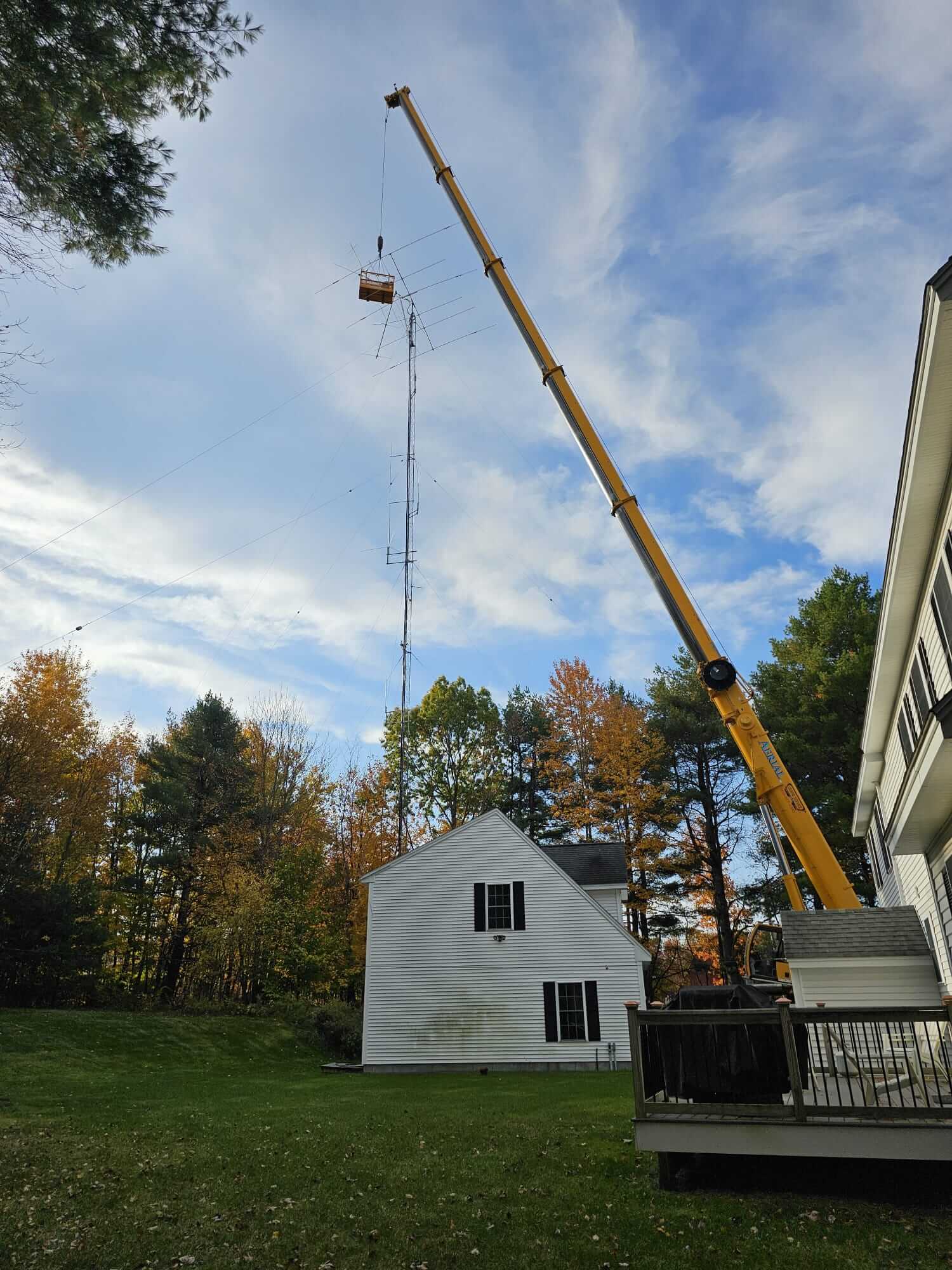
Aerial also offers certified man basket services for qualifying elevated-access work, including bridge inspections and structural access applications.
Supporting Contractors and Project Managers
Bridge beam placement is one activity inside a larger construction sequence. Project managers are coordinating beam fabrication, trucking, bearings, temporary supports, survey, erection crews, traffic control, inspection and construction milestones at the same time.
Aerial Crane Service can review crane-related details before lift day, including beam dimensions, load weight, pick radius, set radius, crane pad location, delivery route, ground conditions, overhead hazards and rigging requirements.
Commercial and infrastructure projects may also need steel erection, HVAC equipment, transformers, generator placement or other lifting support after the bridge beams are set.
Bridge Construction Crane Service Across New Hampshire
Aerial Crane Service provides bridge and infrastructure lifting throughout New Hampshire. In addition to Hooksett, contractors can find local crane service pages for:
Allenstown,
Amherst,
Atkinson,
Auburn,
Bedford,
Bow,
Candia,
Concord,
Derry,
Dover,
Dunbarton,
Epsom,
Exeter,
Franklin,
Goffstown,
Hampstead,
Henniker,
Hopkinton,
Hudson,
Laconia,
Litchfield,
Londonderry,
Manchester,
Merrimack,
Milford,
Nashua,
Northfield,
Pembroke,
Plaistow,
Portsmouth,
Raymond,
Rochester,
Salem,
Tilton,
Weare and
Windham.
Regional crane service also extends into Massachusetts, Maine and Vermont. Existing service-area links relevant to the original page include Worcester, MA and Portland, ME.
How Far in Advance Should Contractors Book Bridge Crane Service?
For a planned bridge beam erection, use two to four weeks as the practical minimum scheduling target. That gives the crane company time to review beam data, radius, access and equipment availability.
Start four weeks or more ahead when the project includes an NHDOT traffic-control window, road closure, engineered erection procedure, multiple girder deliveries, specialty rigging or a narrow overnight work period. Permit and traffic-control approvals should be underway before the crane date is locked.
Urgent bridge repair work should be called in immediately at (603) 491-1268.
Information to Have Ready for a Bridge Crane Quote
| Project Information | Why the Crane Company Needs It |
|---|---|
| Bridge or project address | Establishes mobilization, road access and local work constraints. |
| Individual beam weights | Establishes suspended load before rigging. |
| Beam lengths and dimensions | Establishes load-control and clearance requirements. |
| Pick radius | Establishes crane capacity at the trailer or staging position. |
| Set radius | Establishes crane capacity at the final bearing position. |
| Erection drawings | Provides sequence, member identification and lifting requirements. |
| Crane setup area | Shows available space for outriggers, counterweight and boom movement. |
| Ground information | Supports evaluation of the crane pad and outrigger loads. |
| Delivery sequence | Keeps beam trailers aligned with the erection sequence. |
| Road closure or traffic-control window | Establishes the time available for setup, picking and reopening traffic. |
| Requested erection date | Allows the correct crane and operator to be scheduled. |
Call for Bridge Construction Crane Service in Hooksett, NH
If you need a crane for bridge construction in Hooksett NH, call Aerial Crane Service at (603) 491-1268. Send the beam weights, dimensions, erection drawings, project address and proposed lift date so the team can review the crane class and setup required.
Aerial provides bridge beam placement and infrastructure crane service across New Hampshire and throughout New England, with all-terrain cranes up to a published 145 US ton maximum capacity.