Crane-Assisted Tree Removal Support for Tree Companies
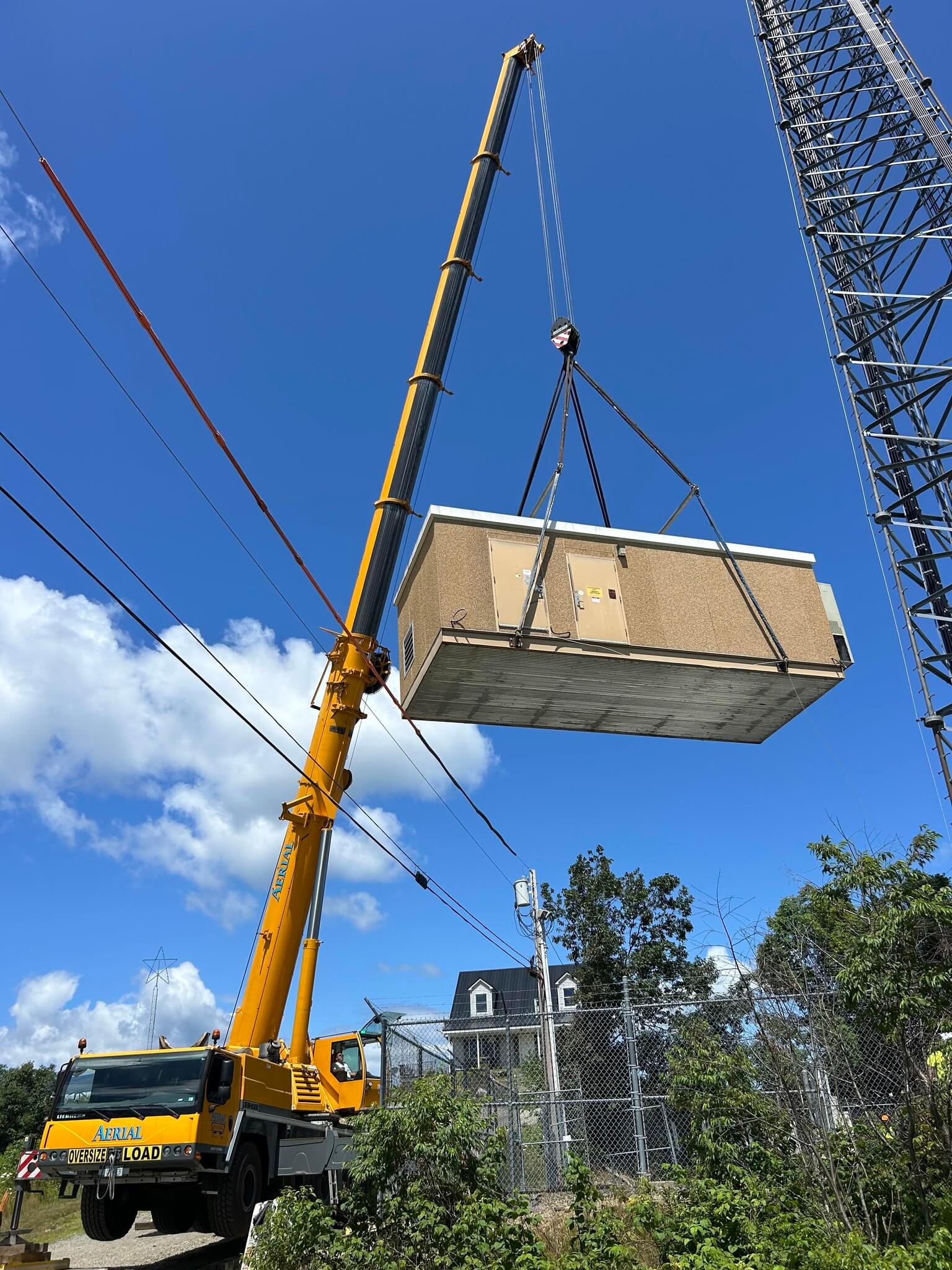
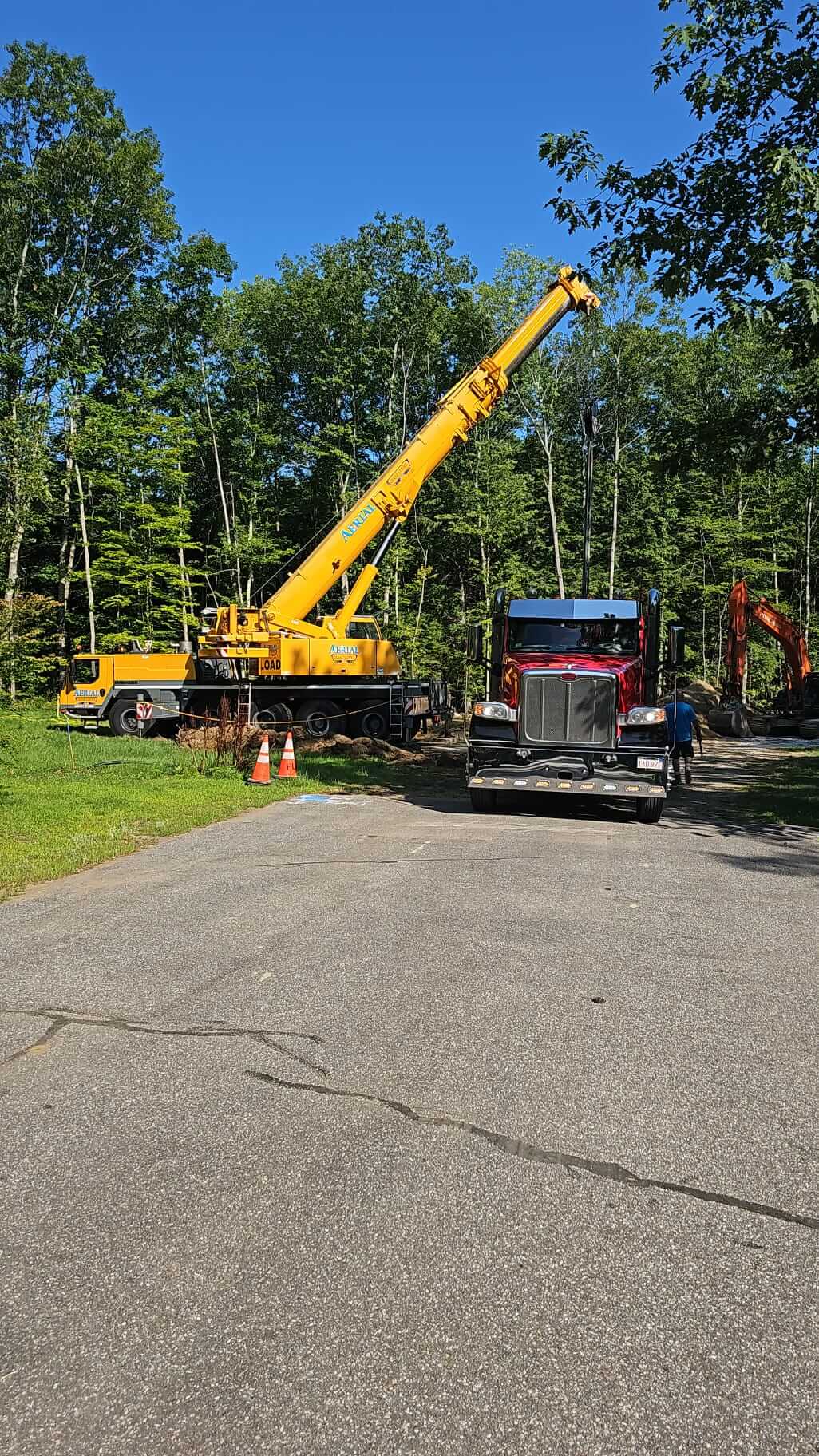
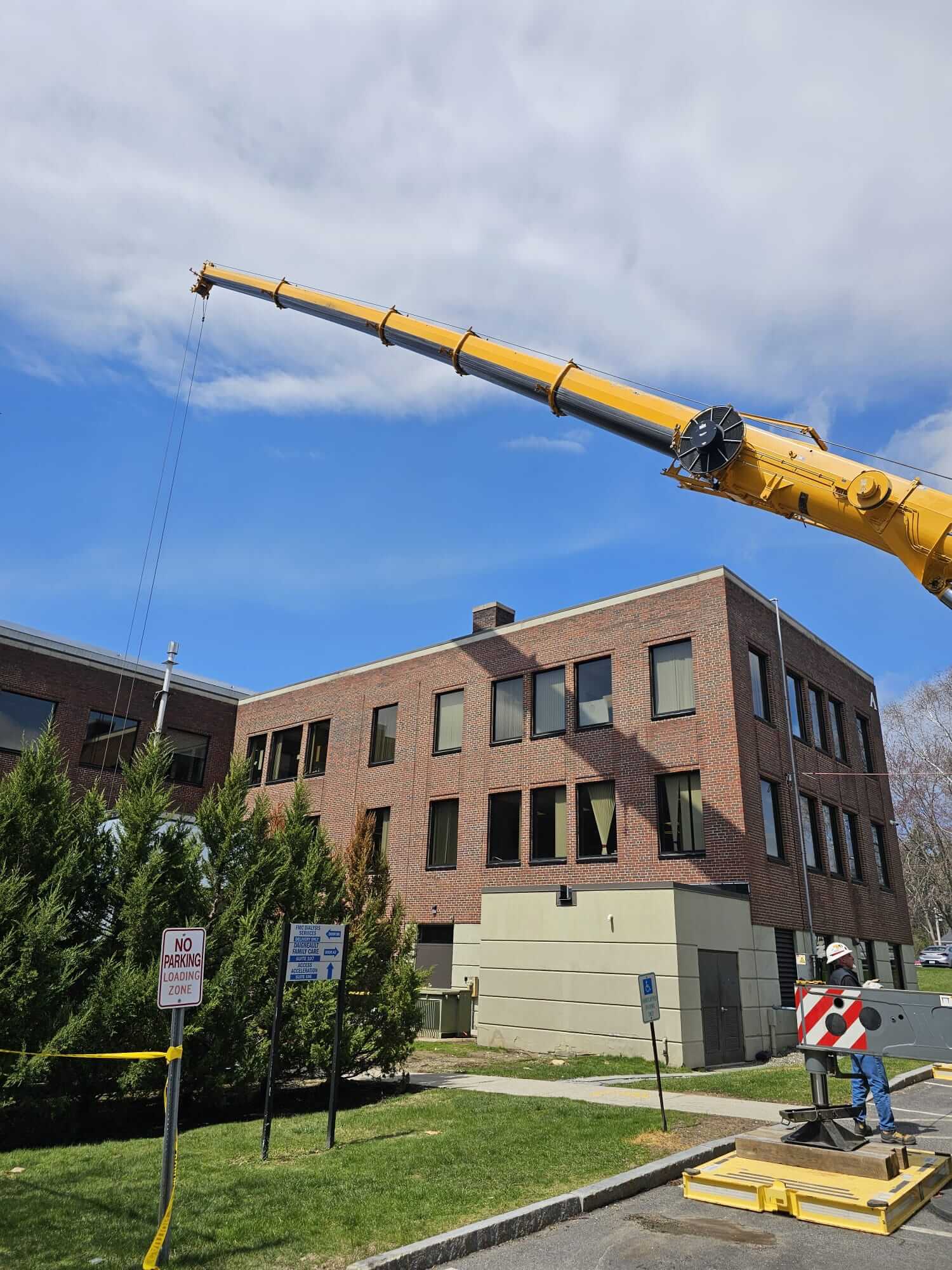
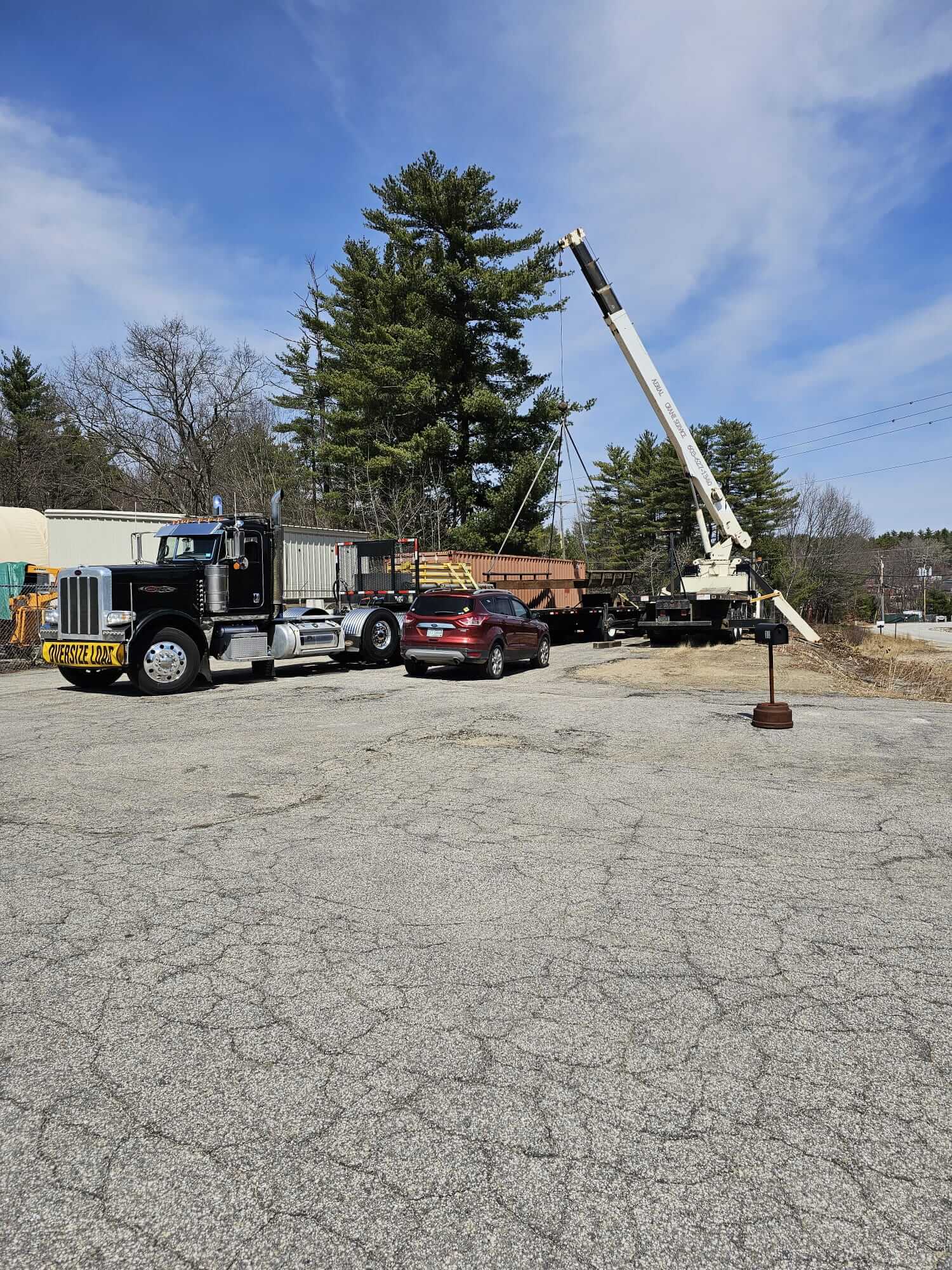
Aerial Crane Service provides crane-assisted tree removal support to professional tree removal companies throughout New Hampshire, Massachusetts, Maine and Vermont. Aerial supplies the crane and crane operator. The tree company supplies the arborist, climber, ground crew and personnel performing the cutting and removal work.
That distinction matters on complex removals. A large tree beside a house, a compromised trunk over a garage, storm-damaged limbs above a driveway or a tall tree with almost no drop zone requires the crane operator and tree crew to work from the same lifting plan. The arborist identifies how the tree will be dismantled. The crane operator evaluates the proposed sections against the crane’s load charts, boom reach calculations, working radius and setup position.
Aerial Crane Service has served New England contractors since 1983. Tree companies can call (603) 491-1268 with the tree location, estimated section weights, crane-to-tree distance and requested date to discuss crane availability.
Professional Crane Support for Tree Removal Companies
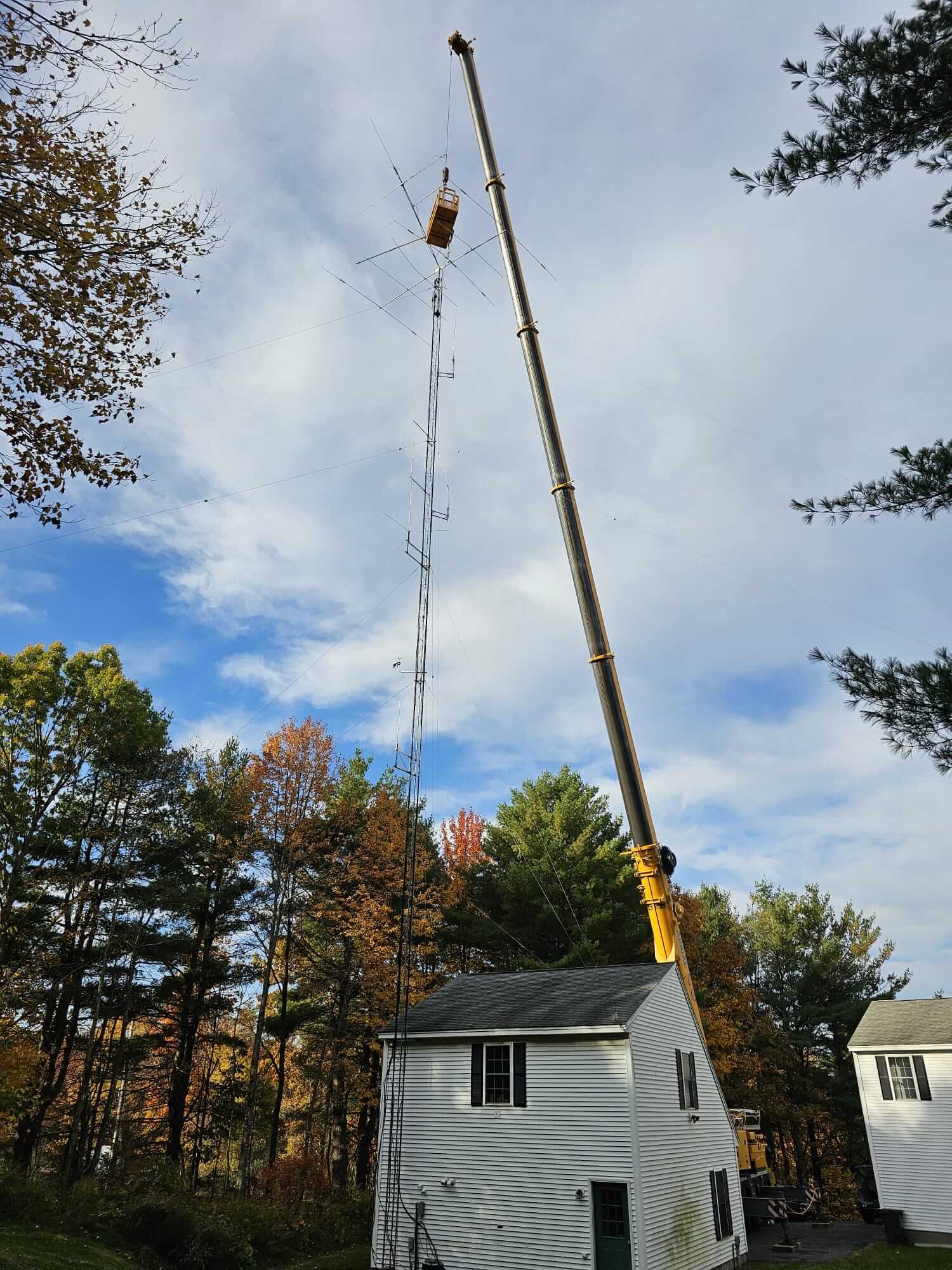
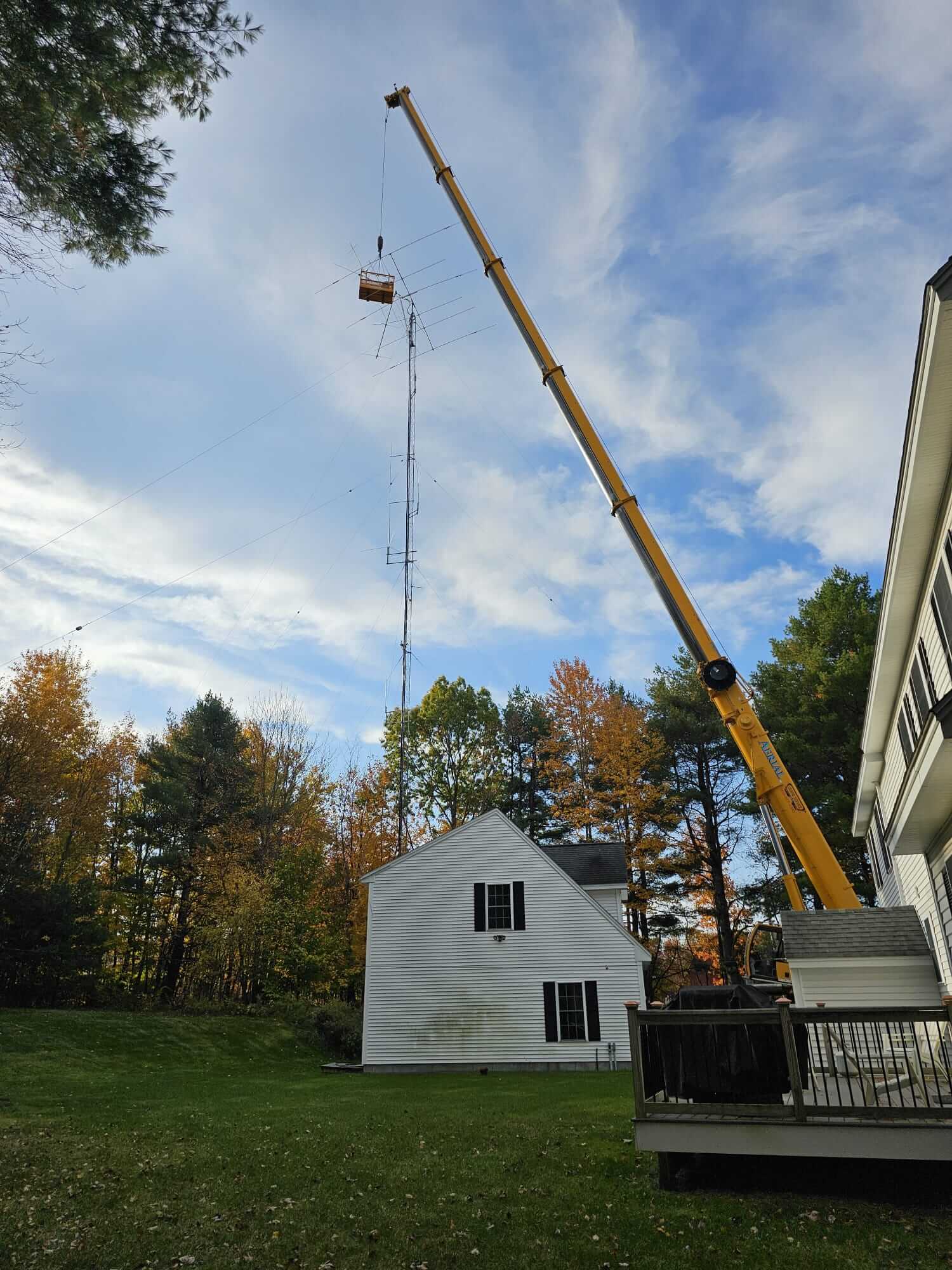
Crane-assisted tree removal allows the tree crew to attach controlled sections to the crane before cutting. Once the cut is complete, the operator lifts the section away from the tree and moves it to an established landing area.
Aerial works directly with tree service companies, arborists, general contractors, municipalities, property managers and utility contractors that need crane support for:
- Large tree removals
- Hazardous and structurally compromised trees
- Storm-damaged trees
- Large white pine removal
- Large oak tree removal
- Trees beside homes, garages and commercial buildings
- Trees near pools, fences, retaining walls and landscaping
- Trees with limited drop zones
- Tree removals near roads and driveways
- Municipal tree projects
- Utility corridor work
- Emergency tree-removal support
- Large limb and trunk-section lifting
- Steep, wooded or limited-access properties
The crane does not replace the tree crew. It gives the tree removal contractor another way to control heavy sections when conventional lowering or free-falling material would create unnecessary exposure to buildings, landscaping or other property.
Coordination with Arborists: How We Work With Your Tree Crew
Aerial provides the crane and crane operator. The tree removal company provides the arborist, climber, cutters and ground personnel responsible for the tree work.
Many professional tree companies use ISA Certified Arborists to assess tree structure, decay, defects and removal strategy. ISA certification belongs to the arborist, not the crane company. Aerial does not represent its crane operators as ISA Certified Arborists.
Before cutting begins, the crane operator and tree crew need agreement on the removal sequence, estimated piece weights, proposed pick points, rigging arrangement, landing area and communication method.
The tree crew should not increase a planned section simply because the crane has a high maximum tonnage. A crane rated for 120 or 145 tons at a short radius may have substantially less available capacity when working over a house, across a backyard or at extended boom length. The operator uses the appropriate load chart for the actual configuration.
Rigging Techniques and Pick Points
Tree sections do not behave like manufactured loads. The weight may be distributed unevenly, limbs may extend far from the trunk and decay may change how a piece reacts when released.
The tree crew determines the cutting strategy and arboricultural rigging approach. The crane operator works with the crew so the proposed rigging techniques and pick points are compatible with the lift. The objective is to have the piece controlled when the final fibers separate, rather than allowing it to fall, swing violently or shock-load the crane.
Aerial also provides rigging services and spreader bars and specialty rigging for projects requiring additional lifting equipment.

Crane Capacity Requirements for Different Tree Sizes
A 60-foot tree does not automatically require a 60-ton crane. Tree height is useful for estimating the scale of a job, but the crane is selected from the weight of each planned section and the working radius.
For a typical 60-foot oak removal, a tree company should usually start planning around a 40- to 60-ton crane class for good-access work. If the crane must sit farther from the tree, reach over a house or work from the street into a backyard, a 90- to 145-ton all-terrain crane may be the more practical choice even though the individual pieces weigh far less than the crane’s maximum rating.
| Tree Removal Situation | Practical Crane Class to Evaluate First |
|---|---|
| Smaller sections, close access, short working radius | Boom truck or 40-ton hydraulic crane |
| Typical mature 50–70 ft tree with good setup access | 40–60 ton class |
| 60–80 ft oak or white pine with moderate reach | 60–120 ton class |
| Large backyard tree requiring long reach over a structure | 90–145 ton all-terrain class |
| Very tall tree, long radius or unusually heavy sections | 120–145 ton class or revised cutting sequence |
These are planning ranges rather than instructions for a specific tree. The crane operator makes the equipment decision after reviewing the planned sections, radius, boom length, setup and applicable load chart.
Crane Fleet for Tree Removal Support
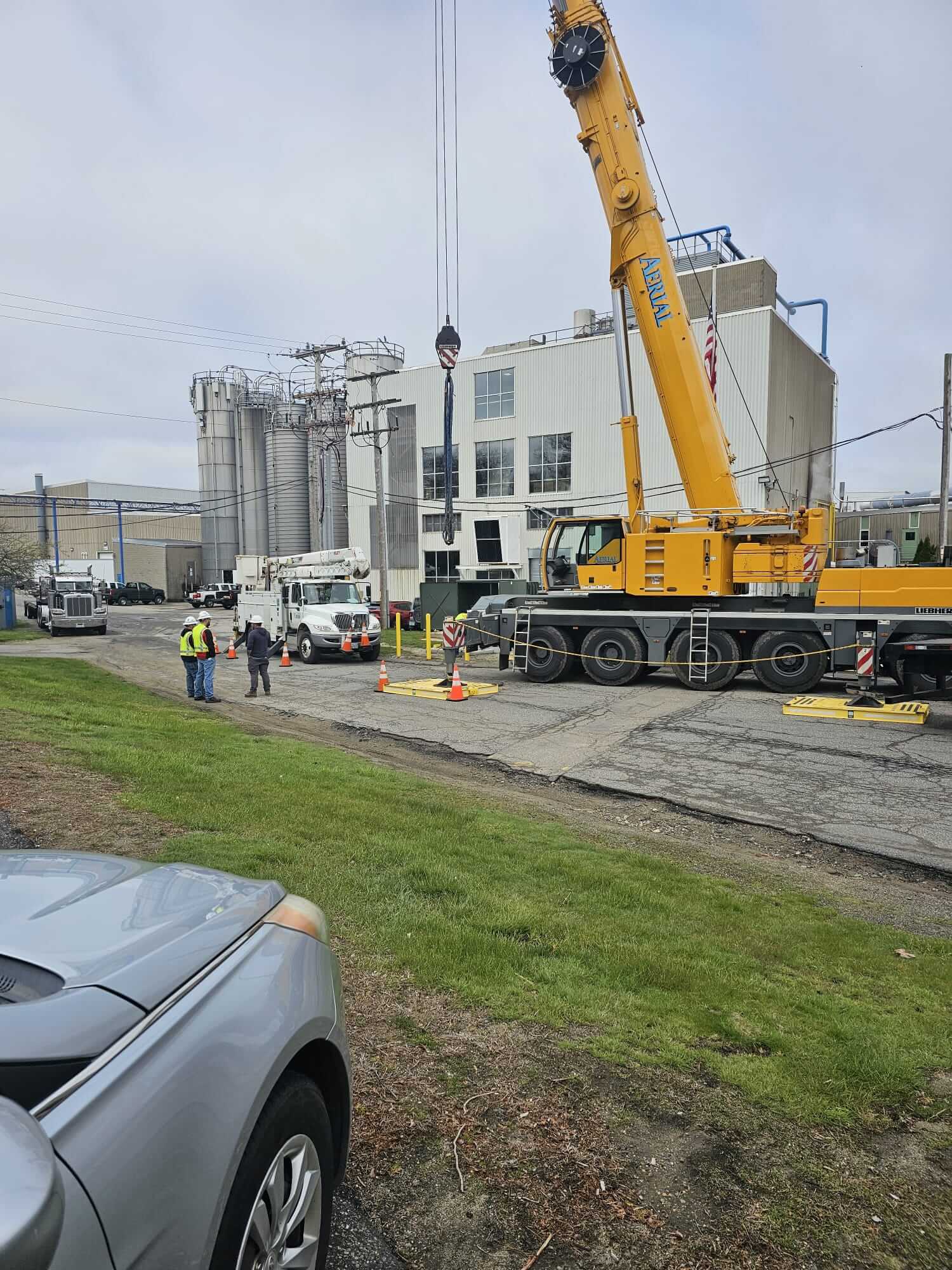
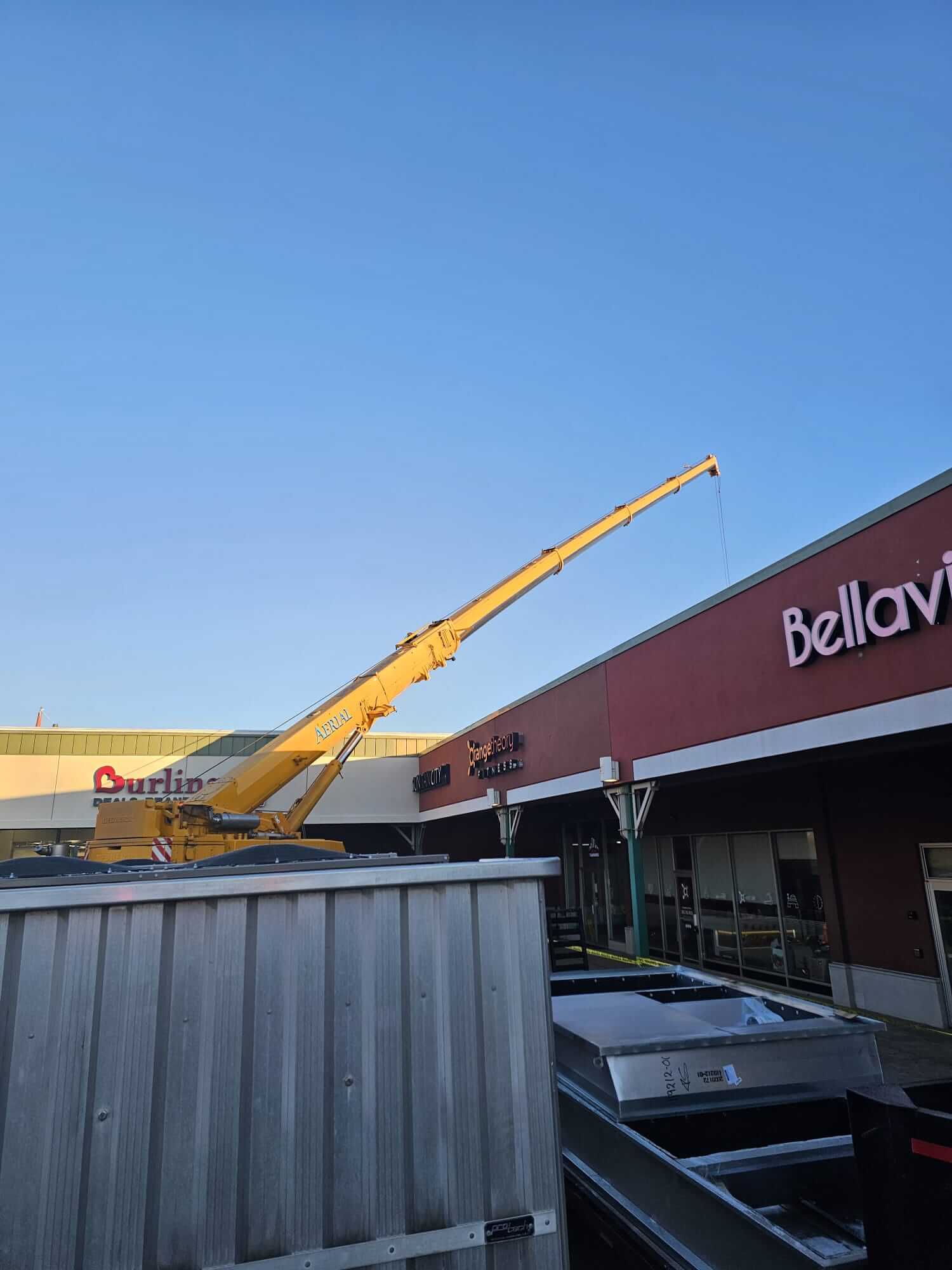
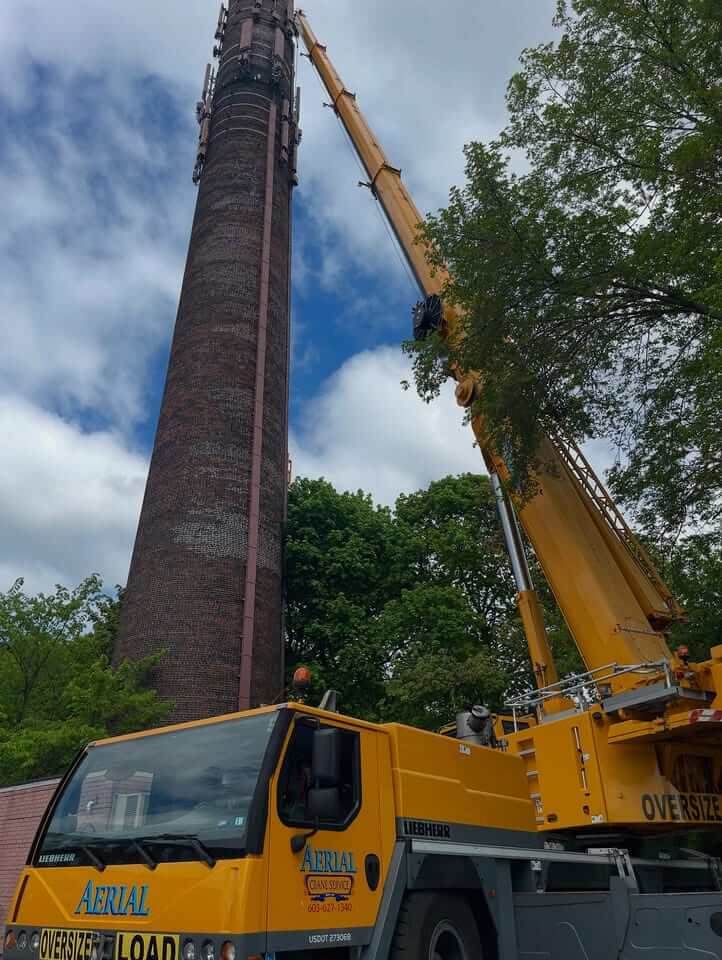
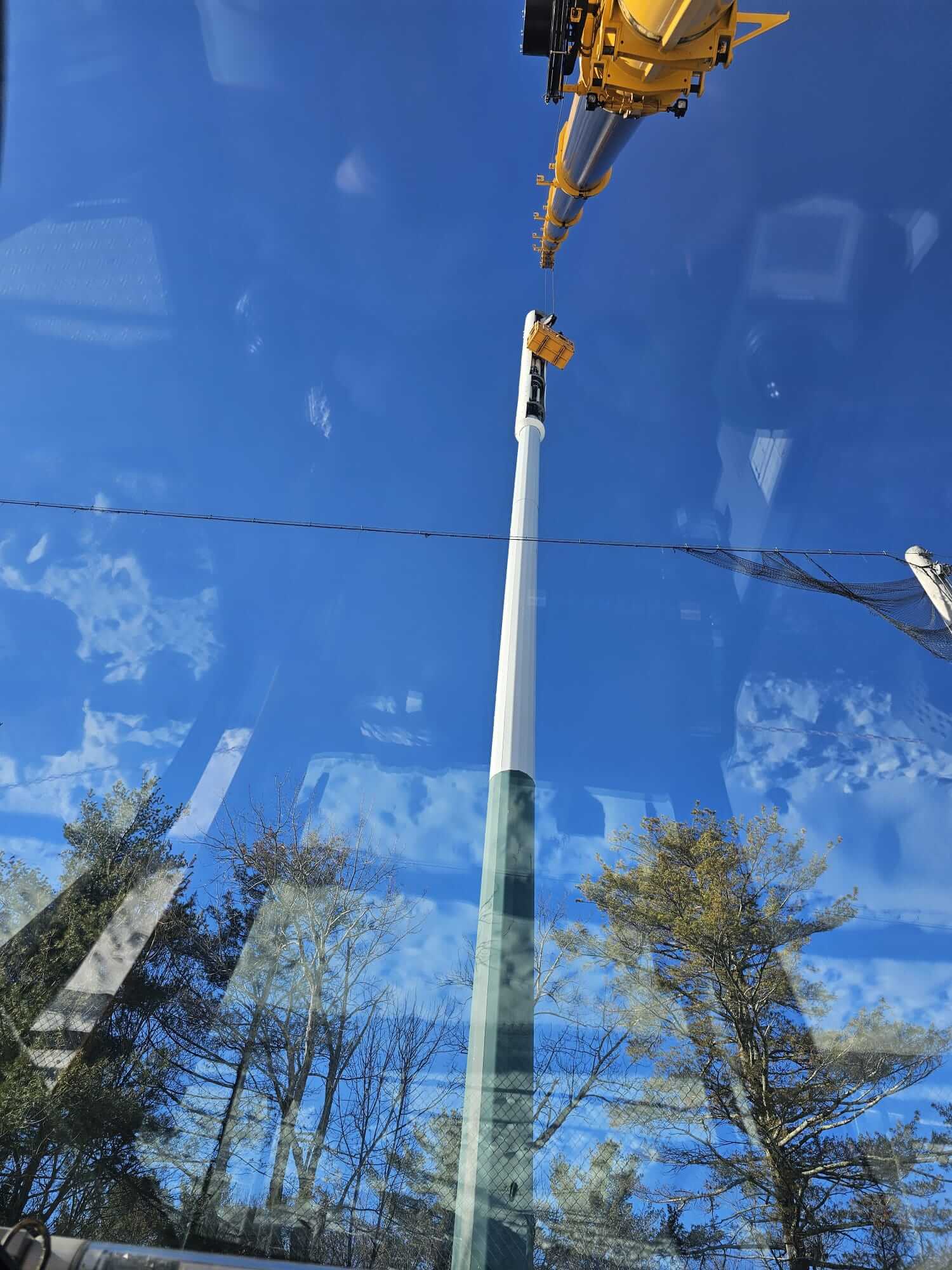
Aerial’s published fleet gives tree contractors several equipment options for short-radius residential jobs, long-reach removals and larger commercial or storm-related work.
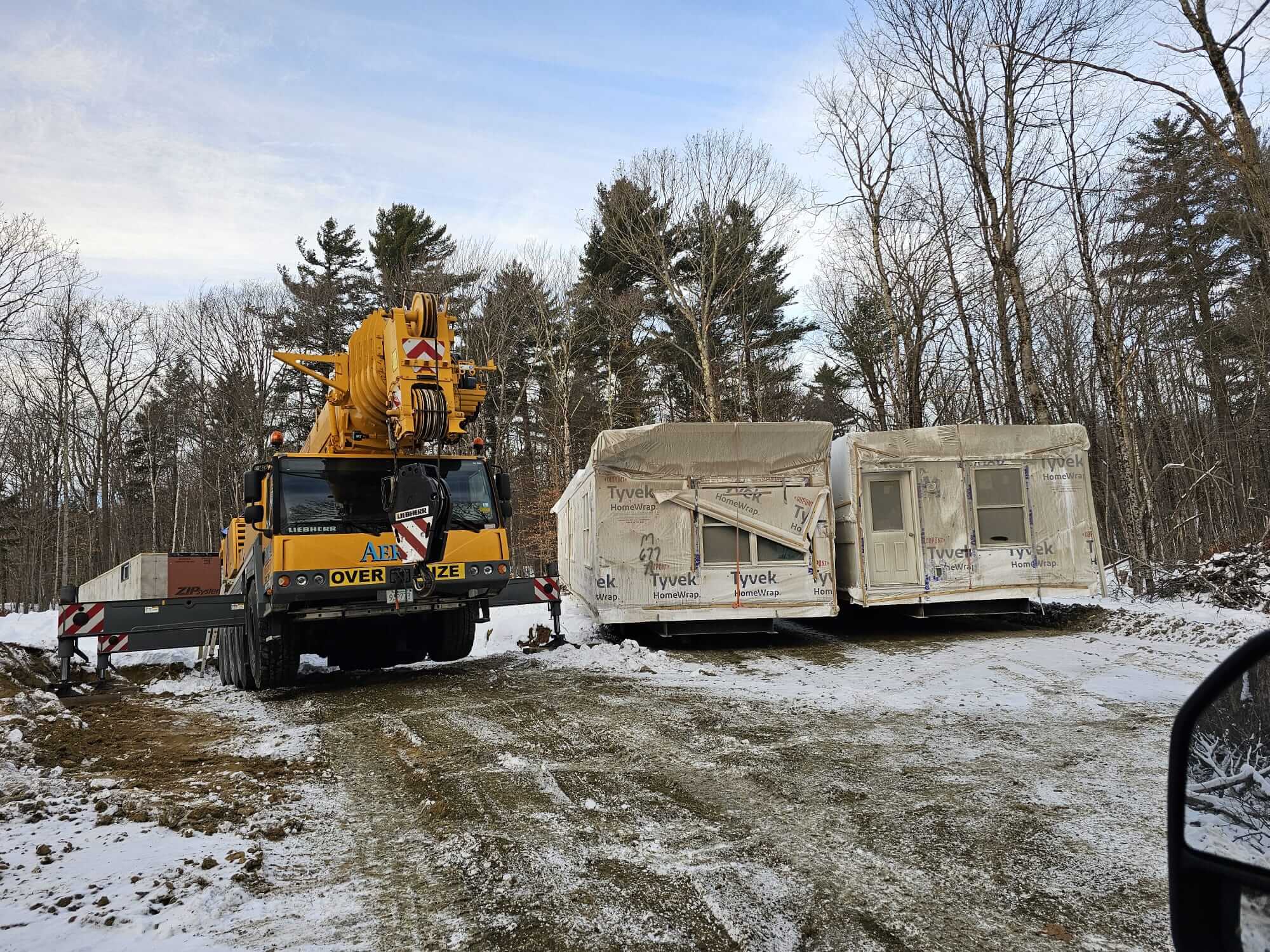
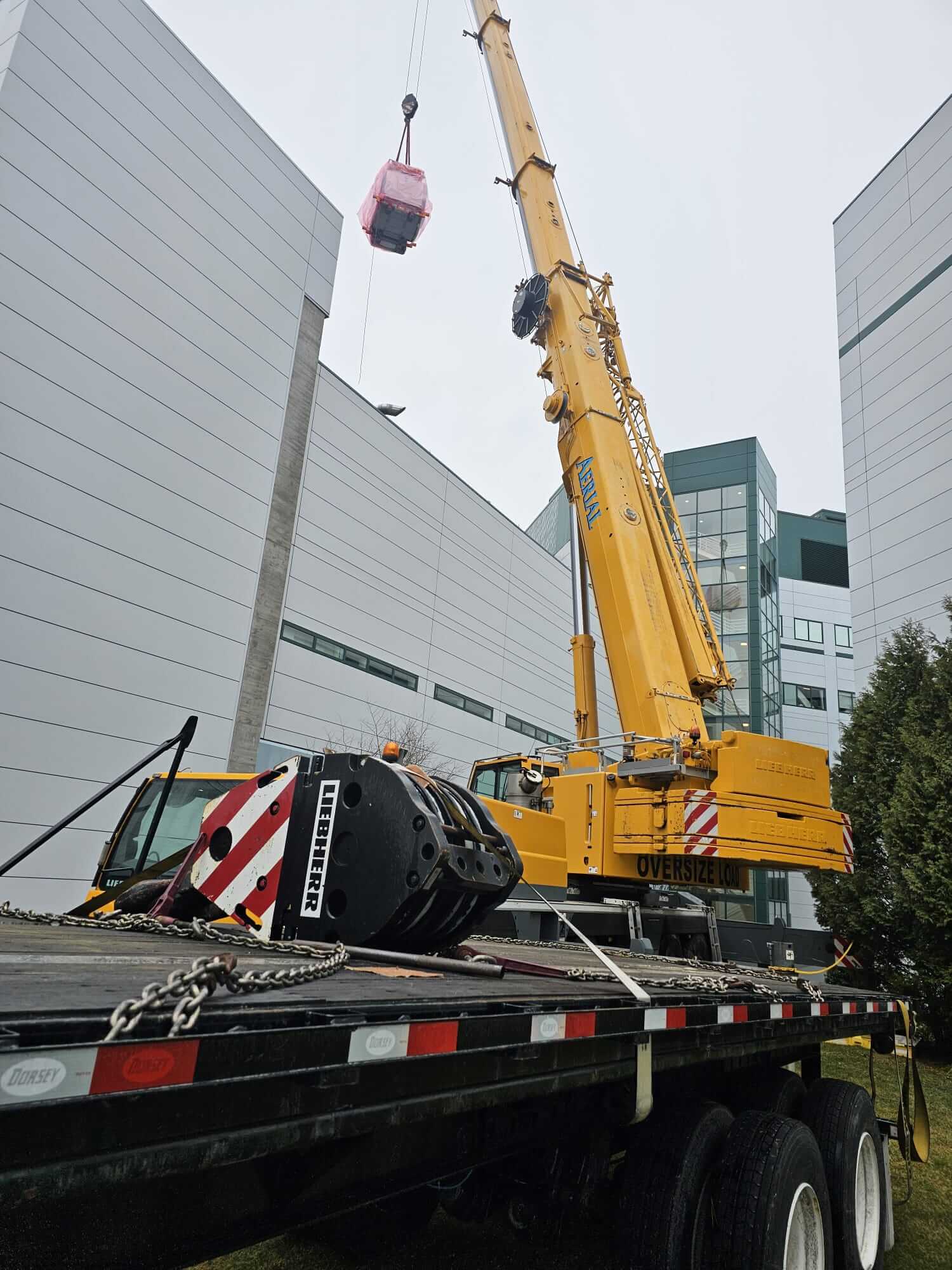
Liebherr LTM 1130-5.1
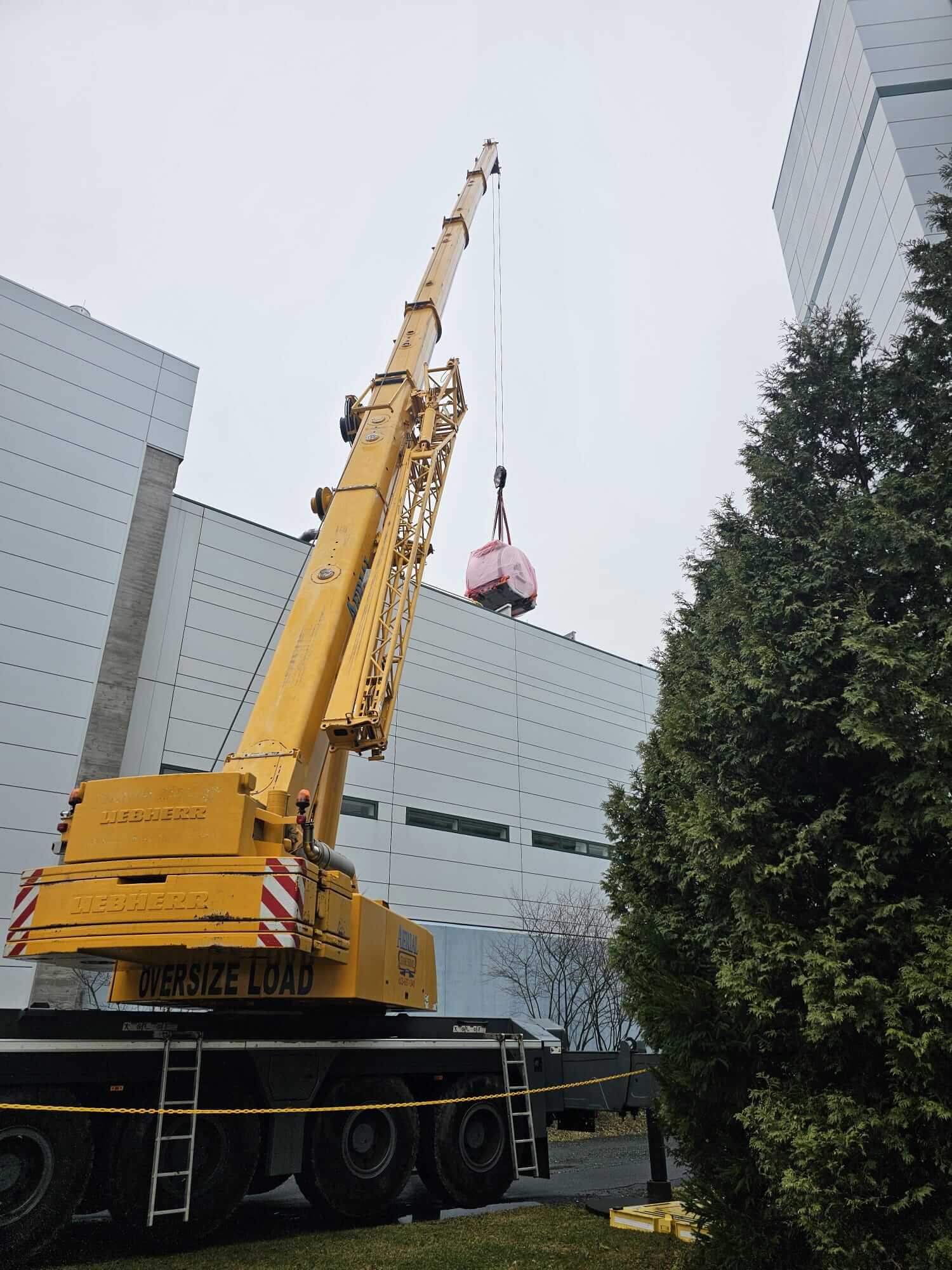
The Liebherr LTM 1130-5.1 is the largest crane currently listed in Aerial’s fleet, with a maximum rated capacity of 145 US tons and a 197-foot telescopic boom. The long boom and all-terrain configuration make it useful when the crane must remain well away from the tree because of buildings, septic areas, landscaping or other setup restrictions.
Liebherr LTM 1090-4.2
The LTM 1090-4.2 is a 120 US ton all-terrain crane with a 197-foot telescopic boom. It provides reach for residential, commercial and storm-related tree projects where a smaller truck crane would run out of chart capacity at the required radius.
Liebherr LTM 1100-5.2
The LTM 1100-5.2 is another 120 US ton all-terrain crane in the fleet, with a 171-foot boom. All-terrain cranes are useful for tree companies that need road mobility combined with higher capacity and reach.
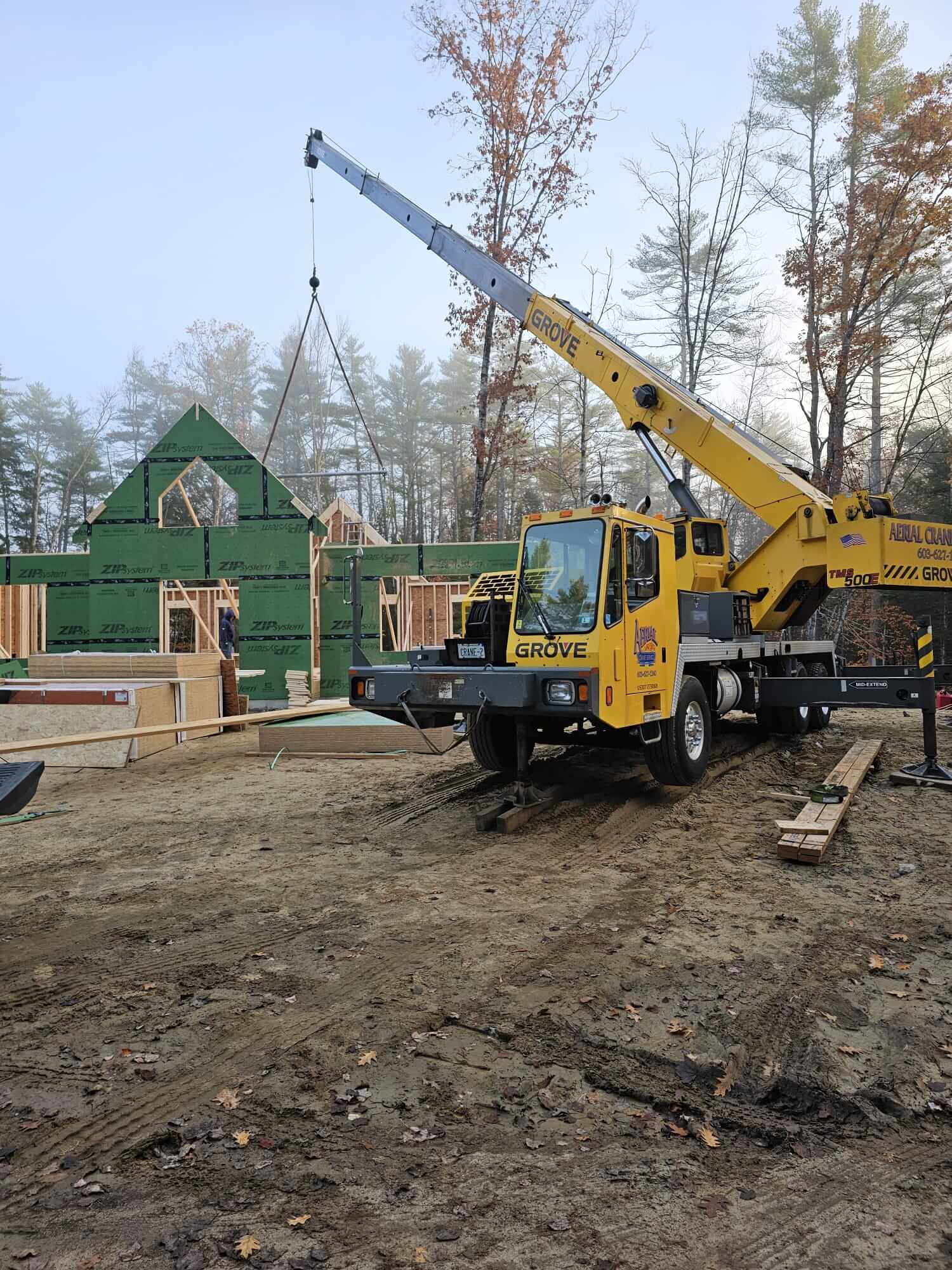
Grove TMS500E
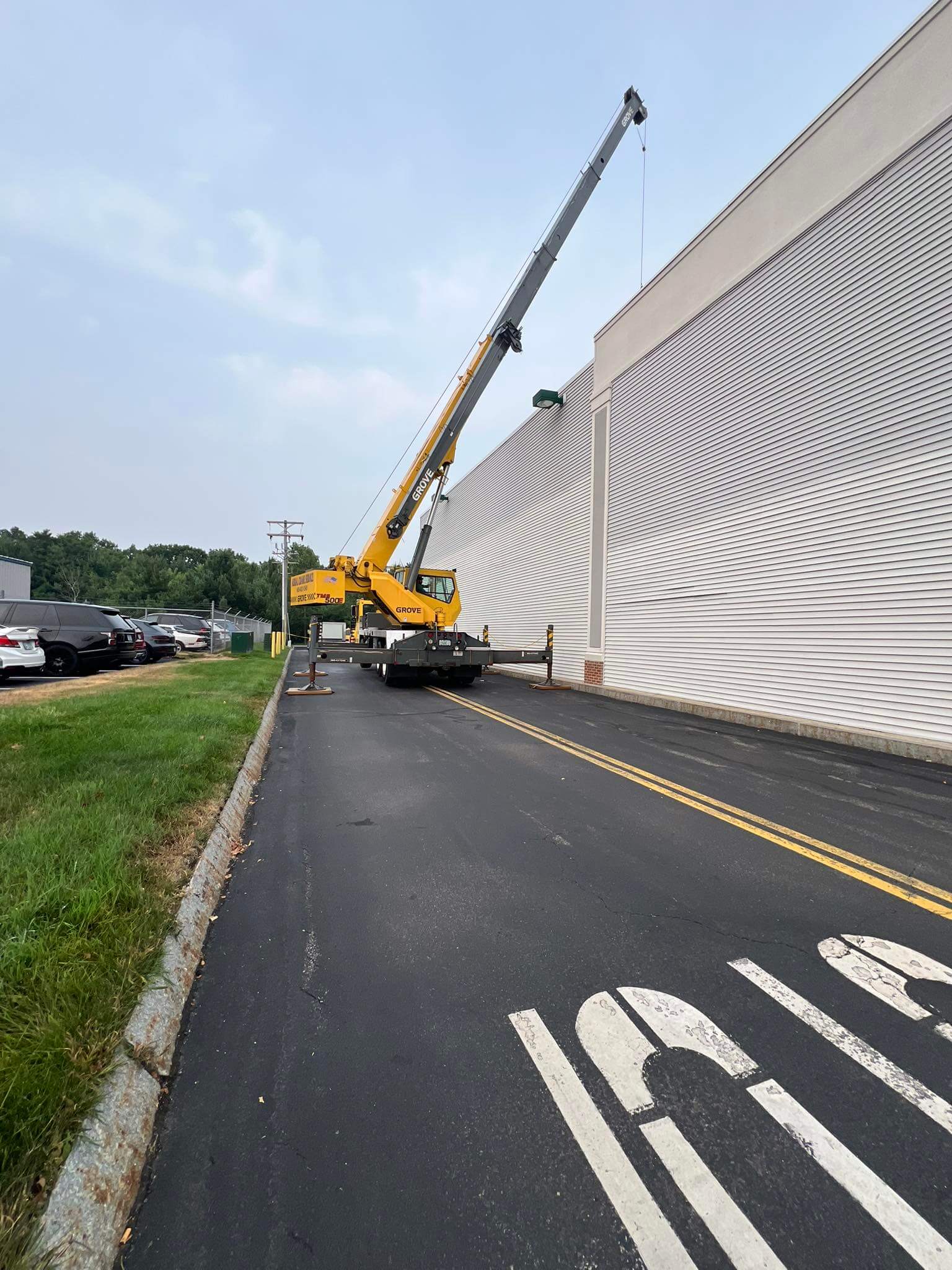
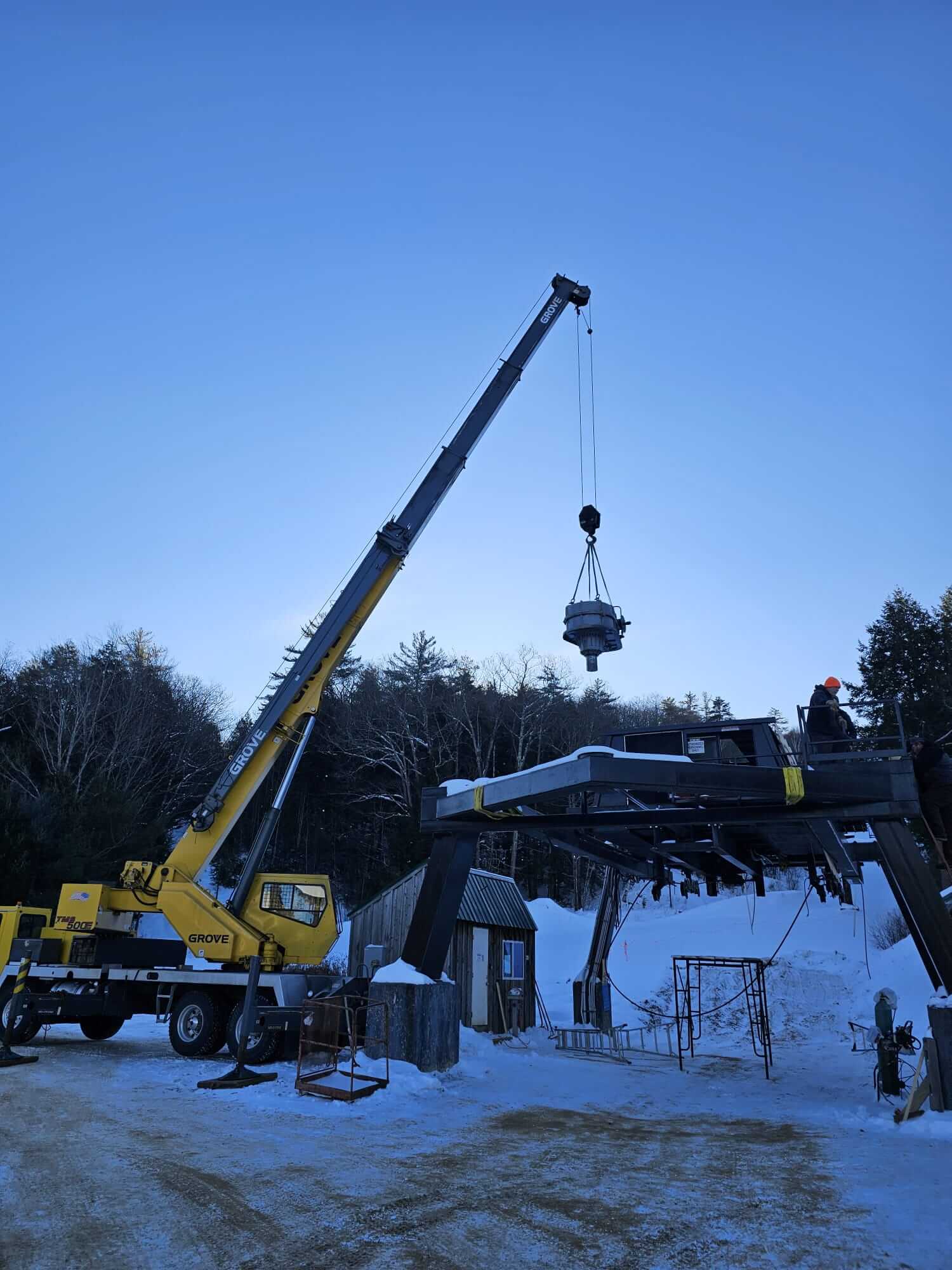
The Grove TMS500E is a 40 US ton hydraulic truck crane with a 95-foot main boom. For tree work with good access and manageable radii, the Grove can provide a more compact setup than the larger Liebherr units.
National 800D Boom Truck
The National 800D is rated at 23.5 US tons with an 80-foot hydraulic boom. It can support lighter pieces, smaller trees and work where a quick, compact setup is appropriate. Aerial also offers dedicated boom truck services.
Cost Factors: What Affects Crane-Assisted Tree Removal Pricing
For a tree company budgeting the crane portion of a New Hampshire job, a practical starting range is approximately $1,000 to $2,500 for straightforward crane support. A full-day job, long-reach setup or larger all-terrain crane can move into the $2,500 to $5,000+ range.
Those figures are regional planning estimates, not an Aerial Crane Service rate sheet. Current 2026 New Hampshire operated-equipment benchmarks place approximately 45-ton boom-truck work around $200–$265 per hour, 60-ton mobile cranes around $235–$315 per hour and 100-ton mobile cranes around $310–$405 per hour before project-specific mobilization and other charges.
The full tree removal price charged to a homeowner is separate because the tree company still supplies the arborist, climber, ground crew, saw work, chipping, hauling and cleanup. Current New Hampshire consumer estimates put many 60-to-80-foot removals around $1,200–$3,200, while very large or crane-intensive removals can exceed $5,000.
The largest crane-cost drivers are:
- Crane size required
- Working radius from crane to tree
- Expected time on site
- Mobilization distance
- Road occupancy or traffic-control requirements
- Access and setup difficulty
- Specialty rigging requirements
- Emergency or short-notice scheduling
Call (603) 491-1268 with the project address, approximate tree height, crane-to-tree distance and photos for a job-specific quote.
Equipment Setup: Space Requirements and Site Preparation
The best time to identify a setup problem is before the crane arrives. Tree companies should review the driveway, street, yard and landing area before scheduling.
Crane Access
Confirm that the crane can physically reach the planned setup area. Narrow roads, low branches, tight driveway entrances, parked vehicles, soft shoulders and overhead utilities can block access even when there appears to be enough room beside the tree.
Outrigger Placement
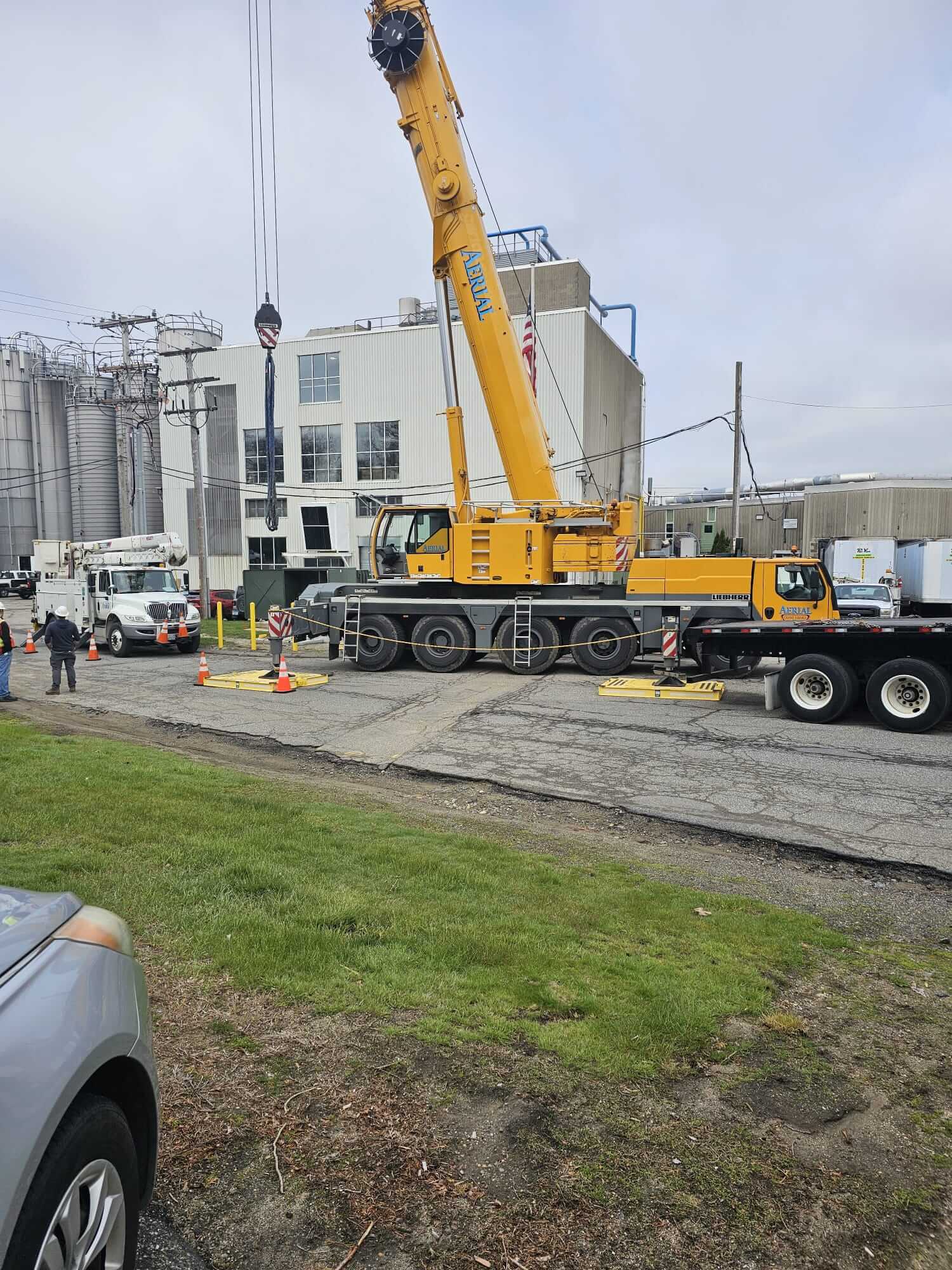
Outrigger placement has to account for the loads transferred into the supporting surface. Septic systems, drainage structures, retaining walls, recently disturbed soil, underground utilities and soft lawns are not automatically suitable support areas.
Frozen winter ground can provide firmer access in some locations, but frozen surface conditions do not prove that the underlying ground or buried structures can support crane loads.
Boom Reach Calculations
Boom reach calculations should use the actual crane position, tree position and planned landing zone. Moving the crane 20 feet farther away to protect a driveway or septic field can materially reduce chart capacity.
Landing Area
The tree crew needs enough room to receive the sections lifted from the tree. The landing zone should keep workers out of the load path while giving the ground crew access to process the material after it is placed.
Property Damage Prevention During Crane Tree Removal
One of the main reasons tree companies bring in a crane is property damage prevention. A tree beside a house may have no safe drop zone. A backyard removal may be surrounded by fences, landscaping, a pool, garage or neighboring property.
Instead of allowing a section to fall through the property, the crew can attach it to the crane and lift it to a selected landing area. That controlled movement can reduce impact to lawns, roofs, fences, pavement, retaining walls and ornamental landscaping.
The crane itself must also be positioned with property protection in mind. Outrigger loads, truck access and landing-zone traffic are reviewed before the lift starts.

Utility Line Clearance and Tree Removal Near Power Lines
Tree work near energized electrical lines requires more than careful crane positioning. OSHA defines line-clearance tree trimming around electrical supply equipment using specific approach distances and qualification requirements.
For many energized lines of 50 kV or less, the basic threshold used in OSHA rules is 10 feet. Workers who are not electrically qualified cannot treat the crane as a way to bypass those clearance requirements.
Aerial can provide crane support to tree contractors working around utility infrastructure, but the tree company and controlling utility must establish the electrical safety conditions before the removal proceeds.
Tree companies working in the service territories of utilities such as Eversource Energy or Liberty Utilities should contact the utility when the tree or planned work can affect energized lines. Utility coordination can include line assessment, temporary de-energization or other controls appropriate to the site.
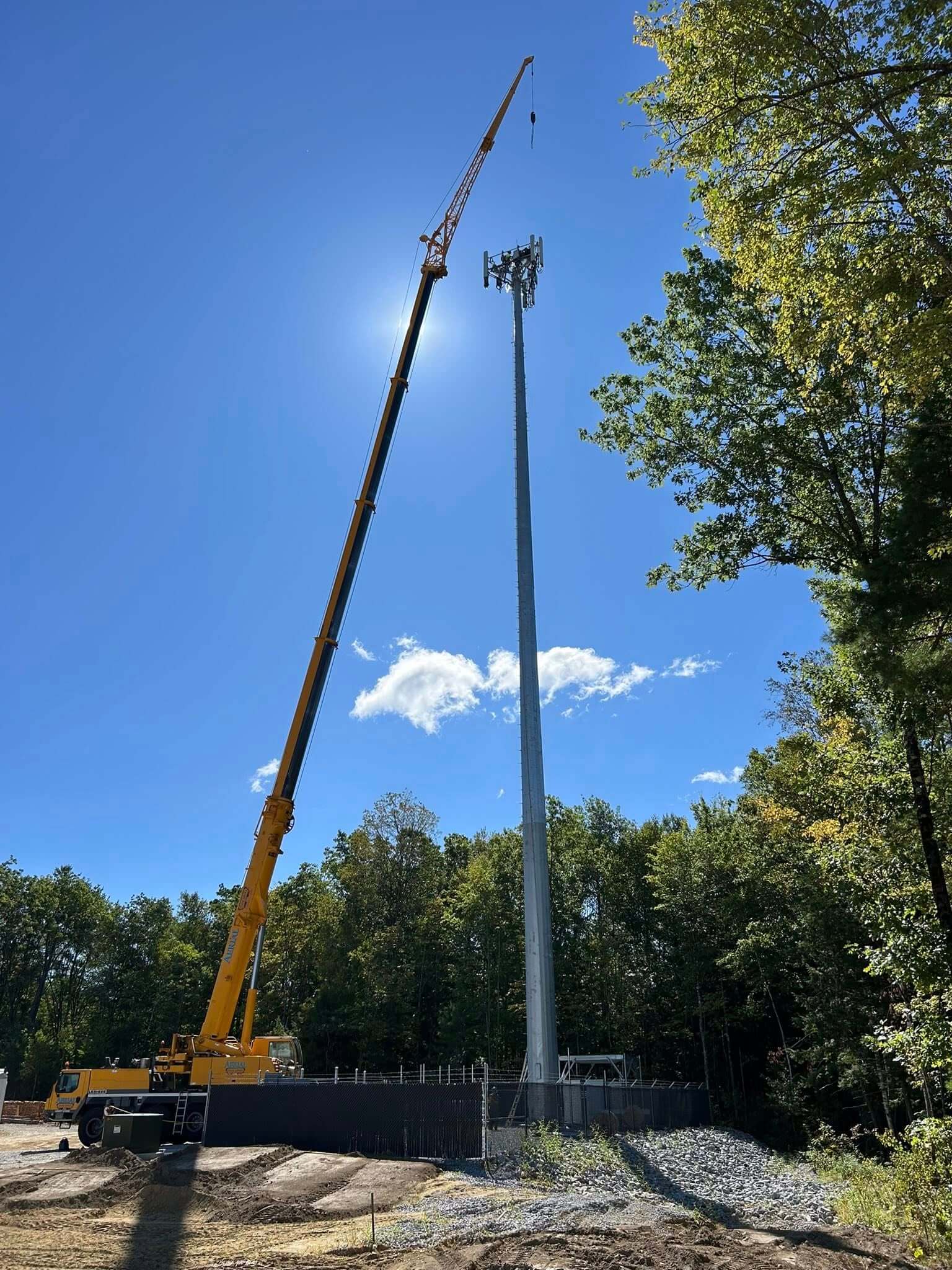
Aerial also works with utility and telecom contractors on crane projects involving electrical and communications infrastructure.
Certified Crane Operators and Safety Standards
Aerial’s role on a tree-removal site is crane operation. The company states that its crane work is licensed, insured and performed by experienced operators.
NCCCO, the National Commission for the Certification of Crane Operators, offers nationally accredited mobile-crane operator credentials covering telescopic and lattice-boom equipment. Aerial’s public site does not currently identify individual NCCCO certifications by name, so a tree contractor whose client or project specifically requires NCCCO documentation should request the operator’s current credential information before the job.
For tree-removal lifts, operator planning includes the crane configuration, manufacturer load charts, radius, boom length, ground support, overhead hazards, weather and communication with the tree crew.
Insurance and Liability Coverage for Crane Tree Work
Aerial Crane Service publicly states that its crane operations are insured. Tree companies should still exchange the project-specific insurance documentation required by their own customer, municipality, general contractor or utility before mobilization.
The crane company’s coverage and the tree company’s coverage serve different scopes of work. Aerial supplies the crane and operator. The tree contractor remains responsible for the arboricultural work, cutting operations and its own employees.
For commercial, municipal or utility projects, request certificates of insurance early enough for the property owner or project manager to review them before the scheduled date.
Permitting and Road Closure Coordination in NH, MA, ME and VT
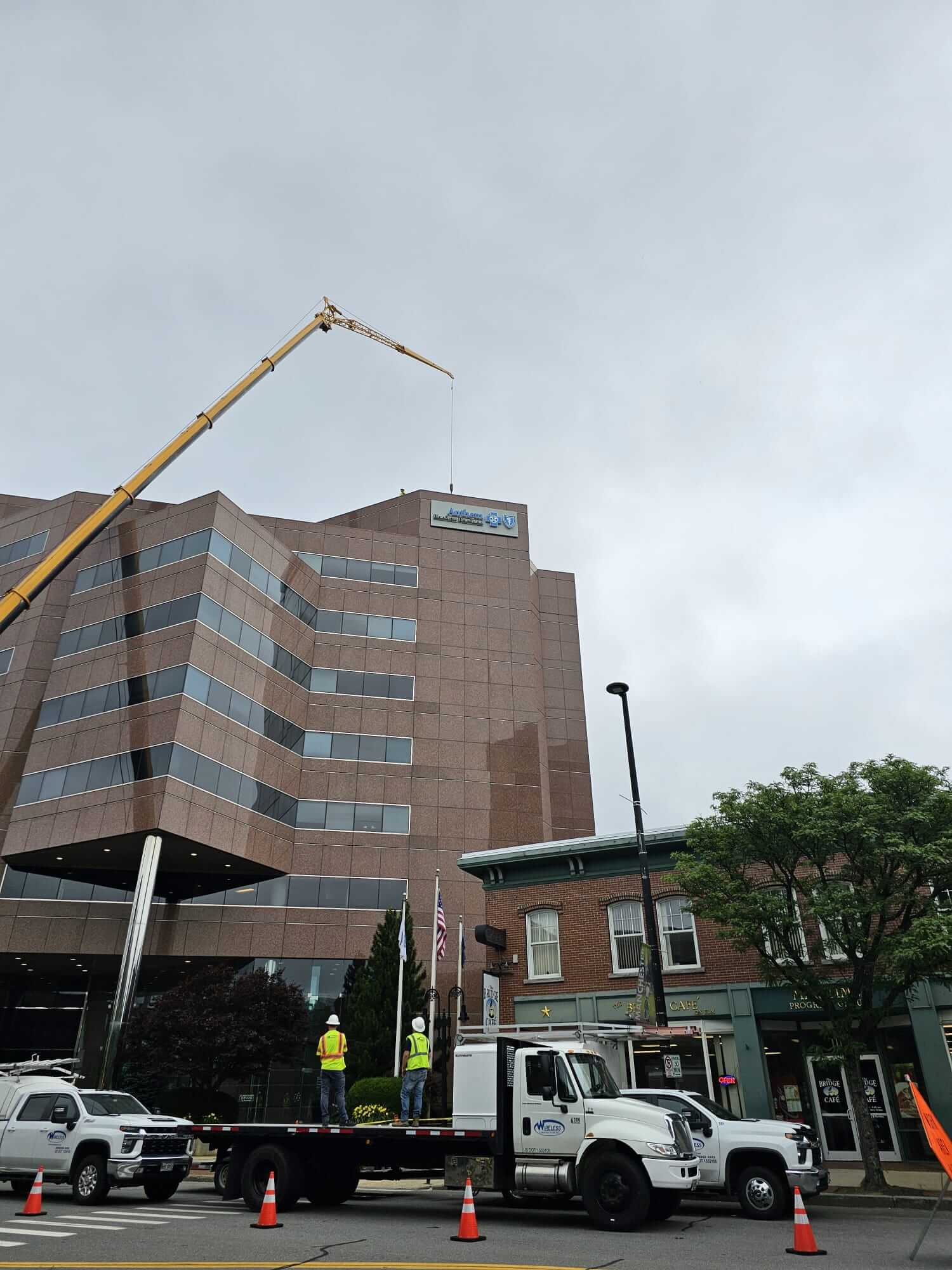
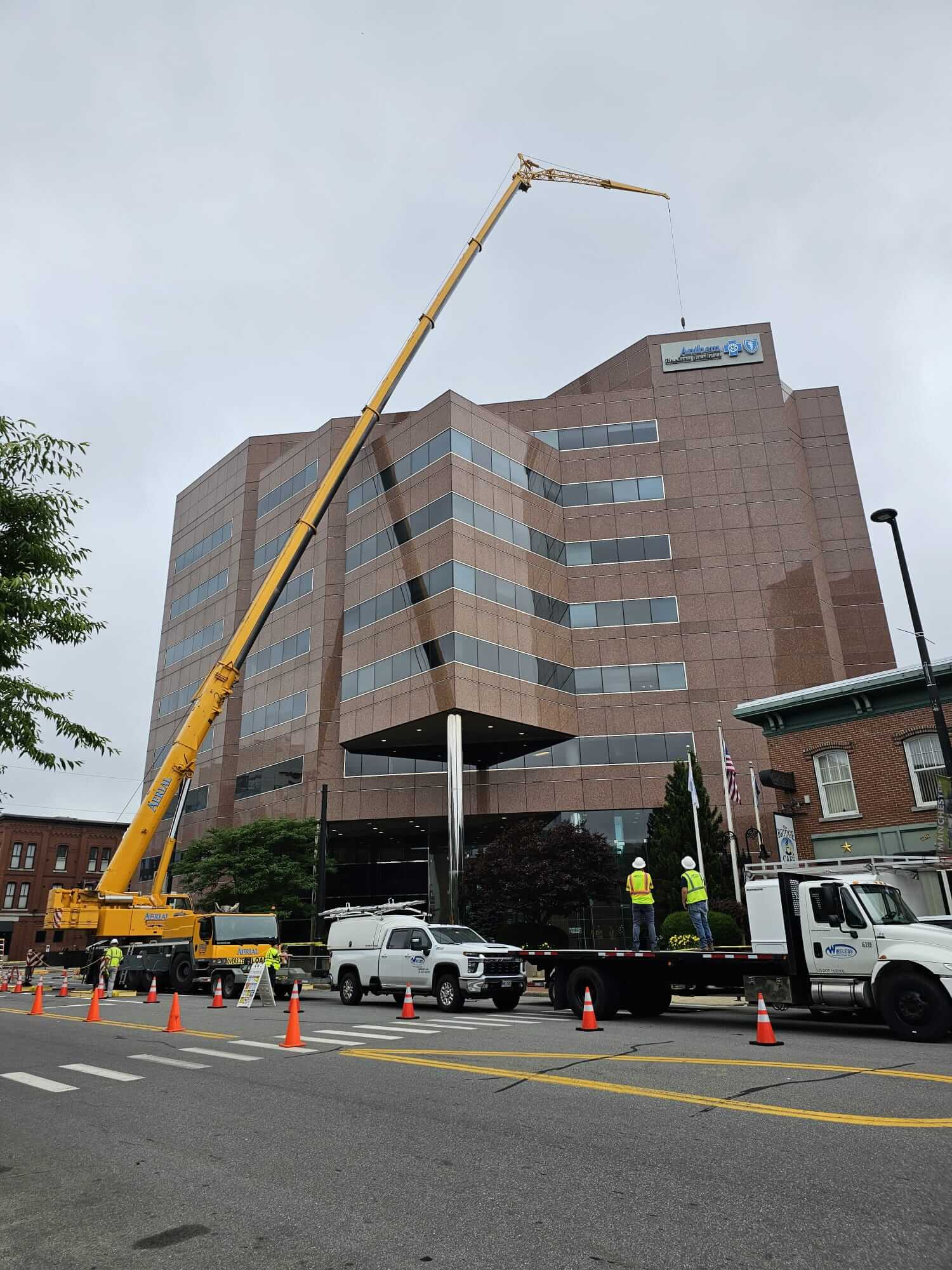
A crane placed entirely on private property may not require the same permits as a crane occupying a travel lane, shoulder or public right-of-way. Tree companies should identify road-occupancy requirements before confirming the lift date.
In New Hampshire, work affecting a state-maintained roadway can require coordination with the New Hampshire Department of Transportation. Municipal streets are generally controlled locally. Massachusetts, Maine and Vermont also use state and municipal permitting systems for work affecting public roads and rights-of-way.
The crane company needs the approved setup location and work window before arriving. Road-closure conditions affect the crane position, outrigger layout, landing zone and time available to complete the picks.
For residential work on a local road, the tree company or property owner should confirm permit responsibility with the municipality before scheduling. For state highway work, confirm the requirements with the applicable transportation authority.
Winter Tree Removal: Special Considerations in New England
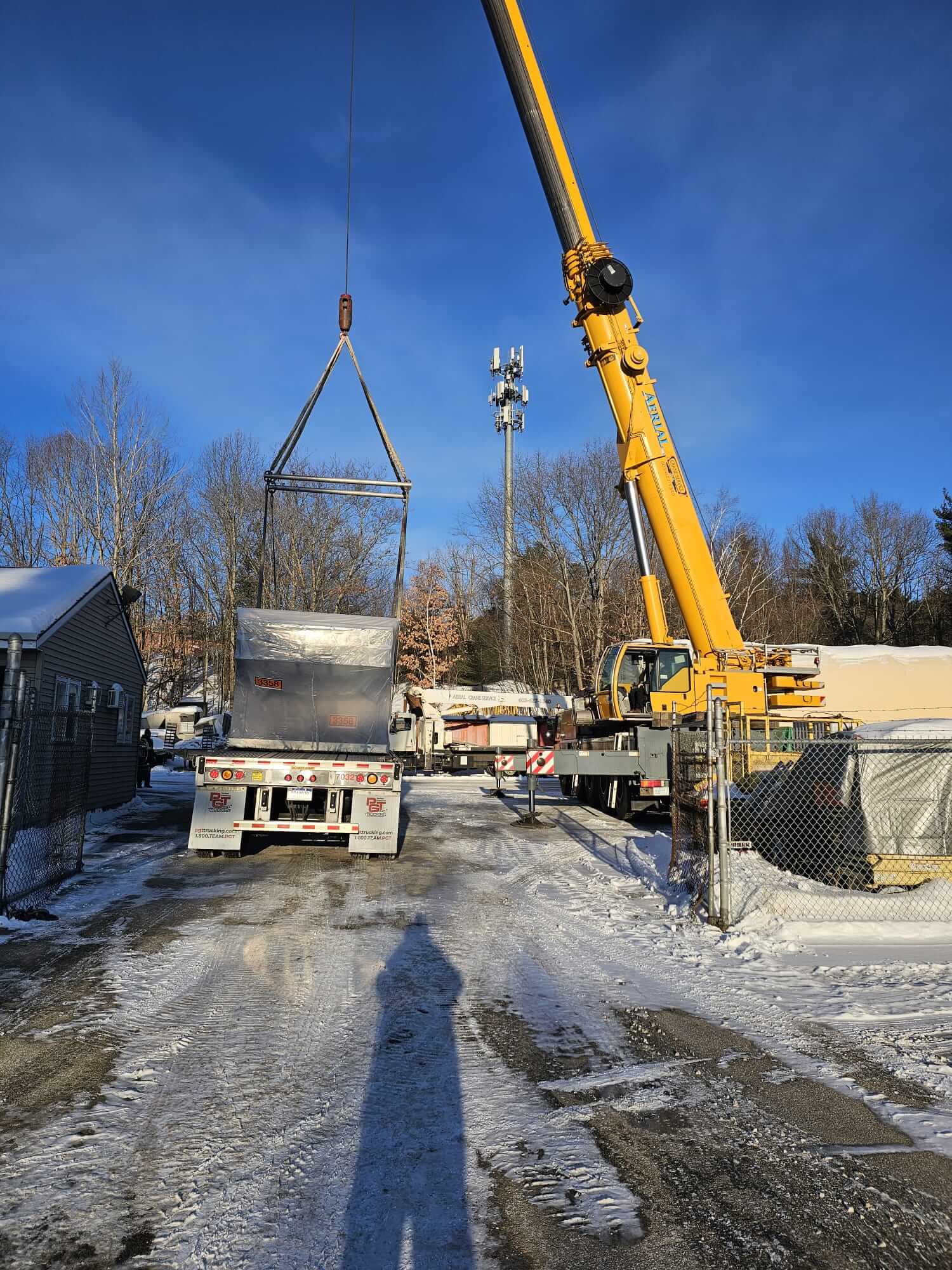
Winter does not automatically stop crane-assisted tree removal. In fact, frozen conditions can sometimes improve access to areas that would be soft or muddy during spring. The crane still needs a verified setup surface, and snow can conceal slopes, curbs, drainage structures and other hazards.
New England ice storms create another type of tree-removal call. White pines, oaks and other mature trees can suffer broken tops, hanging limbs, splits and partial failures after snow, ice and wind loading.
Winter planning should address:
- Snow-covered access routes
- Ice around crane setup and crew work areas
- Frozen or concealed ground conditions
- Reduced daylight
- Wind and visibility
- Ice-loaded limbs and shifting section weights
- Utility damage following storms
- Safe access for the tree crew and ground personnel
White pine removal after storm damage can involve long, flexible tops and tall sections. Oak tree removal can produce dense, heavy trunk sections. In both cases the tree crew should plan conservative pick sizes and communicate estimated weights to the crane operator before the cut.
Emergency Response Times Across Our Service Area
Aerial advertises 24/7 support and assists with urgent tree-removal crane requests. For a straightforward emergency in southern New Hampshire, same-day crane availability may be possible when a suitable crane and operator are open. Aerial does not publish a guaranteed emergency response time.
For the fastest dispatch review, the tree company should call (603) 491-1268 and send:
- Exact address
- Tree height and approximate trunk diameter
- Photos from several angles
- Crane-to-tree distance
- Nearby buildings and utilities
- Available road or driveway setup space
- Whether the tree is on a structure or blocking a road
- Whether utility lines are involved
Large storm events can increase demand across New England quickly, so tree companies should call as soon as they know crane assistance is required.
How Long Does a Typical Crane-Assisted Tree Removal Take?
A straightforward crane-assisted removal is commonly planned as a half-day to one-day crane job. A smaller tree with an open landing area can move faster. A large tree requiring many picks, a long reach, traffic control or careful work around structures can consume the full working day.
The crane time is reduced when the tree crew is ready before the operator arrives. Confirm the climber, rigging, chipper, landing zone and hauling plan before the scheduled crane time begins.
How Far in Advance Should Tree Companies Book the Crane?
For routine tree removal, book the crane about one week ahead when possible. For a 120- or 145-ton all-terrain crane, road closure, municipal project or tightly scheduled commercial job, use two to four weeks.
Storm work is different. Call as soon as the tree company identifies the need for crane support. Aerial accepts urgent requests, with actual mobilization controlled by equipment and operator availability.
What Is the Largest Tree Aerial Has Removed With a Crane?
Aerial Crane Service does not publish a verified record identifying its single largest tree by species, height or weight, so this page does not invent one.
What can be verified is the lifting equipment available to tree contractors. Aerial’s fleet reaches up to the 145 US ton Liebherr LTM 1130-5.1 with a 197-foot telescopic boom. The fleet also includes two 120-ton all-terrain cranes, a 40-ton Grove truck crane and the National 800D boom truck.
For an unusually tall white pine, mature oak or long-reach backyard removal, send Aerial the site photos and measurements. The operator can identify which fleet unit has the required chart capacity at the planned radius.
Applications and Projects We Support
Residential Tree Removal
Crane support is useful when tree companies are working near homes, garages, pools, septic areas, fences, sheds and landscaping. Lifting sections over the obstacle can provide a controlled path from the tree to the landing zone.
Commercial Property Tree Removal
Aerial supports tree contractors at office properties, apartment complexes, schools, medical sites, retail centers, industrial facilities and other commercial locations where tree work has to be coordinated around normal operations.
Storm Damage Cleanup
Broken limbs, leaning trunks and trees resting on structures can create unstable loading. Crane assistance allows the tree crew to support and move sections as part of a planned removal.
Hazardous Trees
Decay, splits and storm damage can make conventional climbing and lowering more difficult. The arborist determines the tree-removal method while Aerial provides the lifting support needed for the planned sections.
Municipal and Public Works Tree Projects
Municipal crews and tree contractors may use crane support for trees beside roads, parks, schools, sidewalks and public buildings. Traffic-control and public-right-of-way requirements should be settled before crane setup.
Construction Site Clearing
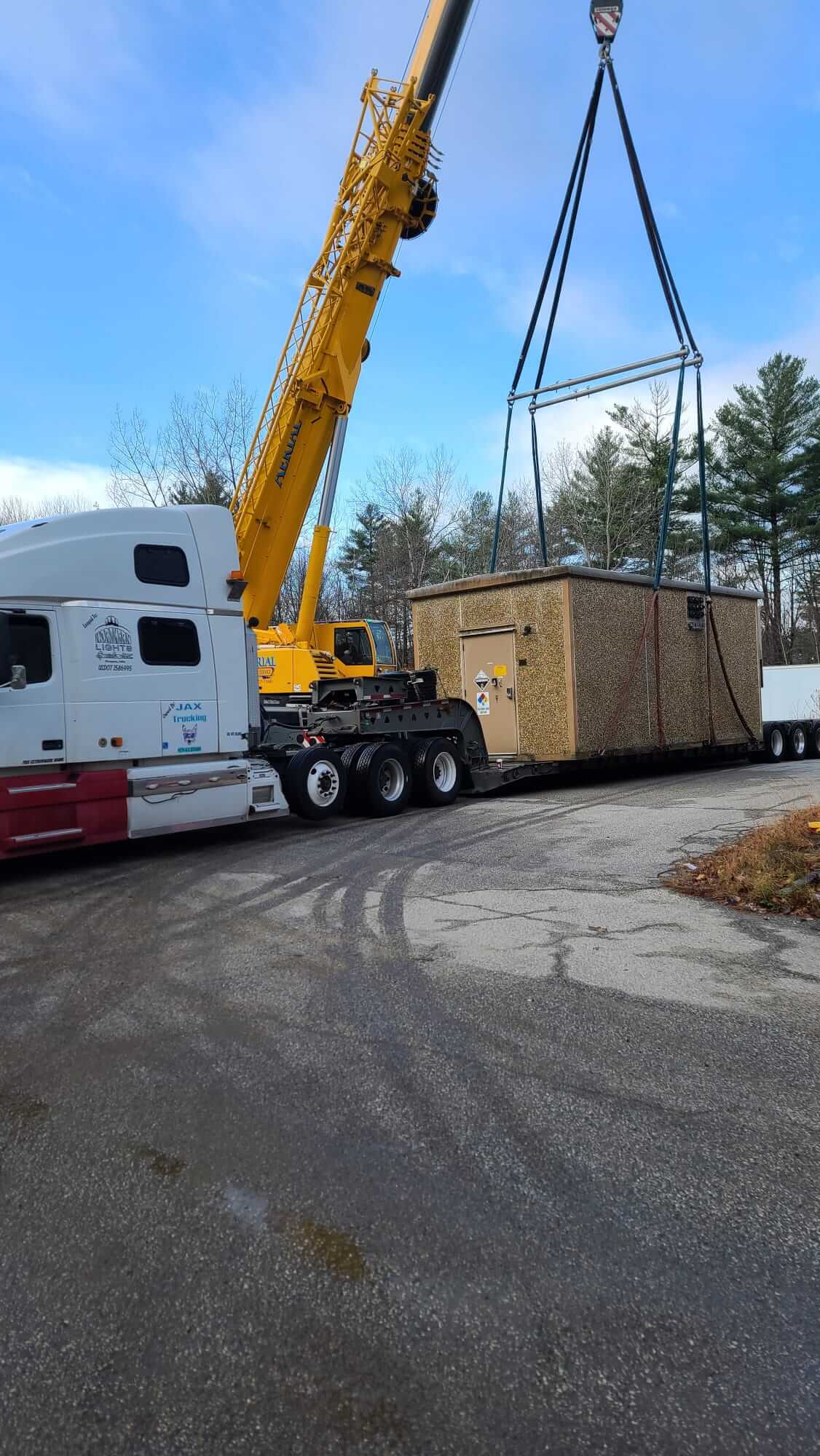
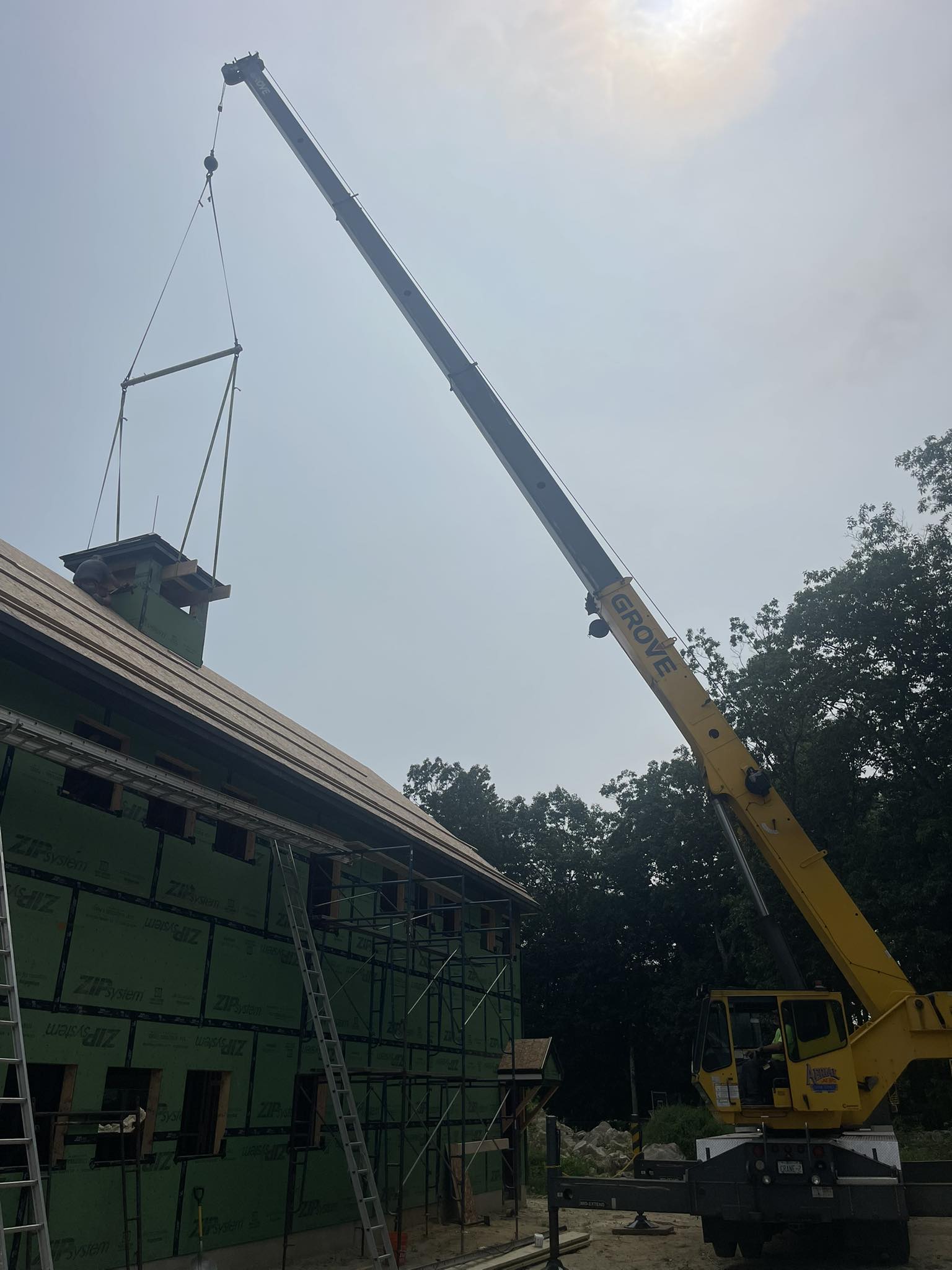
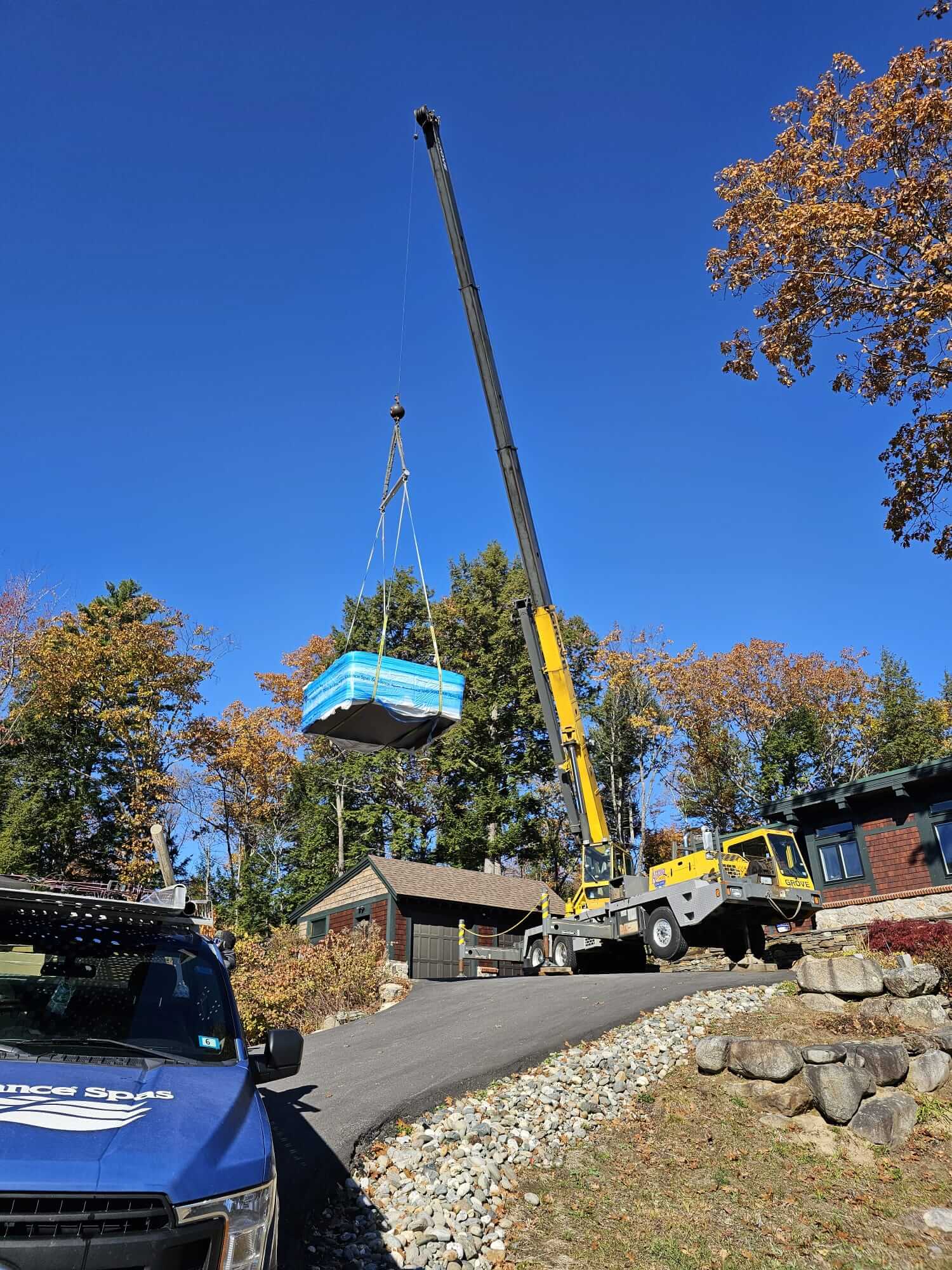
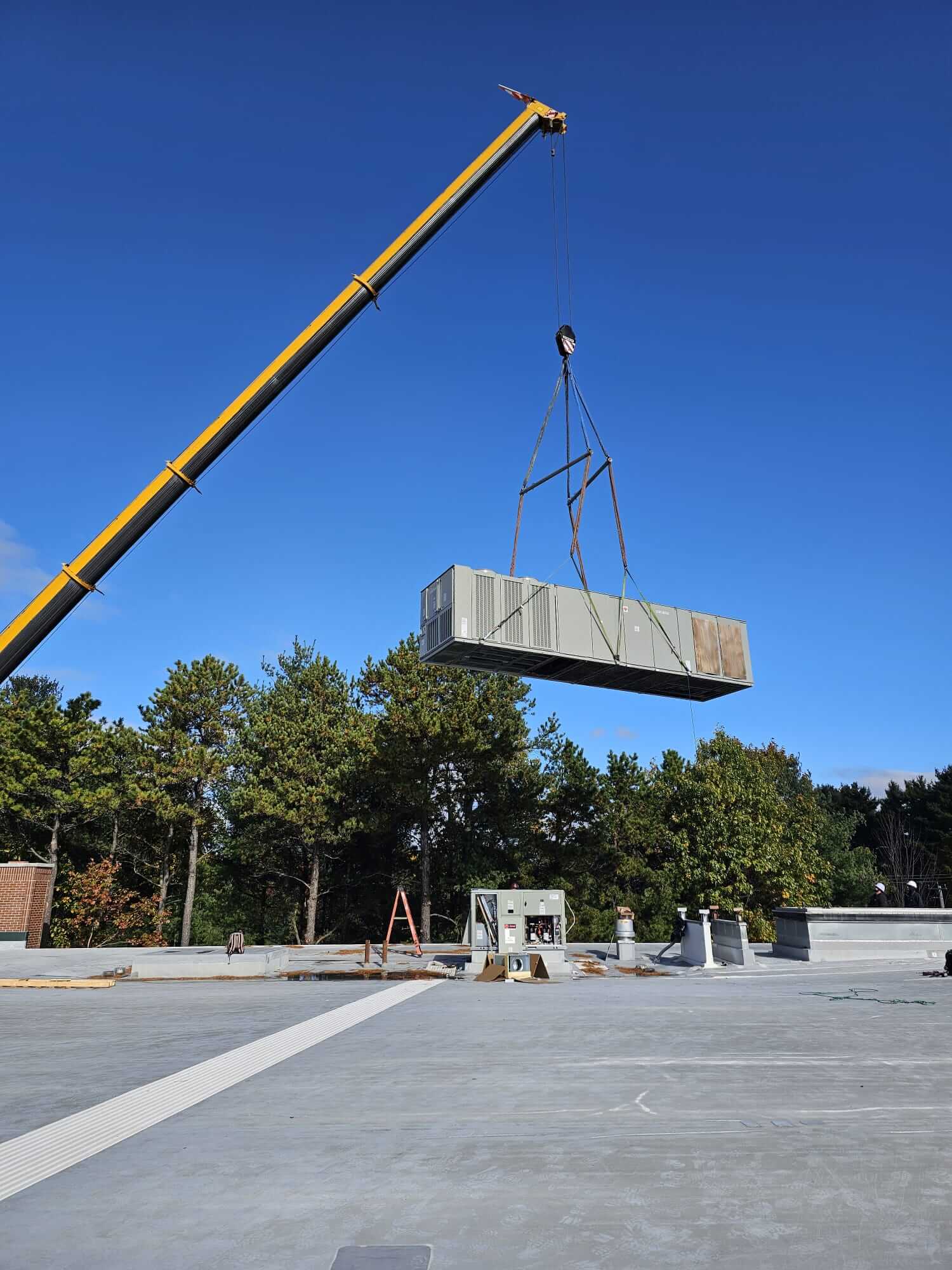
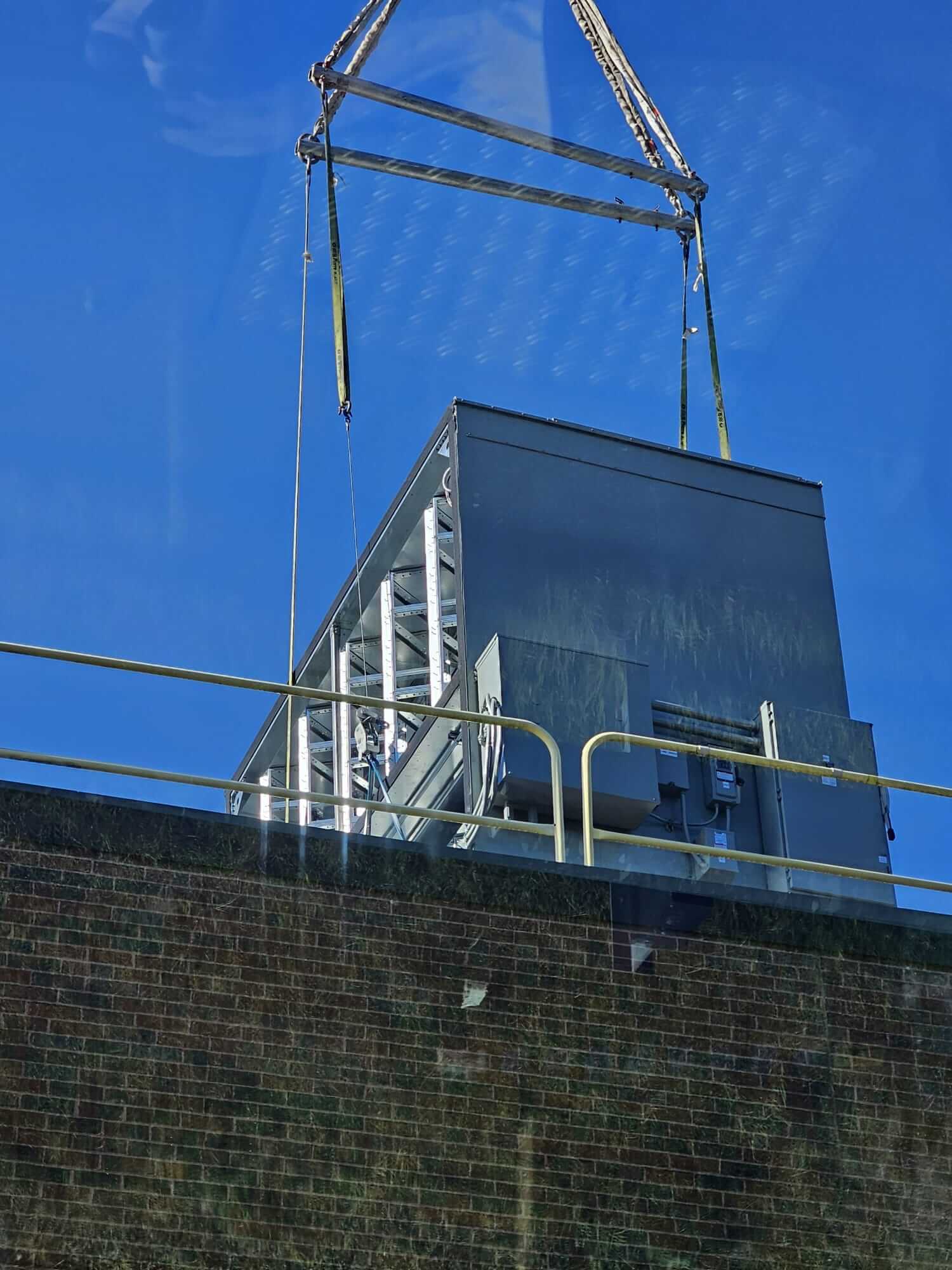
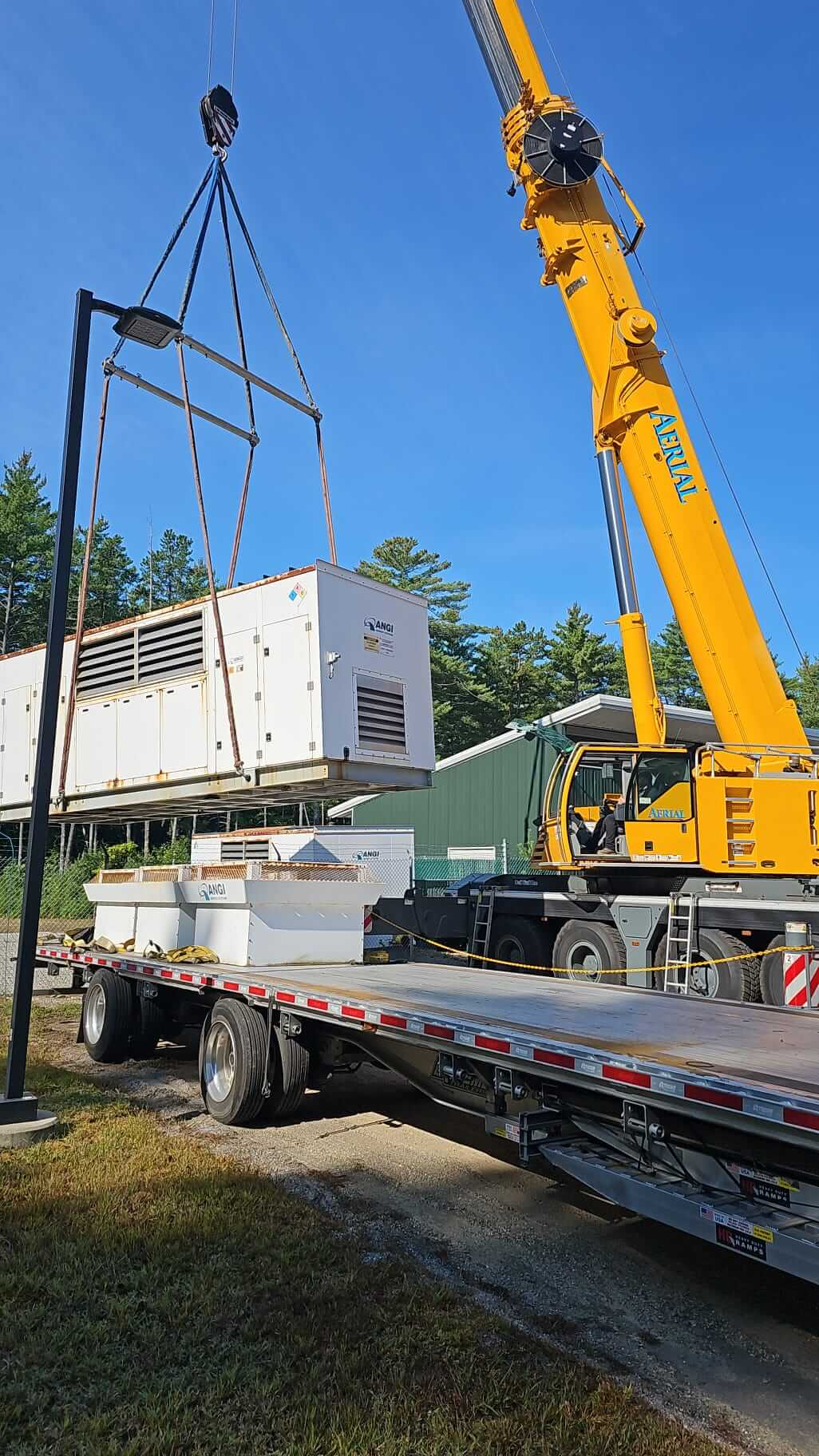
Tree removal may be one step before building or site work begins. Aerial can continue supporting the contractor with steel erection, HVAC lifts, generator placement, transformer installation, precast concrete lifting and modular construction.
Crane Service Areas for Tree Removal Companies
Aerial Crane Service is based in Bow, NH and provides crane support throughout New Hampshire, Massachusetts, Maine and Vermont.
New Hampshire tree companies can also find local crane service information for
Manchester, Nashua, Concord, Hooksett, Bedford, Goffstown, Merrimack, Londonderry, Portsmouth, Dover, Rochester, Salem, Weare, Amherst, Hudson, Milford, Exeter, Derry and Windham.
Regional service extends through Massachusetts, including Worcester and Lowell; Maine, including Portland; and Vermont.
Call to Schedule Crane-Assisted Tree Removal Support
If your tree removal company needs crane support for a large oak, tall white pine, storm-damaged tree, limited-access property or removal near a structure, call Aerial Crane Service at (603) 491-1268.
Aerial supplies the crane and crane operator. Send the tree location, estimated height, crane-to-tree distance, photos, utility information and preferred date so the team can review the crane size and scheduling requirements.