
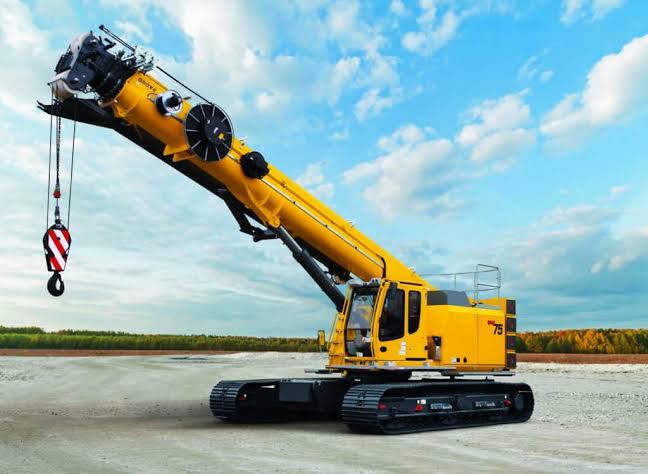
For most construction projects that need fast mobilization, road travel, a telescopic boom, and a relatively compact setup, a mobile crane is usually the more practical choice. A crawler crane starts to make more sense when the project stays in one place for a long period, involves repeated heavy picks, requires movement across a prepared jobsite, or benefits from the crawler’s tracked undercarriage.
That still doesn’t tell us which crane belongs on a particular job.
When we plan a lift, we don’t choose equipment from a “mobile crane vs crawler crane” chart alone. Load weight, working radius, required height, ground support, access, crane setup area, and the sequence of the work can matter more than the crane category itself. That’s the same approach we use when evaluating our mobile crane rental services for construction projects across New England.
Mobile Crane vs Crawler Crane at a Glance
| Factor | Mobile Crane | Crawler Crane |
|---|---|---|
| Undercarriage | Wheels | Tracks |
| Typical stabilization | Outriggers on many configurations | Wide tracked base |
| Road mobility | Much better; many units are built for road travel | Usually transported to the project |
| Jobsite relocation | Fast when access permits | Slow, but useful for repeated movement within a large site |
| Ground loading | Concentrated at tires and outrigger reactions during setup and lifting | Distributed across tracks |
| Boom | Telescopic booms are common | Lattice booms are common on larger crawlers |
| Mobilization | Generally simpler | Can require multiple transport loads and assembly |
| Best fit | Shorter projects, multiple sites, commercial construction, constrained schedules | Longer projects, repeated heavy lifting, major infrastructure, and large fixed jobsites |
That table is a starting point. The decision changes once we put actual load data and site geometry into it.
1. Mobilization Can Decide the Job Before Lifting Starts
A crawler crane may have an advantage once it is assembled and working on a large site, but getting it there is part of the job.
Larger crawlers are typically transported rather than driven between projects. Depending on the machine, mobilization can involve boom sections, counterweights, and other components arriving on separate trailers, followed by assembly at the site. That investment can make sense when the crane will remain there for weeks or months and perform repeated lifts.
Mobile cranes solve a different problem. Truck-mounted and all-terrain cranes can move between projects much more efficiently. That matters when a contractor has a short lifting window, several locations to cover, or no reason to keep a crane sitting on site after the work is complete.
Our published fleet reflects that type of work. We operate truck-mounted and all-terrain equipment for construction, industrial, and specialty lifting across New Hampshire, Massachusetts, Maine, and Vermont. For a contractor coordinating several trades, faster mobilization can remove a lot of dead time from the schedule. Our general contractor crane services are structured around that kind of coordination.
2. Setup Space Matters as Much as Access Through the Gate
Seeing enough room for a crane to drive onto a jobsite does not mean there is enough room to perform the lift.
A mobile crane operating on outriggers needs an appropriate setup footprint. We need to consider where the carrier will sit, where the outriggers will extend, whether delivery trucks can reach the pick area, and whether the boom can work without conflicts from buildings, utilities, or other equipment.
Crawler cranes eliminate the conventional outrigger footprint, but they bring their own space requirements. The machine itself can be large, and assembly, boom configuration, counterweights, and component delivery may require substantial staging space.
This is why “tight site equals mobile crane” is too simple. A mobile crane may fit through the site entrance and still have no workable outrigger position. A crawler may have excellent stability once assembled but no practical place to stage its components.
For either type, we want the site layout before the crane arrives.
3. Tracks Help on Difficult Ground, but Ground Still Has to Support the Crane
Crawler cranes are well known for spreading their weight over a large track area. That can make them better suited to certain prepared construction surfaces where a wheeled crane would face difficult access or outrigger-support conditions.
That does not mean a crawler can simply work on mud because it has tracks.
Ground firmness, slope, compaction, drainage, and supporting materials all enter the discussion. Known underground hazards such as voids, tanks, or utilities also matter.
Mobile crane planning places the same kind of attention on the setup area. Outrigger reactions can be substantial, so the question is not whether the parking lot, shoulder, or construction pad “looks solid.” We need to know whether the setup can support the planned crane configuration.
When access or support is questionable, that issue should be solved during planning rather than after the crane is on site.
4. Lifting Capacity Is Really a Geometry Question
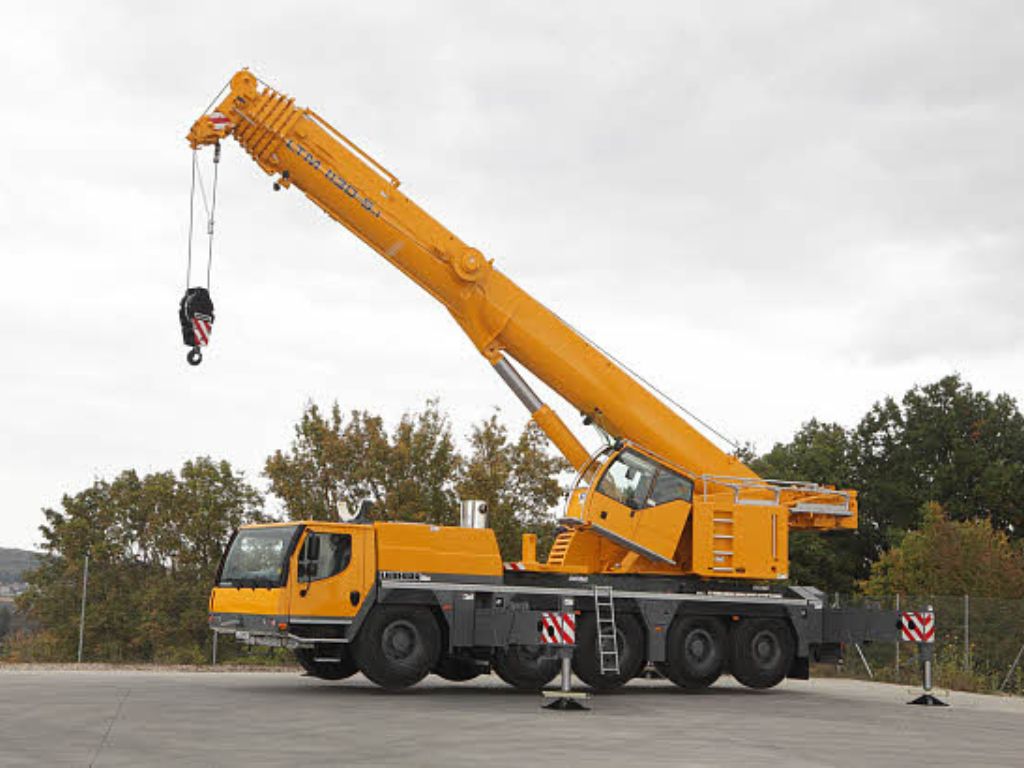
This is where a lot of crane comparisons become misleading.
A crane advertised as a 100-ton, 120-ton, or 145-ton machine cannot lift that maximum rating at every radius and boom length. The usable capacity changes as the crane configuration and geometry change.
On our own projects, we start with information such as:
- load weight and dimensions;
- pick location;
- final set location;
- working radius;
- required lift height;
- available setup position;
- rigging requirements.
We then evaluate the appropriate load chart for the planned configuration. Our guide on how to determine what size crane you need goes deeper into that process.
This is also why statements such as “crawler cranes lift more than mobile cranes” need context. Very large crawler cranes exist, and crawlers dominate some heavy infrastructure applications. Large all-terrain mobile cranes can also perform substantial construction lifts.
The correct comparison is the capacity available for your load at your required radius, not the largest number printed on the crane.
Rigging changes the calculation too. Hook blocks, slings, spreader bars, and other lifting gear contribute to the total suspended load. When a project requires more involved load handling, our crane rigging services are planned along with the crane rather than treated as an afterthought.
5. Pick-and-Carry Capability Needs a Machine-Specific Answer
Crawler cranes are commonly selected for projects where a crane needs to lift a load and travel within a large jobsite. Their tracks and operating configurations can make that capability useful for repetitive construction or assembly work.
The phrase “crawler cranes can travel with a load and mobile cranes cannot,” however, is too broad.
Travel with a suspended load must be permitted for the specific equipment and configuration, and the applicable limits and operating procedures have to be followed. Load position, boom position, ground support, route, and travel speed can all affect what the machine is allowed to do.
For planning purposes, we would never assume pick-and-carry capability from the word “mobile” or “crawler” alone. The equipment documentation and actual lift plan decide that.
6. Project Duration Changes the Cost Equation
A mobile crane can be a strong fit when the project consists of one lift, one shift, or a series of scheduled lifting days. The crane can mobilize, set up, perform the planned work, and leave without the assembly commitment associated with a large crawler.
That can work especially well for HVAC replacements, commercial steel, precast pieces, mechanical equipment, and other construction lifts where the crane is needed for a defined part of the schedule.
A crawler can become more attractive when mobilization is spread across a long project. If the machine will remain assembled and perform repeated heavy lifts over weeks or months, the initial transportation and assembly effort represents a smaller portion of the overall job.
That is why rental rate alone doesn’t answer the cost question.
A contractor also has to consider mobilization, supporting equipment, assembly, site preparation, staging, permits where applicable, rigging, crew time, and the effect the crane choice has on the rest of the construction schedule.
Our contractor crane rental booking guide covers several of the job details worth confirming before equipment is scheduled.
Where All-Terrain Mobile Cranes Fit
There is another category worth separating from the simple “wheels vs tracks” comparison: the all-terrain mobile crane.
All-terrain cranes combine road mobility with multi-axle carriers intended for more demanding access conditions than a conventional road truck crane. They still require proper setup and ground support for lifting, but they give contractors an option between a conventional truck crane and the much larger mobilization commitment of a crawler.
Our heavier published fleet is centered around Liebherr all-terrain cranes. It includes 120 US ton LTM 1090-4.2 and LTM 1100-5.2 units and a 145 US ton LTM 1130-5.1. Our mobile fleet also includes a Grove TMS500E truck crane and a National 800D boom truck.
That range lets us approach many construction lifts without assuming that every heavier load requires tracked equipment.
Which Crane Works Better for Steel, Concrete, Bridges, and Industrial Construction?
The application provides useful context, but we still need the lift details.
For steel erection projects, mobile cranes can work well when beams, columns, joists, or trusses arrive in sequence and the crane can operate from a defined setup position. Our planning also considers delivery timing and coordination with steel crews, general contractors, and other trades.
Long-duration steel or infrastructure work with repeated very heavy picks across a large site may push the decision toward a crawler.
Bridge construction creates a similar split. A crawler can make sense on major long-term infrastructure work, while mobile cranes remain useful for projects where suitable access and lift geometry allow the work to be completed from planned positions. We also provide crane service for bridge beam placement.
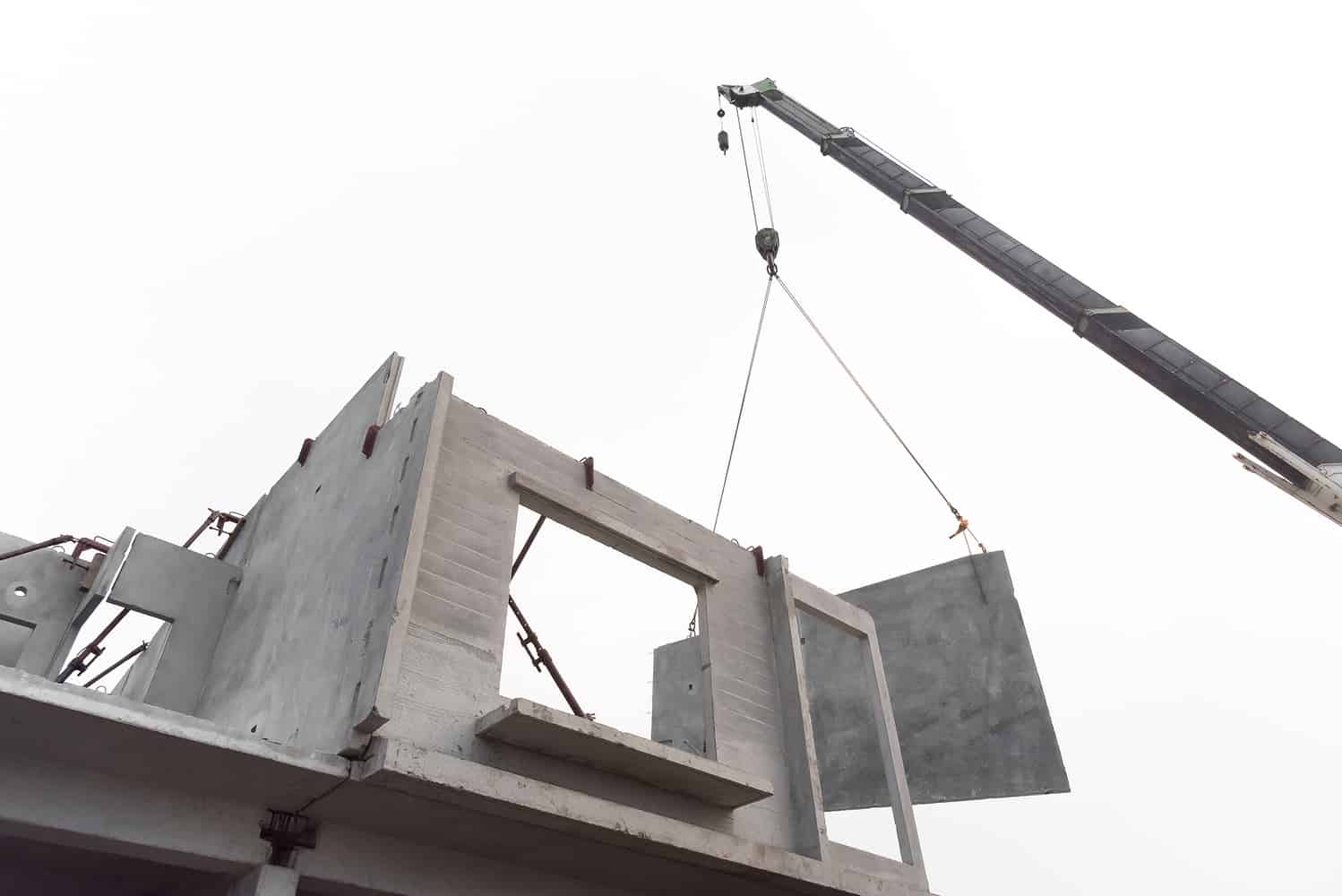
For building construction, precast concrete lifting may be well suited to a mobile crane when panel or component weights, radius, and staging can be planned around an accessible setup location.
For plant work, equipment changes, and facility upgrades, mobile equipment often fits the shorter lifting windows common to industrial crane projects, particularly when production areas, buildings, and existing infrastructure limit where a crane can be placed.
How We Decide Whether a Mobile Crane Fits the Construction Project
Before we recommend equipment from our fleet, we want the information that changes the lift.
A good starting package includes the load weight and dimensions, job address, pick point, final placement point, required height, site drawings or photos, and the expected construction schedule.
From there, we can evaluate radius, boom requirement, access, setup footprint, ground conditions, rigging, and surrounding hazards. On an active construction project, we also need to know how the crane fits around delivery trucks and the work of other trades.
Sometimes that evaluation confirms that one of our mobile or all-terrain cranes fits the work.
Sometimes the conditions point toward equipment outside that approach. A long-duration project built around repeated very heavy lifts, extensive on-site travel, or a crawler-specific configuration should be treated that way from the start.
That is a better decision than selecting a crane because one category sounds stronger on paper.
If you’re planning a construction lift in New Hampshire, Massachusetts, Maine, or Vermont, send us the load information, project location, lift height, site photos, and target date. We can review the lift geometry and jobsite conditions and determine which equipment in our fleet fits the work.