

You do not automatically need one general state-issued crane permit every time a crane operates on private property in New Hampshire. The permit question depends on where the crane travels, where it sets up, whether it occupies a public road or sidewalk, whether traffic has to be controlled, and whether the crane exceeds legal highway dimensions or weights while being transported.
That means “Do I need a crane permit in NH?” usually has more than one answer.
A lift that takes place entirely inside a private commercial lot may have a different permit path from a rooftop HVAC lift where the crane needs to sit in a downtown travel lane. A large mobile crane moving between projects may also need a transportation permit even when the lift itself occurs entirely on private property.
The best time to separate those requirements is before the crane is scheduled.
New Hampshire Does Not Have One General Crane Setup Permit
There is no single statewide permit that every contractor obtains simply to place a mobile crane on a private New Hampshire jobsite.
A crane can still be subject to federal safety rules, transport requirements, local construction rules, and site-specific approvals.
Those are separate issues.
For example, imagine a contractor replacing a rooftop unit at a warehouse. The crane enters through a private driveway, sets up in the parking lot, stays clear of public sidewalks and roads, and leaves without exceeding applicable road limits.
That situation does not create the same permitting issues as placing the crane on Main Street and closing one traffic lane for the morning.
The equipment and load might be identical. The location of the crane changes the permit question.
Aerial Crane Service’s crane service in New Hampshire follows that site-specific approach. The company reviews lift location, access, ground conditions, rigging, and surrounding conditions before the crane is dispatched.
Crane Operator Certification Is Different From a Crane Permit

One source of confusion is the word “license.”
New Hampshire does not currently have a general state crane-operator licensing program comparable to the hoisting-license system used in Massachusetts.
Federal OSHA requirements still apply to covered crane operations in construction.
Under OSHA’s crane standard, employers must make sure covered operators satisfy applicable training, certification or licensing, and employer-evaluation requirements.
Certification does not give a crane permission to occupy a street.
A street permit does not prove that an operator meets OSHA requirements.
These are separate parts of the job.
This distinction matters when a GC is reviewing paperwork. A certificate for an operator should not be mistaken for a municipal approval to block traffic, and a city encumbrance permit does not replace the crane company’s safety obligations.
Aerial states that its New Hampshire crane rentals are operated services rather than equipment-only rentals and that its operators are certified. Contractors should still handle job-specific documentation through the normal project safety process.
You May Need a Local Permit When the Crane Enters the Public Right-of-Way
The permit question changes quickly when the crane leaves private property.
A public right-of-way can include more than the travel lane itself. Depending on the municipality, it can include sidewalks, shoulders, parking areas, and other public space adjoining the roadway.
If the crane needs to occupy or restrict those areas, contact the city or town before scheduling the lift.
New Hampshire municipalities use different names for these approvals.
Nashua uses a Permit to Encumber when work temporarily narrows or closes a pedestrian walkway or city street.
Manchester requires an Encumbrance Permit when work closes or narrows pedestrian space, closes traffic lanes, or obstructs a city right-of-way.
Portsmouth has its own street-encumbrance permitting process for construction activities affecting public ways.
The form name changes. The physical issue is similar.
If the crane needs public space to set up, the local authority needs to be part of the planning.
Outriggers Can Trigger the Right-of-Way Question Too
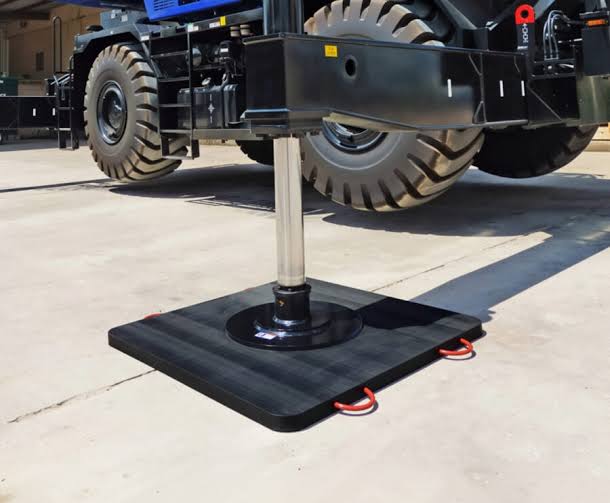
Contractors sometimes focus on where the crane’s tires are parked and overlook where the outriggers will land.
That can be a mistake.
A mobile crane may sit mostly inside a private driveway while an outrigger, mat, or barricaded work area extends into a sidewalk or public shoulder.
The usable crane footprint is larger than the chassis.
Before deciding that a lift stays entirely on private property, look at the full setup: carrier position, outrigger spread, mats, counterweight clearance where applicable, boom movement, barricades, rigging area, and space needed to keep people outside the operating zone.
Aerial’s crane rental for general contractors includes setup area and traffic control among the conditions reviewed before a crane is selected and dispatched.
For permit planning, the setup drawing matters more than the address alone.
A Lane Closure Usually Creates More Than a Crane Question
Once a crane occupies a traffic lane, the project may need a traffic plan as well as permission to occupy the road.
Manchester’s encumbrance process, for example, includes traffic-control or detour planning, barricades, signs, insurance requirements, and coordination with municipal departments.
Nashua separately lists encumbrance permits and road or lane-closure approvals.
Portsmouth requires advance authorization before construction work interferes with normal vehicle or pedestrian travel and may require traffic details on specified streets.
That is why “we only need the lane for two hours” is not enough information.
Someone needs to determine how vehicles will pass, whether pedestrians can maintain an accessible route, whether parking spaces are affected, and whether police details, flaggers, barricades, or detours are required.
The crane company needs that information because it can change the setup.
The GC needs it because it can change the schedule.
State Roads Can Bring NHDOT Into the Picture
A city or town street and a state-maintained highway are not always handled through the same office.
The NHDOT permit system directs contractors to separate permitting resources for right-of-way activities on state roads.
If a planned crane setup, staging area, or traffic restriction affects a state-maintained route, confirm the required approval with NHDOT rather than assuming a municipal permit covers the work.
This can matter on projects where the building is privately owned but the only practical crane setup is along a state route in front of the property.
The property line does not determine the whole permit path.
Where the crane and work zone actually sit does.
Oversize and Overweight Crane Travel Uses a Separate Permit System
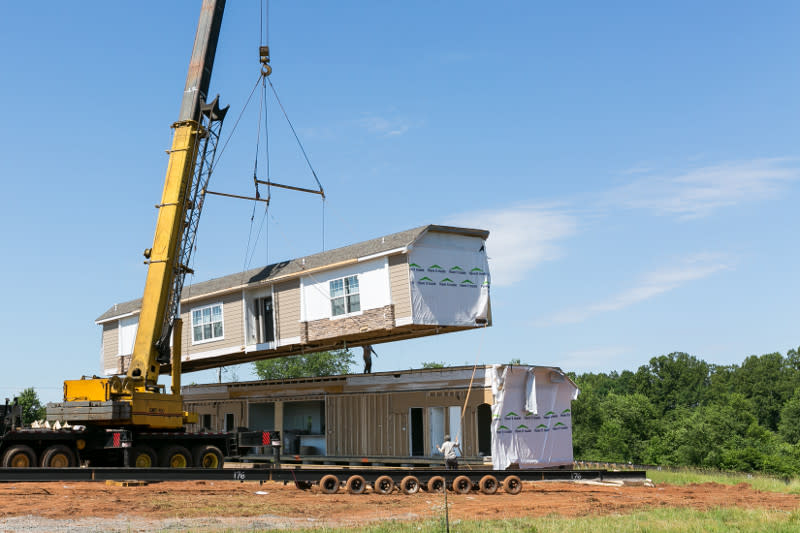
The permit needed to move a crane can be completely separate from the permit needed to operate it at the site.
New Hampshire DOT maintains an Oversize/Overweight Permit Office for vehicles and loads that exceed applicable legal road dimensions or weight limits.
The current NHDOT permit system screens dimensions such as width, height, vehicle length, and axle-based weight.
That becomes relevant with larger cranes, counterweight transport, support vehicles, and other equipment moving between projects.
An oversize crane permit in New Hampshire is therefore primarily a transportation issue.
It authorizes the permitted vehicle or load to travel under specified conditions and routes.
It does not automatically authorize the crane to block a city street once it reaches the project.
One lift can involve both kinds of approval.
Route Restrictions Can Affect the Day You Schedule the Crane
An oversize or overweight permit is not simply permission to drive anywhere.
NHDOT publishes travel restrictions and permit conditions that can affect routes, times, weekends, holidays, bridges, construction areas, and seasonal road conditions.
The department’s current system also identifies route restrictions for permitted moves and can require route surveys for certain large loads.
This means mobilization planning belongs in the project schedule.
If a contractor schedules a large crane for an early morning lift, the question is not only whether the crane is available at that time.
The crane and any required support equipment also have to be able to reach the site under the applicable travel conditions.
That is one reason larger lifts deserve more lead time than a last-minute call may allow.
The Construction Project May Have Permits Even When the Crane Does Not
There is another layer that gets missed in crane-permit searches.
The underlying work may have its own building, mechanical, electrical, utility, or construction permits.
Replacing rooftop mechanical equipment is a good example.
The crane may be able to set up entirely on private property without a street encumbrance permit, while the mechanical project itself still requires approval from the local building department.
The same can apply to structural steel, additions, modular construction, equipment foundations, utility work, and other projects.
Do not use “the crane doesn’t need a street permit” as shorthand for “the project doesn’t need permits.”
They answer different questions.
The project manager should confirm the construction permits with the authority having jurisdiction and then review whether the crane adds any separate right-of-way or traffic requirements.
Power Lines Are a Safety Issue, Not a Substitute Permit Category
The presence of overhead electrical lines can affect crane placement, boom movement, working radius, and the load path.
It can also require coordination with the utility.
That does not mean every project near a power line has a document literally called a “crane power-line permit.”
OSHA imposes specific requirements for crane operations where the equipment, load line, load, or rigging could approach energized lines within the work zone.
The practical response is to identify those lines during planning rather than discovering them after setup begins.
If utility coordination, de-energization, relocation, or another control is needed, that work should be assigned before lift day.
A permit checklist should never replace the electrical-hazard review.
Who Is Responsible for Getting the Crane Permit?
There is no useful statewide answer that applies to every project.
Responsibility can depend on the permit, municipality, contract, and who controls the relevant part of the work.
An oversize or overweight transportation permit may be handled by the carrier or crane provider.
A building permit may sit with the GC, mechanical contractor, or another party according to the project arrangement.
A street-occupation application could involve the general contractor, crane company, owner, or another authorized applicant depending on local rules.
Traffic-control coordination can be another separate responsibility.
Settle that in writing.
Before booking, the project team should know:
- Which approvals are required
- Which company is applying for each one
- What drawings, insurance certificates, or traffic plans are needed
- When approval must be received
- Who is paying associated municipal or traffic-control costs
- What happens if approval is delayed
“Someone else was handling it” is not a useful lift-day discovery.
How Early Should You Check Local Crane Permit Requirements?
Check them as soon as the crane setup starts affecting the project plan.
A small private-lot lift may require little permit coordination. A downtown project involving a lane closure, police detail, delivery truck, pedestrian diversion, and rooftop pick can take considerably more preparation.
Municipal lead times also differ.
Manchester currently requires advance notice as part of its encumbrance process. Nashua advises contractors to allow review time for right-of-way applications, and road closures can require additional notice.
That means the permit review should happen while the crane location is being planned, not after the machine has already been booked.
If changing the crane position avoids a lane closure while still providing workable radius and ground conditions, that can affect both permitting and crane selection.
A Simple NH Crane Permit Check Before Booking
Before scheduling a crane in New Hampshire, walk through the job in this order:
1. Is the crane setup entirely on private property?
Include outriggers, mats, barricades, work-zone space, and supporting equipment in that answer.
2. Will any sidewalk, street, shoulder, parking lane, or public right-of-way be occupied?
If yes, contact the municipality or road authority.
3. Is the road municipal or state-maintained?
That determines whether the city, town, NHDOT, or more than one authority needs to be involved.
4. Will vehicle or pedestrian traffic need to change?
If so, ask about encumbrance permits, lane closures, traffic-control plans, flaggers, police details, and accessible pedestrian routing.
5. Does crane mobilization exceed legal road size or weight limits?
If it does, the transportation side of the job may require an NHDOT oversize or overweight permit.
6. Does the underlying construction project require separate permits?
Check building, mechanical, electrical, structural, utility, and other project approvals independently from the crane setup.
7. Who is responsible for each application?
Assign the work before the lift is scheduled.
This gives the project team a much clearer answer than simply asking whether “cranes need permits.”
Planning a Crane Lift in New Hampshire
Aerial Crane Service provides operated crane service across New Hampshire for general contractors, HVAC contractors, steel crews, industrial facilities, utilities, roofing companies, tree services, and specialty projects.
The company’s planning process reviews the load, lift radius, rigging, access, ground conditions, setup area, overhead hazards, traffic conditions, and schedule before the crane is dispatched.
That information also helps expose permit questions early.
If the crane fits entirely inside a private site, the permit path may be simple. If the lift reaches into a street, affects traffic, requires oversize transportation, or takes place under municipal construction rules, more coordination may be needed.
Aerial Crane Service can help identify potential permit issues during lift planning, while the responsible contractor or project party should confirm the actual approval requirements with the municipality, NHDOT, utility, or other authority that has jurisdiction.
For an upcoming New Hampshire lift, contractors can review Aerial’s New Hampshire crane service or discuss the project at (603) 491-1268.