Rigging Services in New Hampshire and Across New England
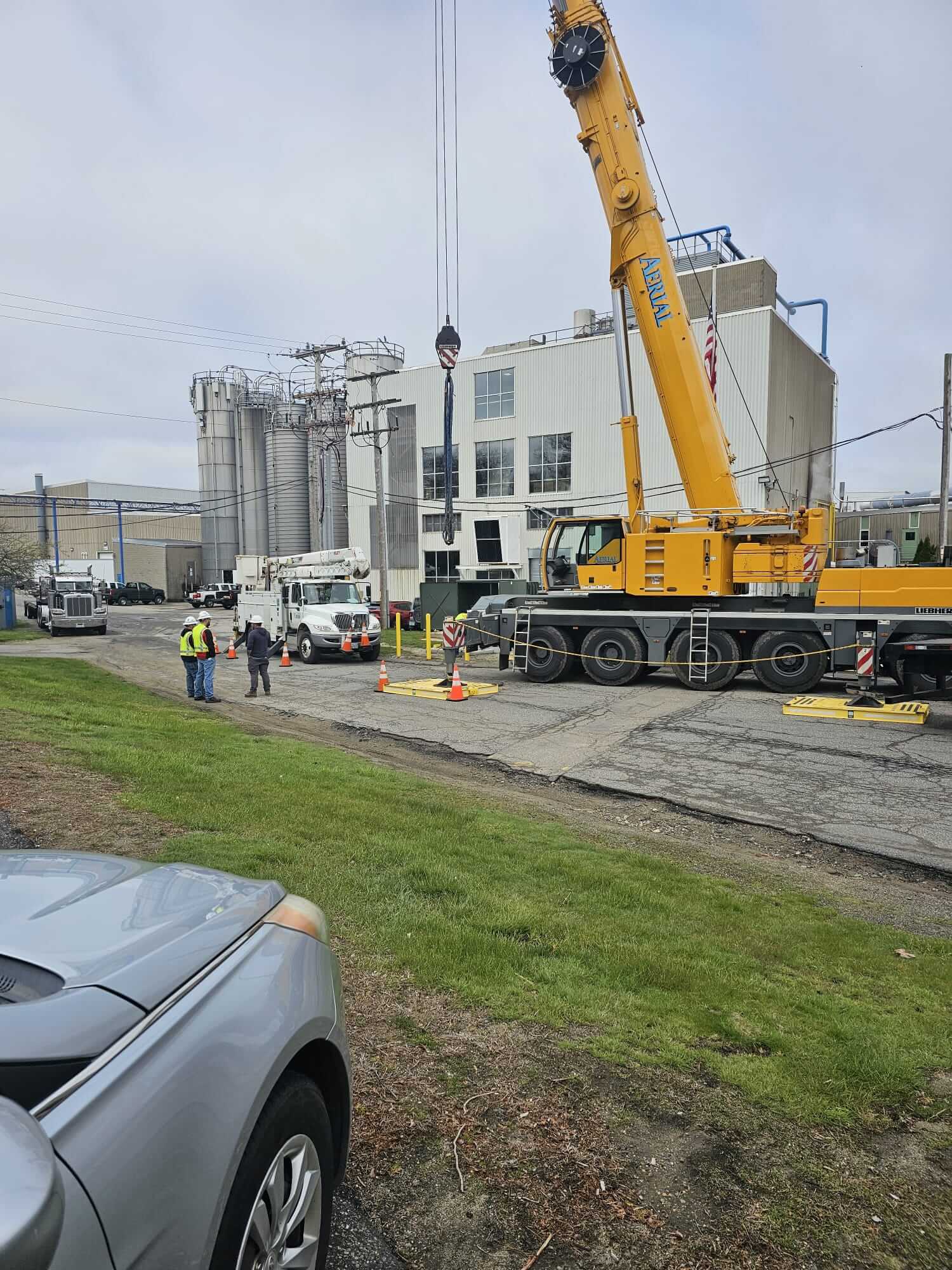
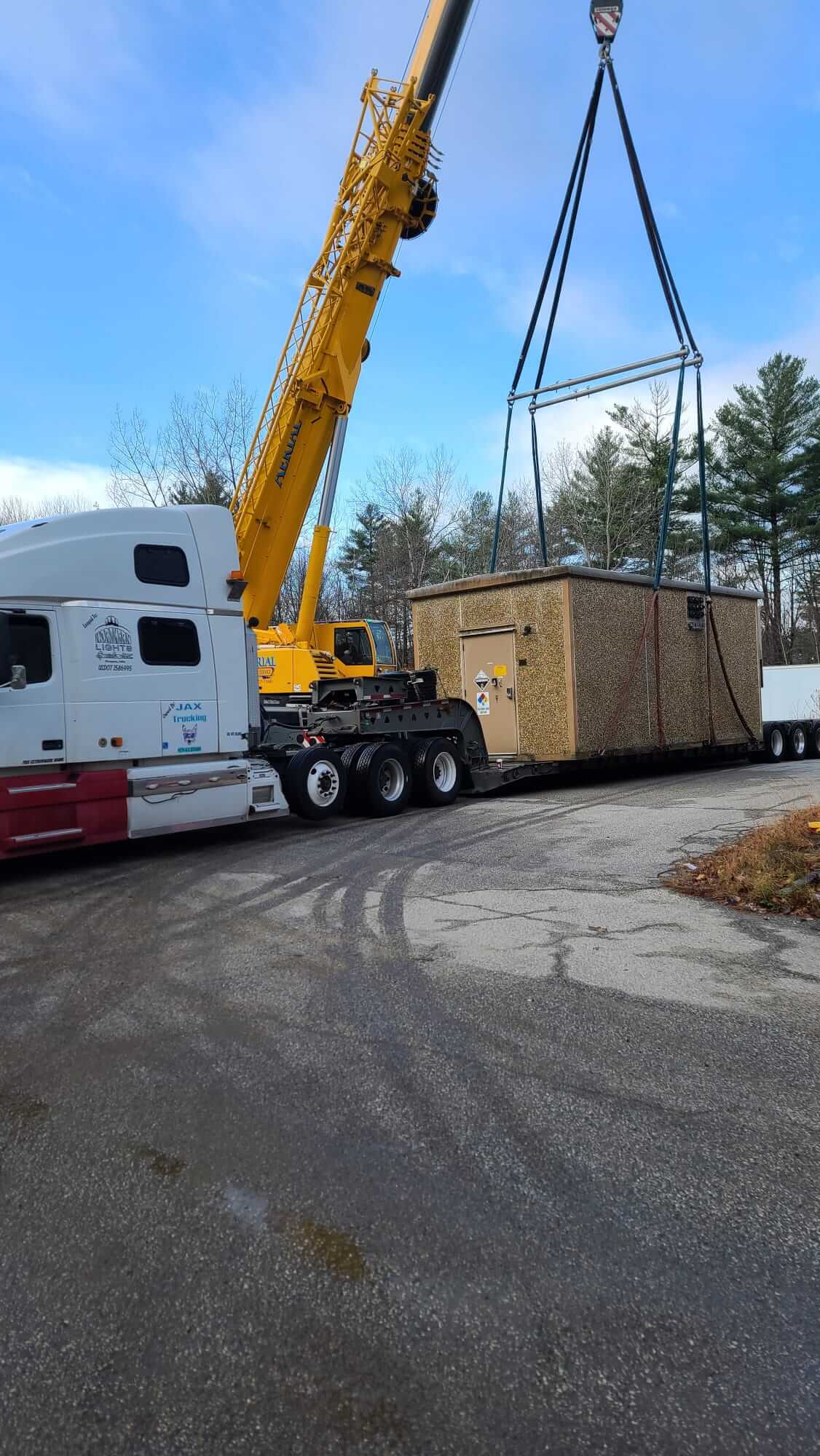
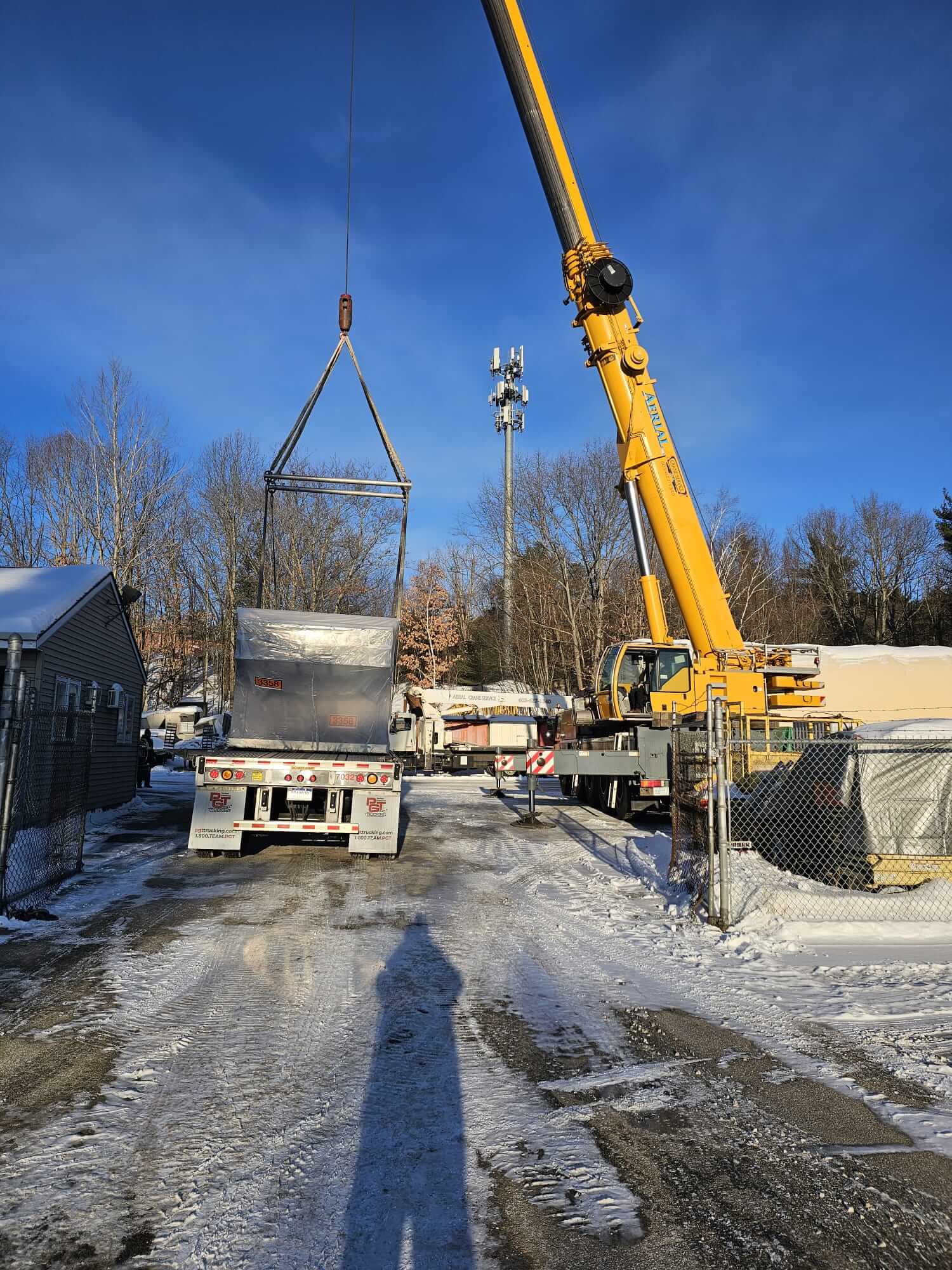
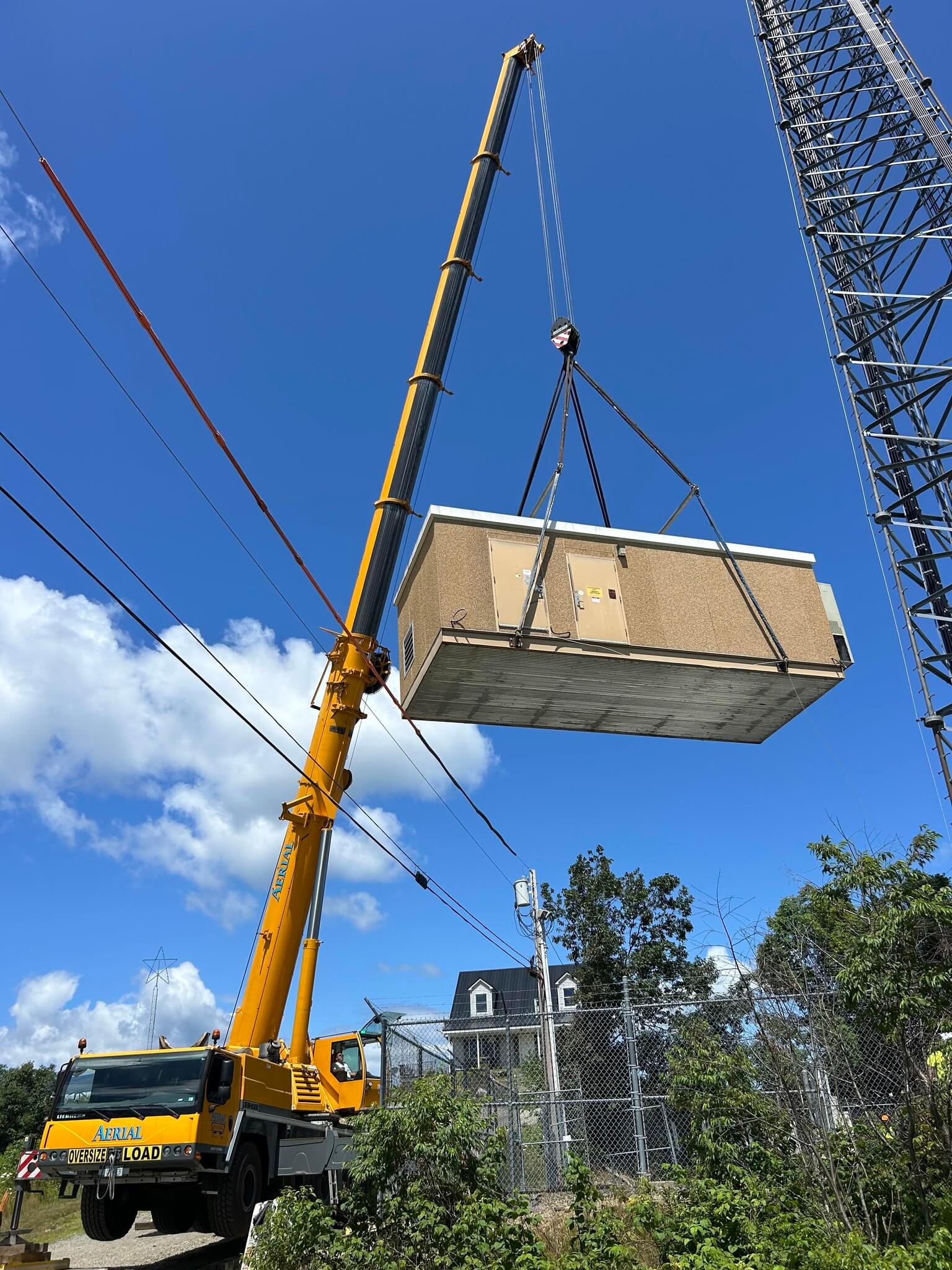
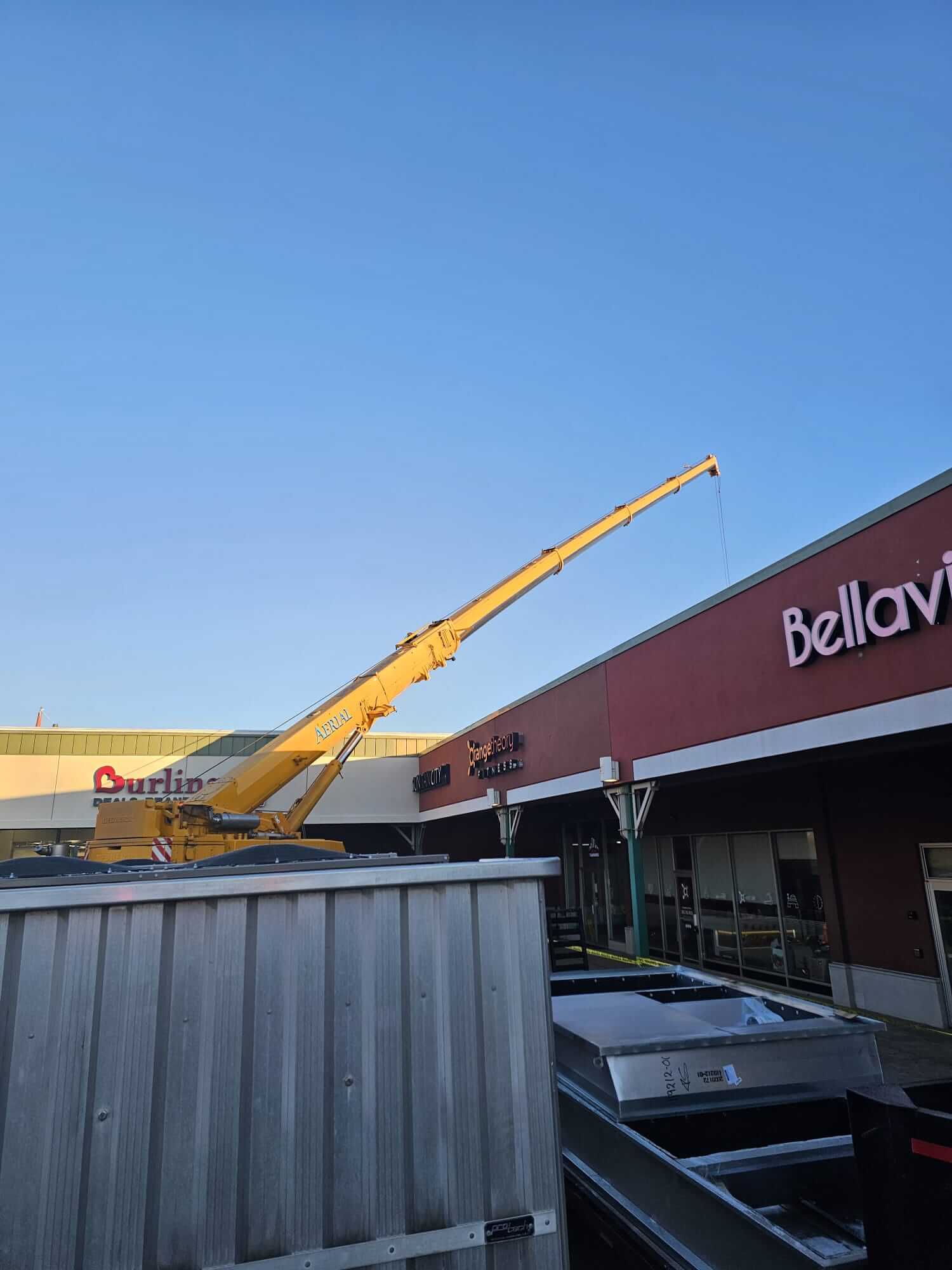
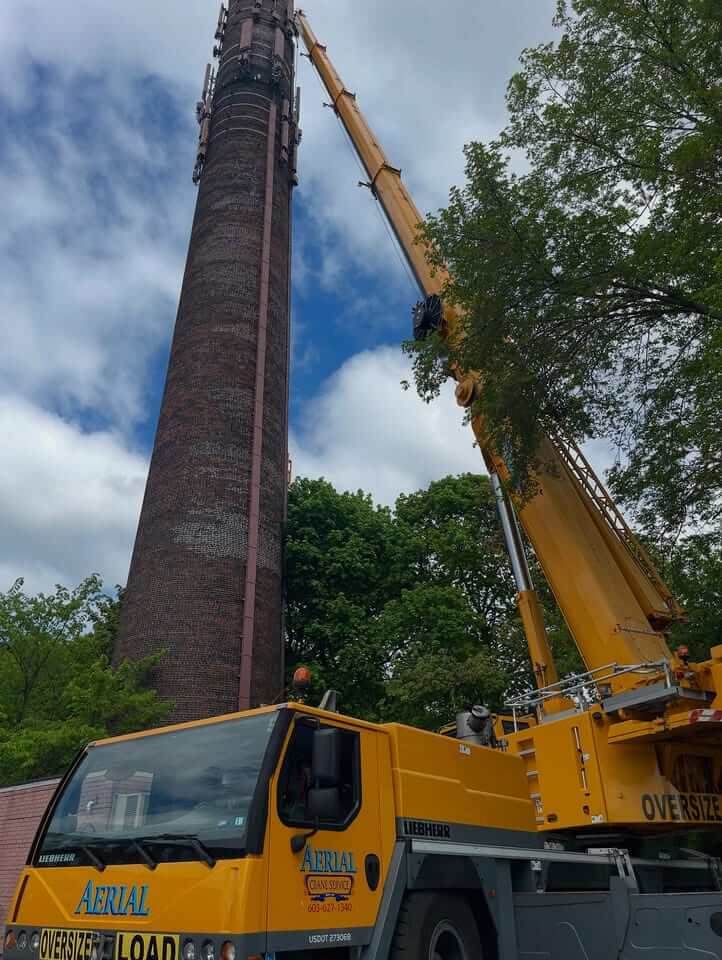
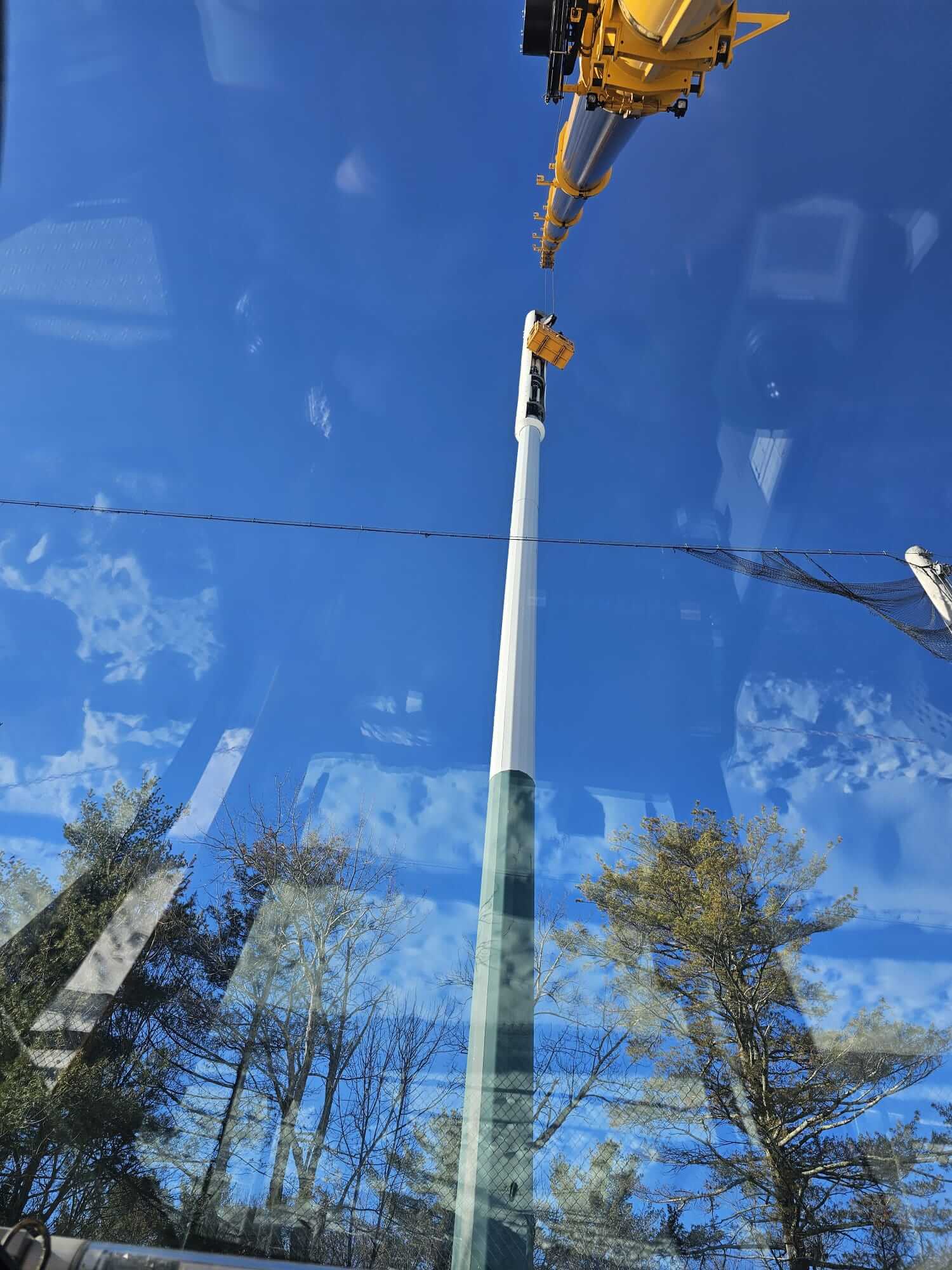
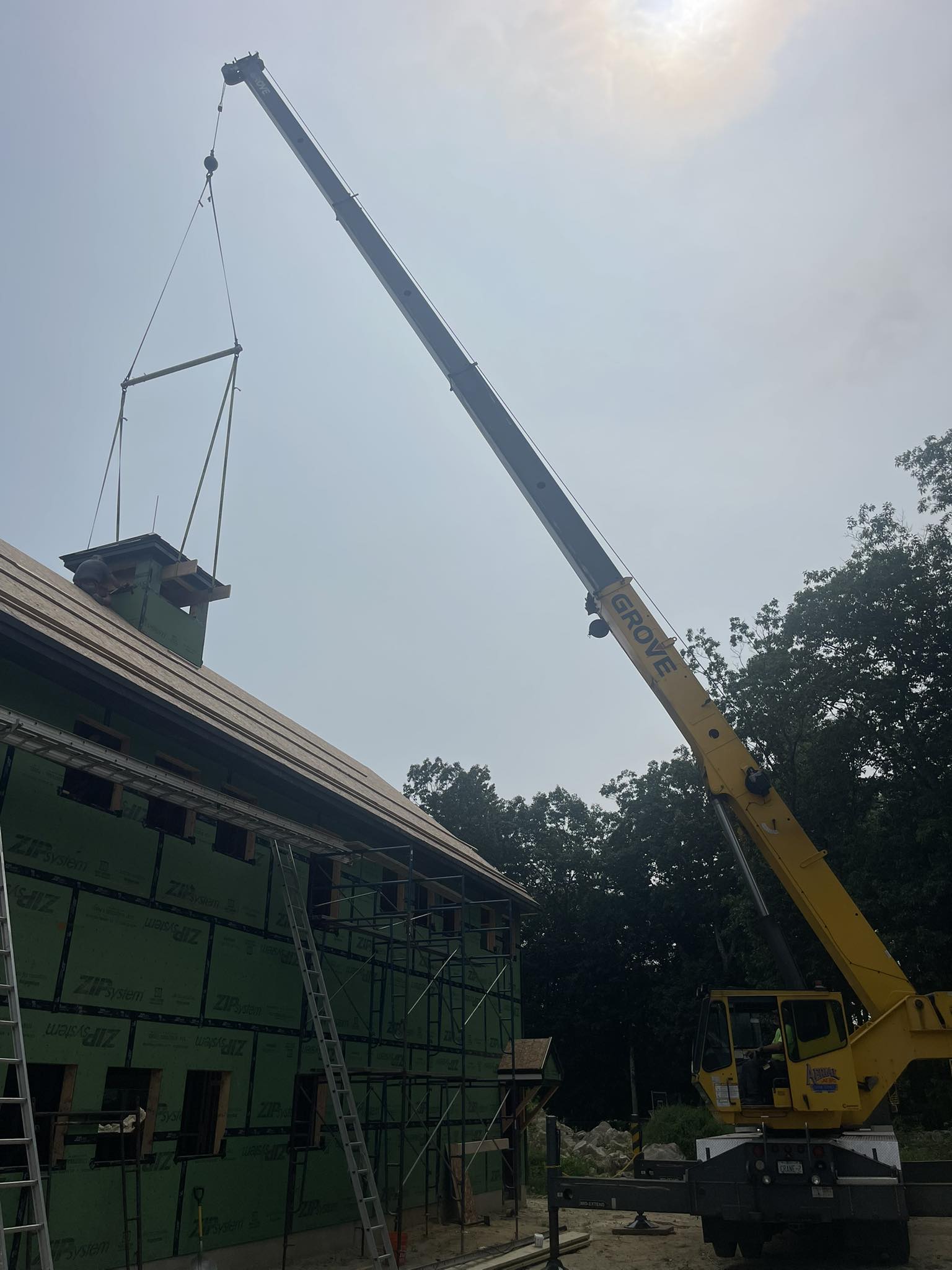
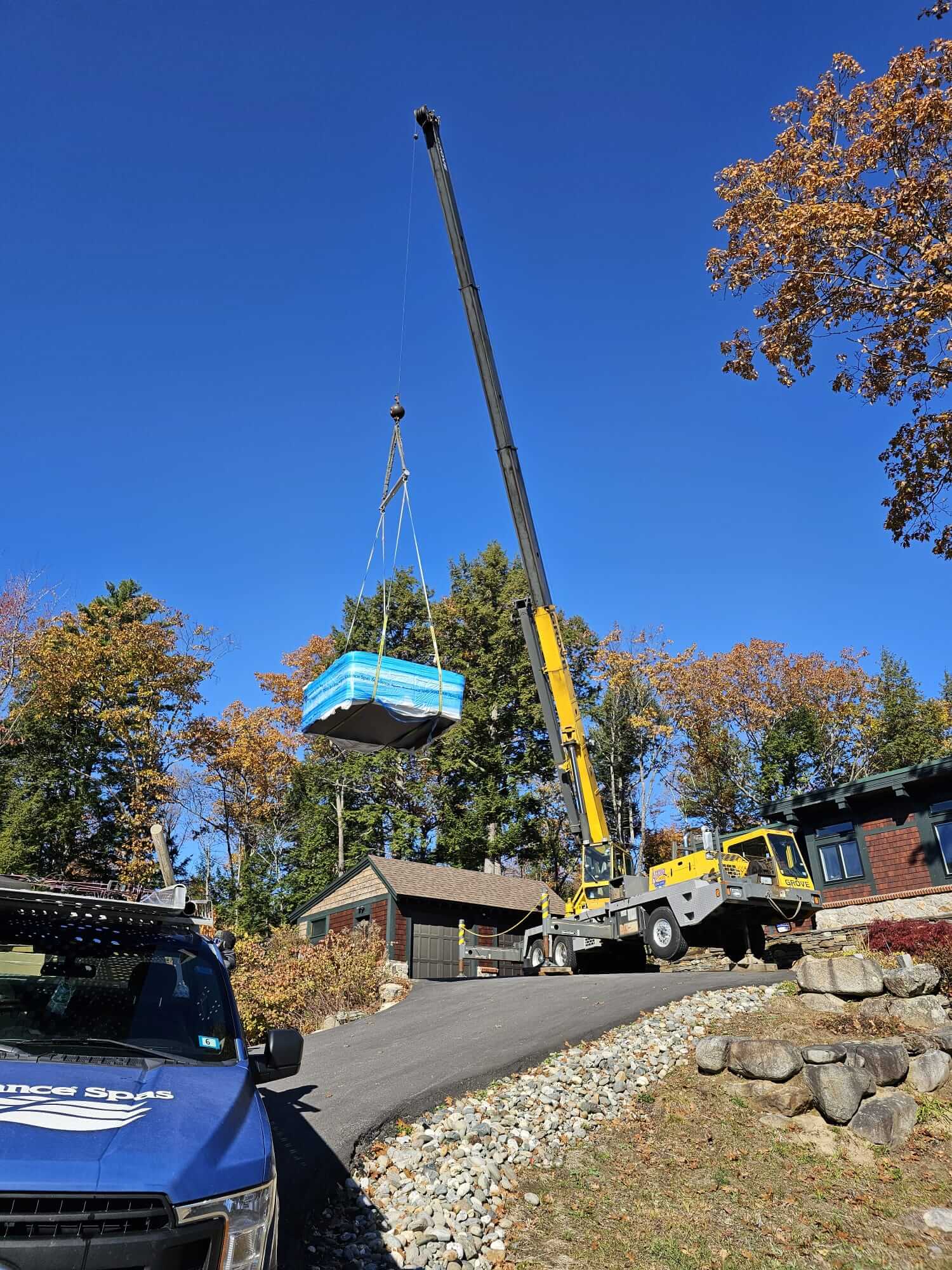
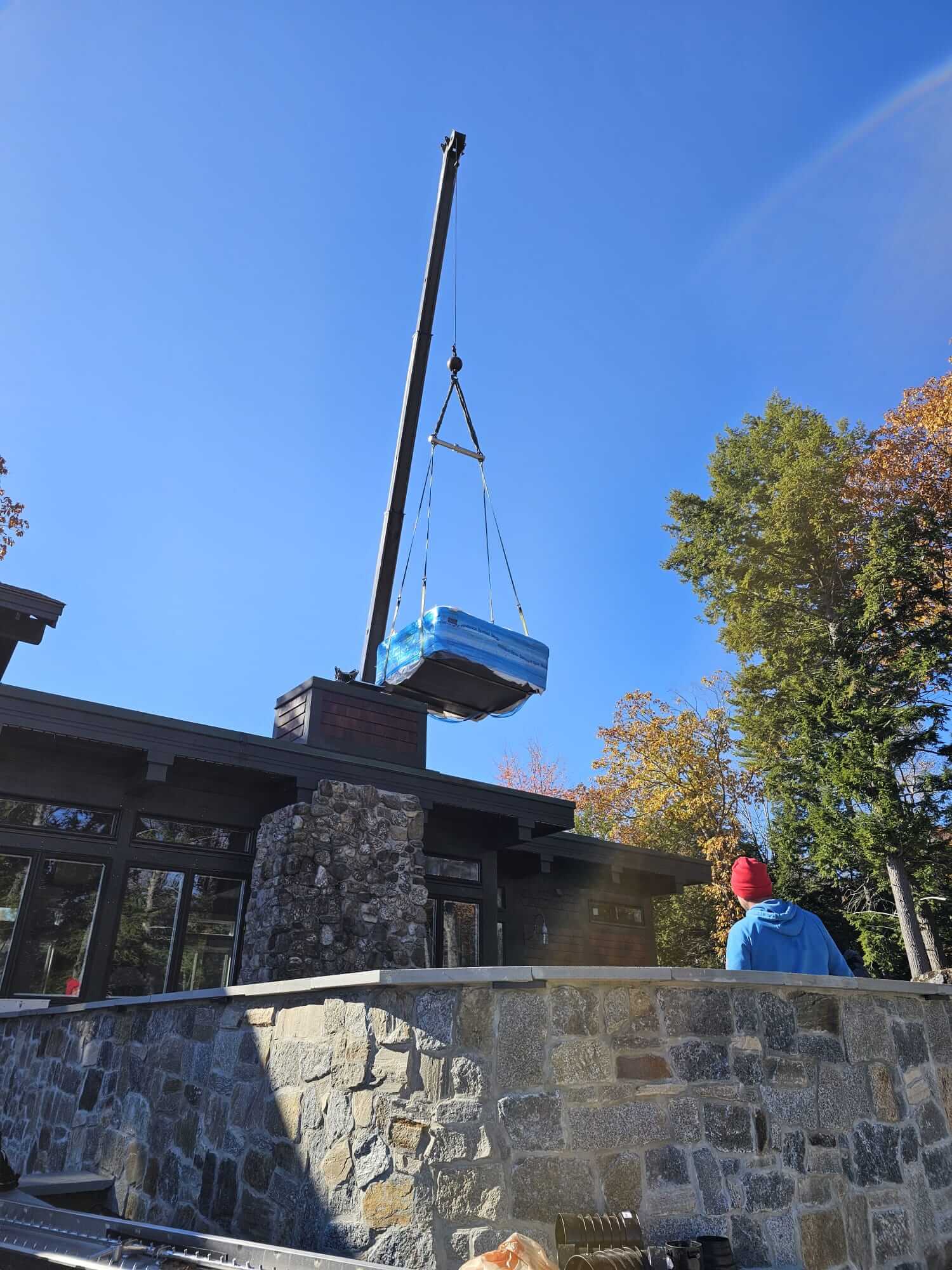
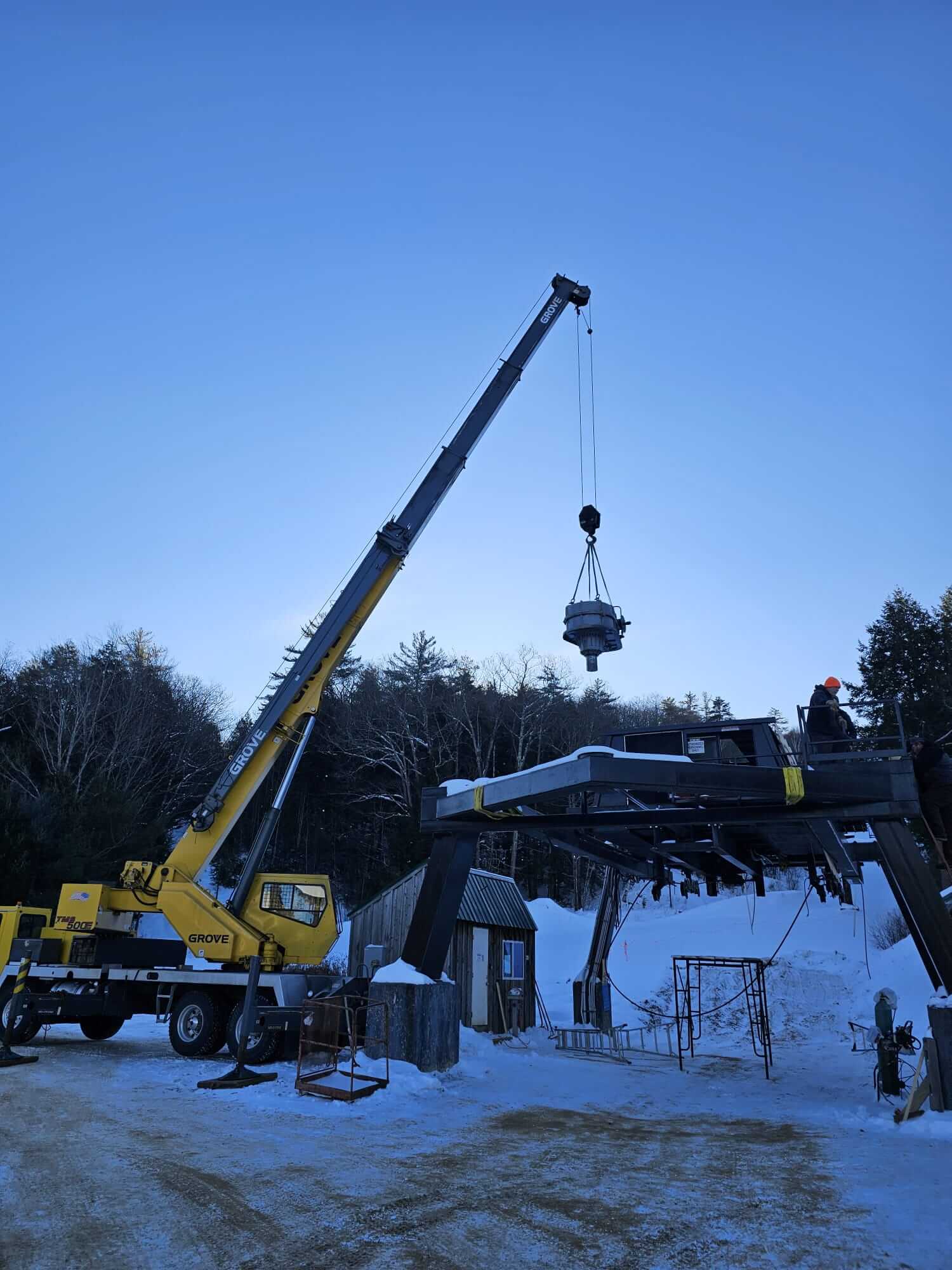
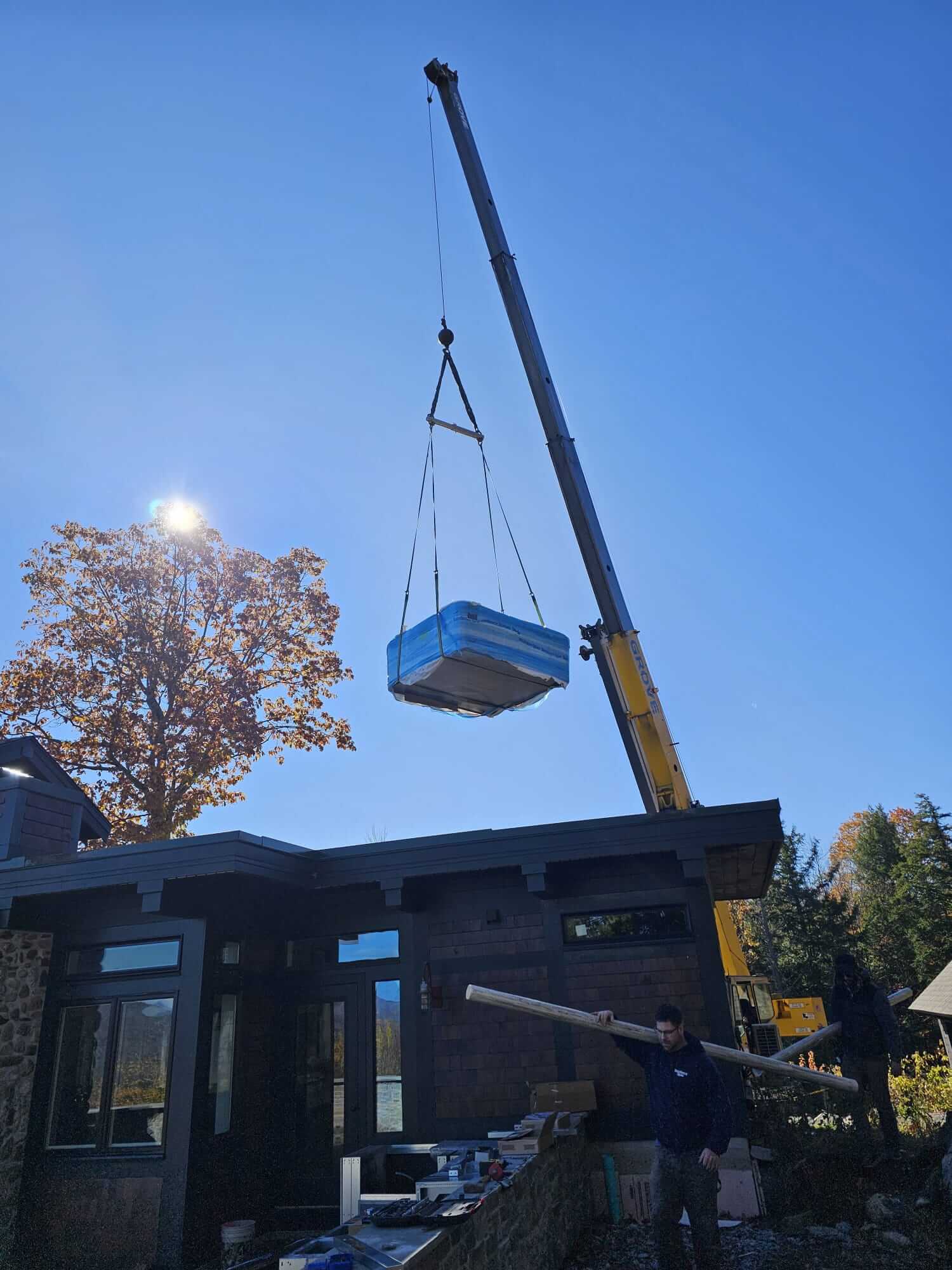
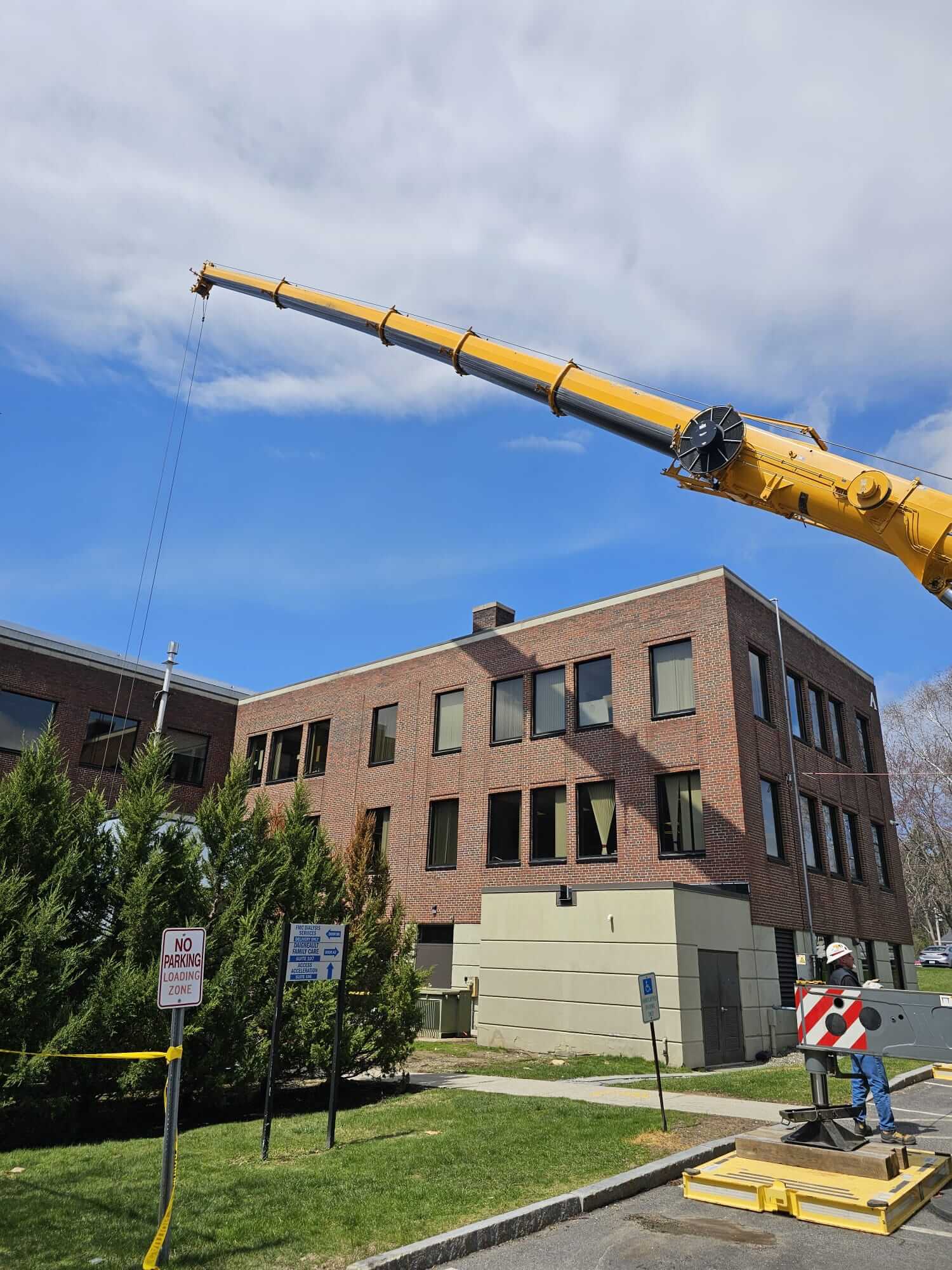
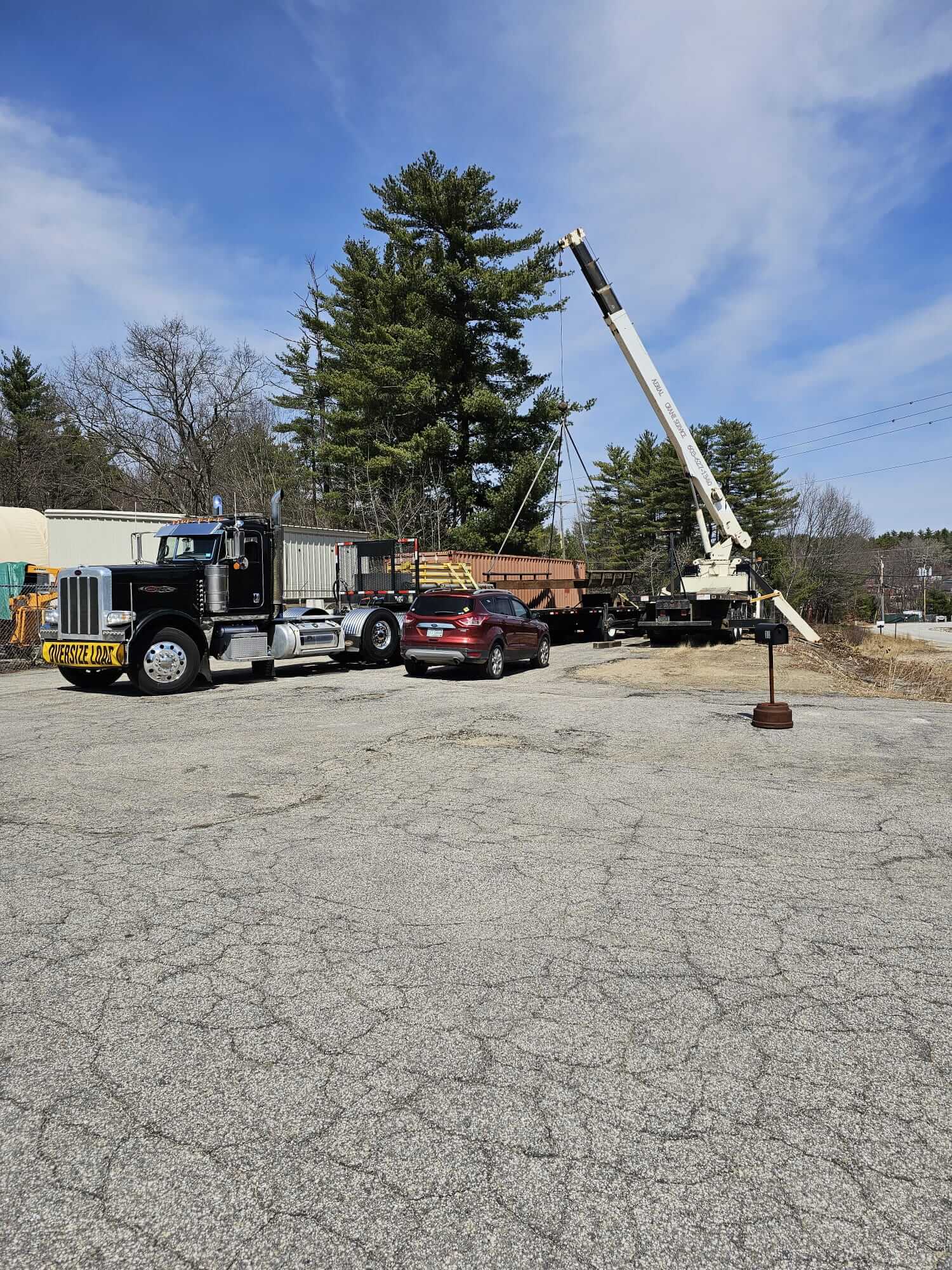
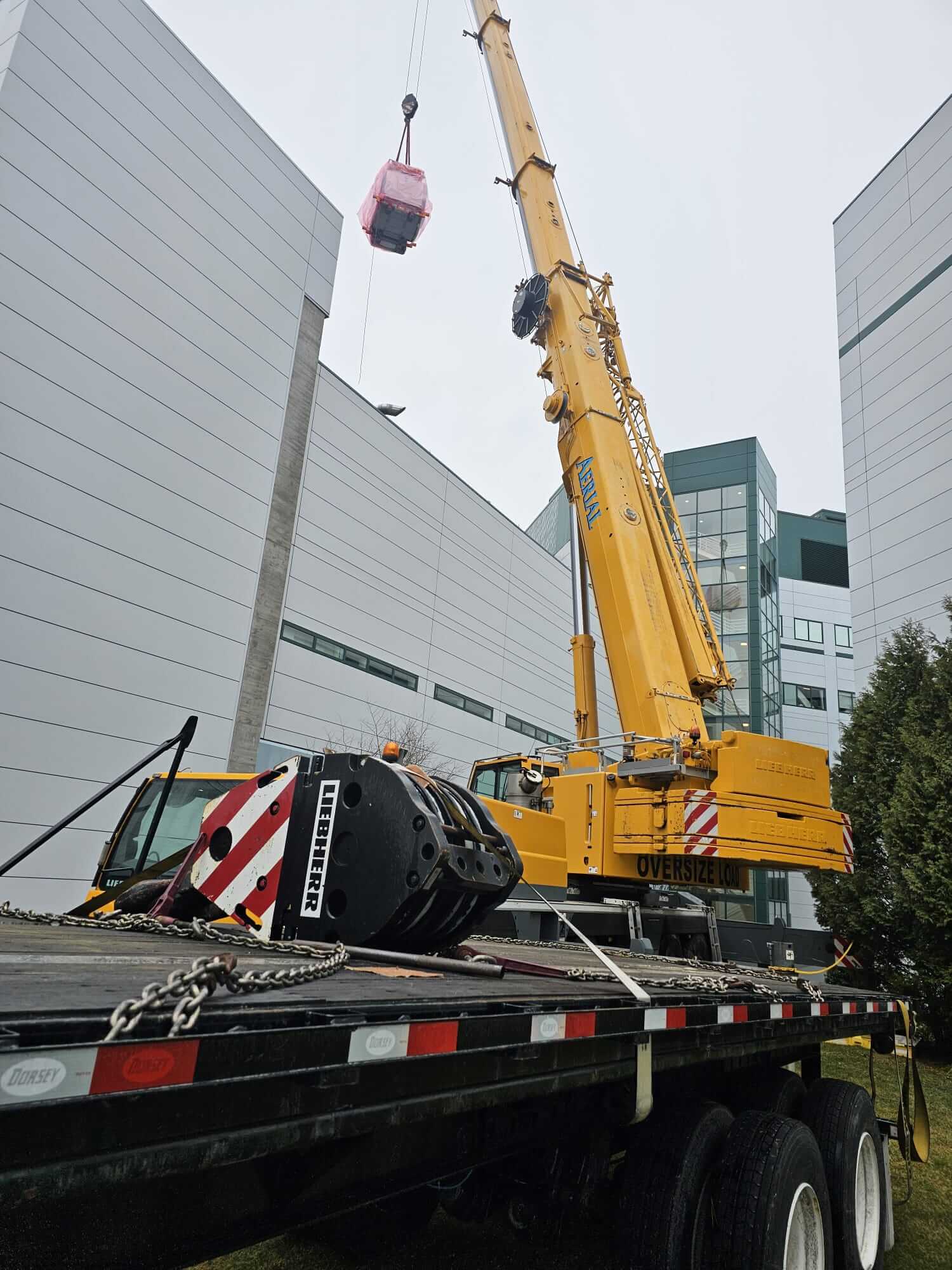
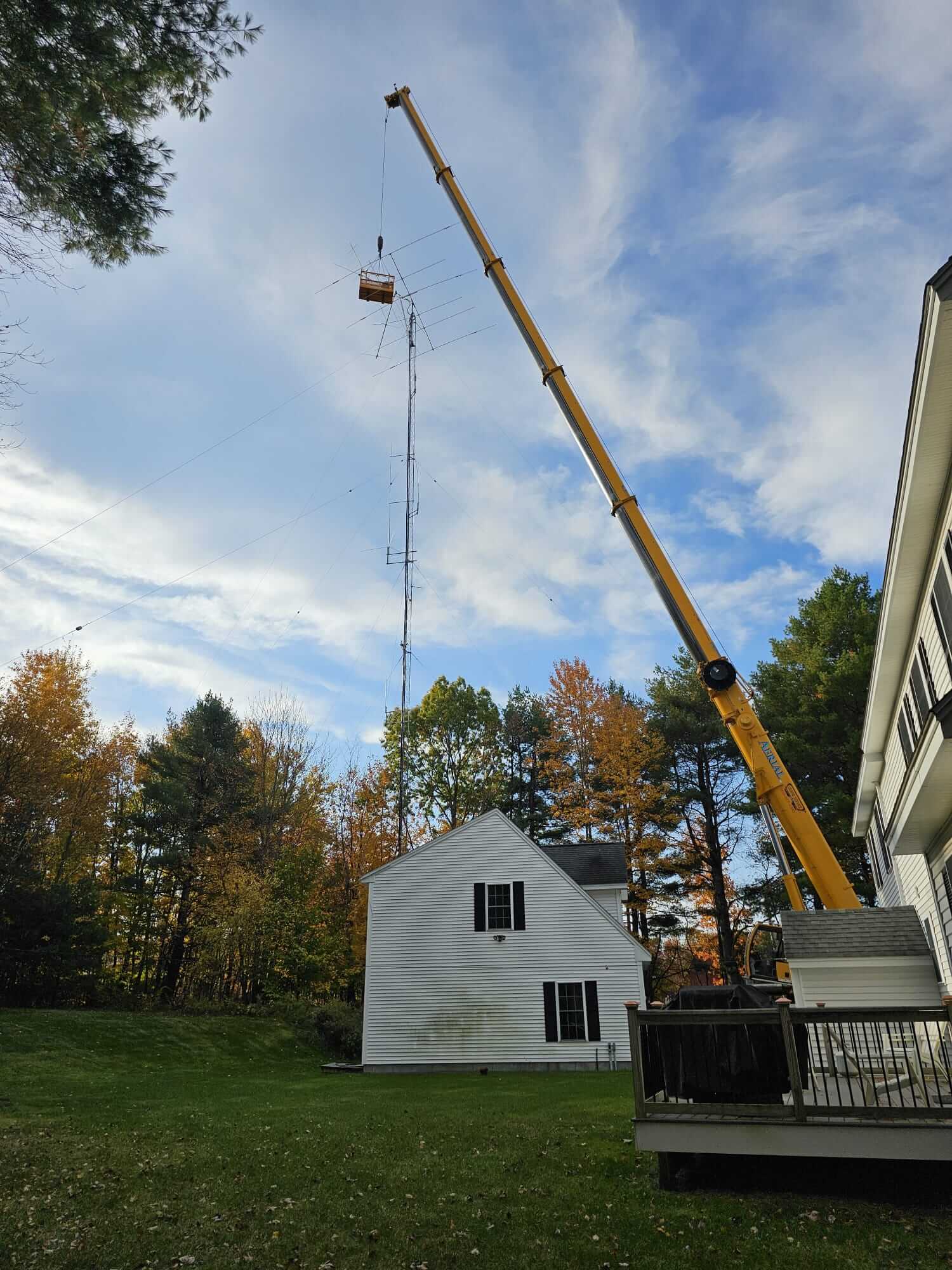
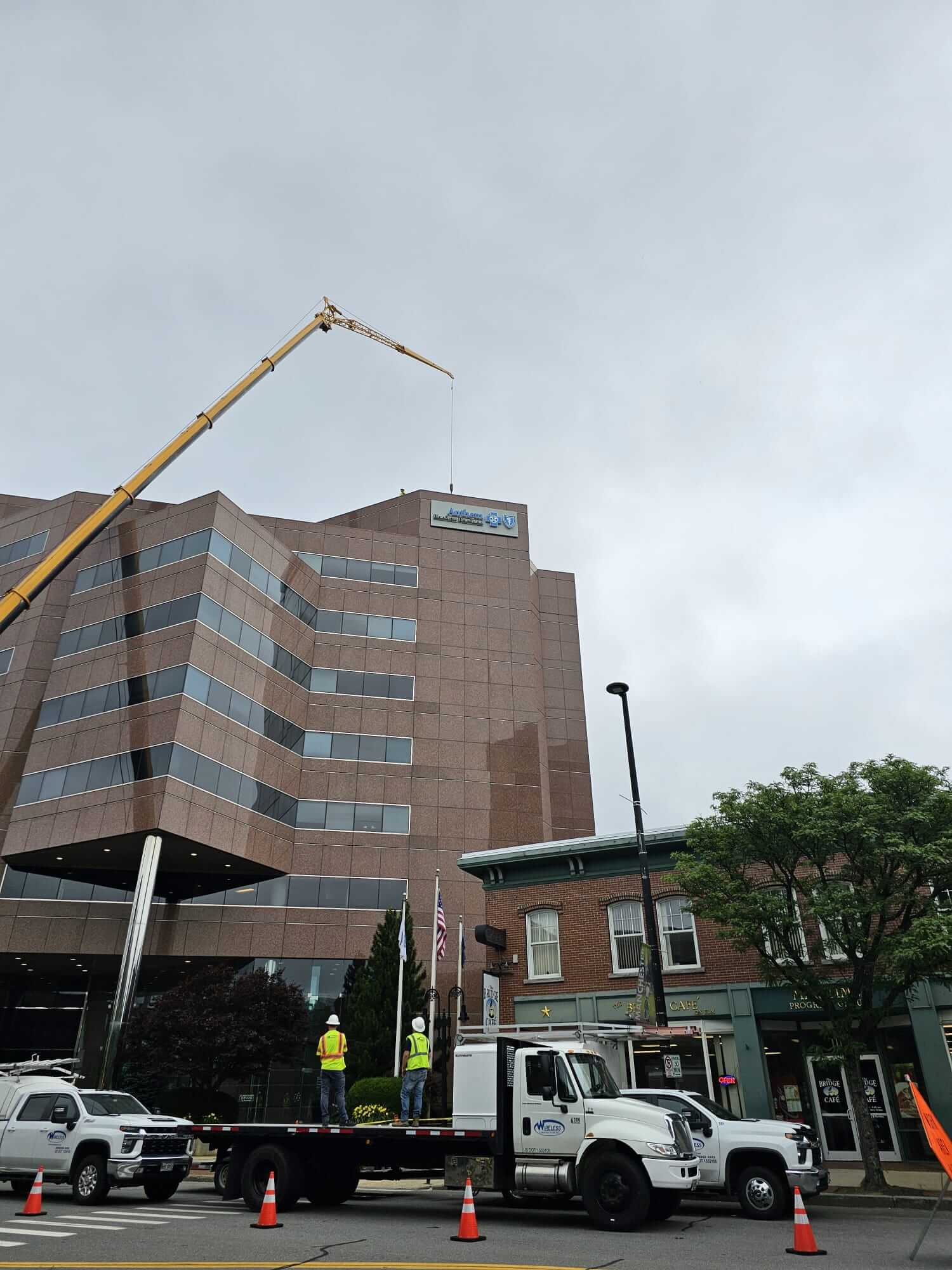
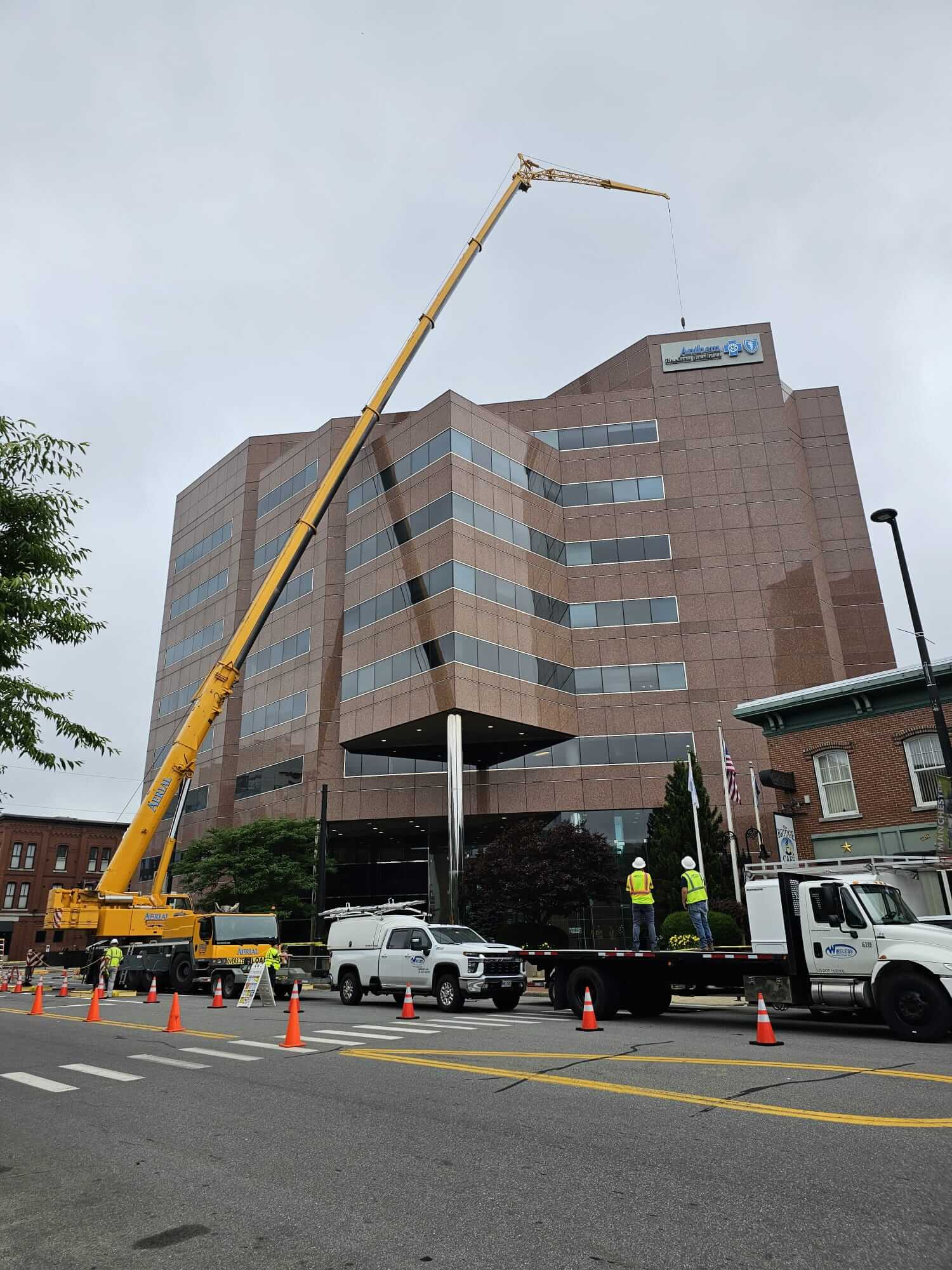
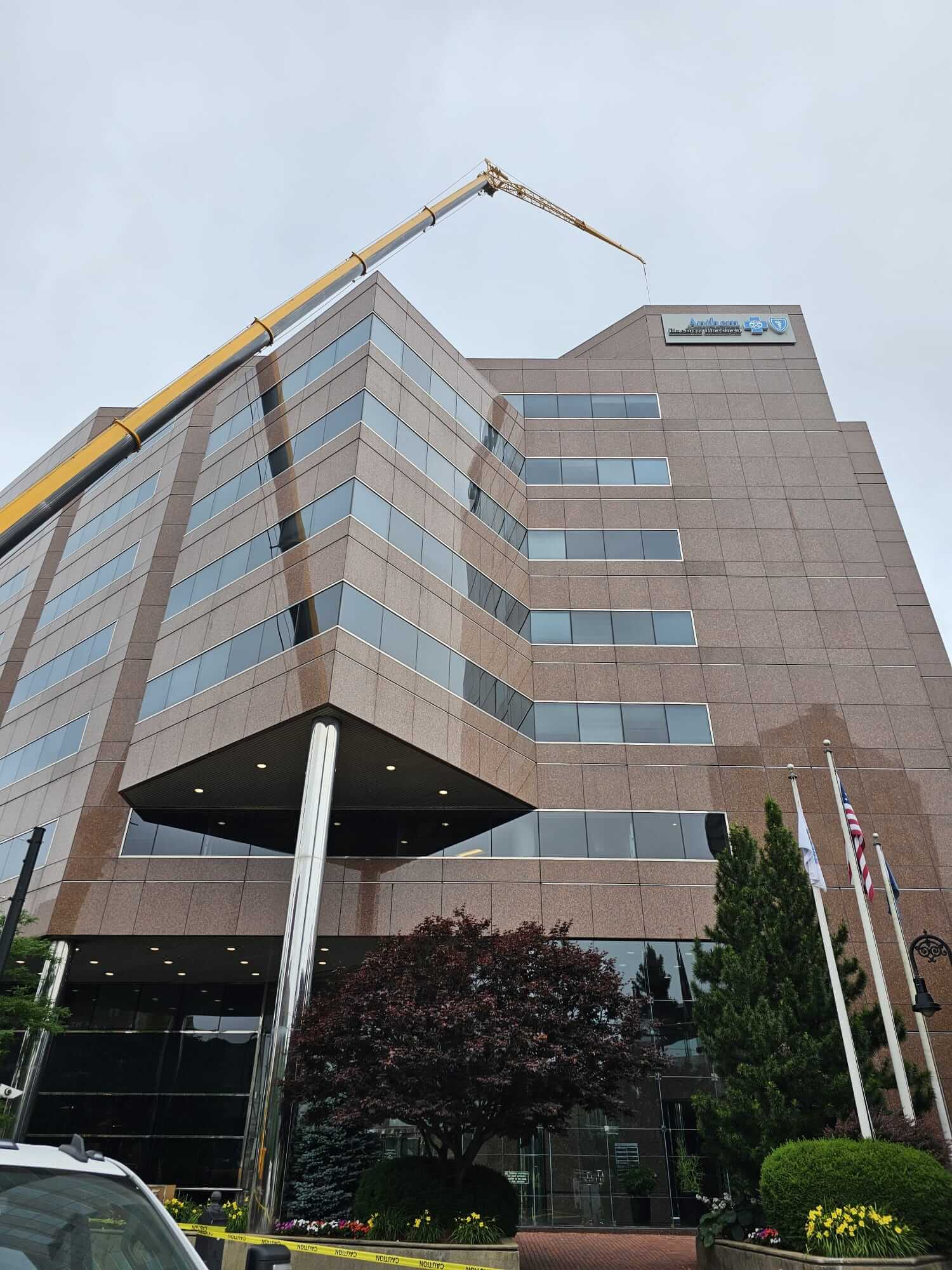
Aerial Crane Service provides crane rigging in New Hampshire for HVAC equipment, structural steel, generators, transformers, precast concrete, modular construction, industrial machinery, tanks, utility equipment and other heavy loads. Based in Bow, NH, Aerial has supported contractors throughout New England since 1983.
A rigging plan starts before the crane takes the weight. The crew needs a confirmed load weight, dimensions, lifting points, center of gravity, planned sling configuration and final set position. Those details are matched with the rated capacities of the slings, shackles, spreader bars and crane being used.
Aerial Crane Service works with contractors, project managers, industrial facilities, mechanical contractors, utility crews and steel erectors throughout NH, MA, ME and VT.
Call (603) 491-1268 with the load weight, dimensions, jobsite address and requested lift date to discuss the crane and rigging setup.
Professional Crane Rigging Support
Rigging connects the load to the crane and controls how that load behaves after it leaves the ground. The equipment used for one load may be a poor match for another load of the same weight because shape, lifting points, center of gravity, sling angle and surface condition all change the forces in the rigging system.
Aerial provides rigging support for:
- Structural steel and construction components
- Rooftop HVAC equipment
- Generators and transformers
- Industrial machinery
- Precast concrete
- Modular and prefabricated building sections
- Tanks and vessels
- Utility equipment
- Bridge and infrastructure components
- Mechanical systems
- Commercial construction materials
- Specialty and irregular loads
Related crane services include HVAC lifts, generator placement, transformer installation, steel erection, precast concrete lifting and power plant and industrial lifting.
Certified Rigging Equipment and Inspection Standards
Rigging gear used for crane work must have readable identification and a working load limit appropriate for the planned lift. Federal OSHA rigging standards require rigging equipment used in construction to be inspected before use on each shift and as conditions require. Defective equipment must be removed from service.
The New Hampshire Department of Labor has parallel requirements in Lab 1403.69. The rule requires rigging equipment and attachments to be inspected for damage or defects before daily use, manufacturer identification and safe working load markings to remain legible, and loads to stay within the equipment’s recommended working load.
New Hampshire also requires special custom-designed grabs, hooks, clamps and other lifting accessories to be marked with their safe working loads and proof tested to 125 percent of rated load before use.
ASME B30.9 sling standards address sling fabrication, attachment, use, inspection, testing and maintenance. The current B30.9 standard covers alloy steel chain, wire rope, synthetic fiber rope, synthetic webbing and other sling constructions used for load handling.
Aerial’s current public service page describes inspection as part of its rigging process. It does not advertise a standalone third-party inspection or certification service for customer-owned slings, shackles or rigging assemblies. Contractors who need formal third-party certification of their own equipment should arrange that service with an inspection provider authorized for the required scope.
Rigging Inspection Documentation
Rigging inspection documentation is especially relevant for equipment with periodic recordkeeping requirements. New Hampshire requires records of the most recent thorough inspection of alloy steel chains, with periodic inspections performed at intervals no greater than the applicable requirements.
Before a project, contractors should also make sure tagged working load limits are readable and that the planned hardware can be identified against manufacturer data.

Sling Types and Load Capacity Selection
The right sling starts with the material being handled, its weight, lifting points, edges, temperature, surface finish and required hitch. Wire rope slings, synthetic slings and chain slings have different strengths and limitations.
Wire Rope Slings
Wire rope slings are commonly used around construction and structural loads because they handle substantial loads and abrasion better than many softer sling materials. They still need protection from sharp edges and must be removed from service when broken wires, corrosion, wear or other defects exceed applicable limits.
Synthetic Slings
Synthetic slings are useful around finished HVAC units, equipment cabinets and other surfaces where a softer sling may reduce marking or surface damage. Edge protection matters. OSHA and New Hampshire rules also place limits on synthetic sling use around chemical exposure, damage and high temperatures.
Chain Slings
Chain slings can suit rugged industrial work and loads with conditions that would quickly damage some synthetic materials. They require rated identification and inspection for wear, deformation, cracks, stretching and damaged links.
Shackles and Rigging Hardware
Shackles and rigging hardware connect slings, lifting points and below-the-hook devices. The hardware’s working load limit must match the forces produced by the planned configuration. A high-capacity sling does not make an undersized shackle acceptable.
Aerial also provides spreader bars and specialty rigging for oversized, unusual and high-value loads where standard sling arrangements are not a good fit.
Load Charts and Capacity Calculations
Load charts and capacity calculations apply to both sides of the lift. The rigging must carry the load at the actual hitch and sling angles, while the crane must have chart capacity at the planned radius and boom configuration.
For a symmetrical two-leg bridle, flatter sling angles increase tension in each leg. A 10,000-pound load shared by two sling legs does not automatically place only 5,000 pounds on each sling.
| Sling Angle From Horizontal | Approx. Tension Per Leg on a 10,000 lb Load |
|---|---|
| 60° | About 5,775 lb per leg |
| 45° | About 7,070 lb per leg |
| 30° | About 10,000 lb per leg |
That example is useful for understanding the effect of sling angle, but actual selection should use the manufacturer’s rated capacity tables for the specific sling, hitch, angle and configuration being used.
Center of Gravity Determination
Center of gravity determination is especially important for machinery, generators, transformers, HVAC units and asymmetrical fabricated components. The hook needs to be positioned so the load can settle into a stable suspended position without an uncontrolled shift.
Equipment drawings, manufacturer data, component weights and known lifting points provide a better basis than estimating by appearance. An off-center motor, compressor, transformer core or machine enclosure can move the center of gravity far from the geometric center of the load.
Crane Load Moment Indicators
Crane load moment indicators and other operational aids help the operator monitor crane conditions, but they do not replace the lift plan, rigging working load limits or the manufacturer’s crane load chart. Sling capacity and crane capacity must each be checked for their part of the operation.
Rigging for HVAC and Rooftop Equipment in New Hampshire
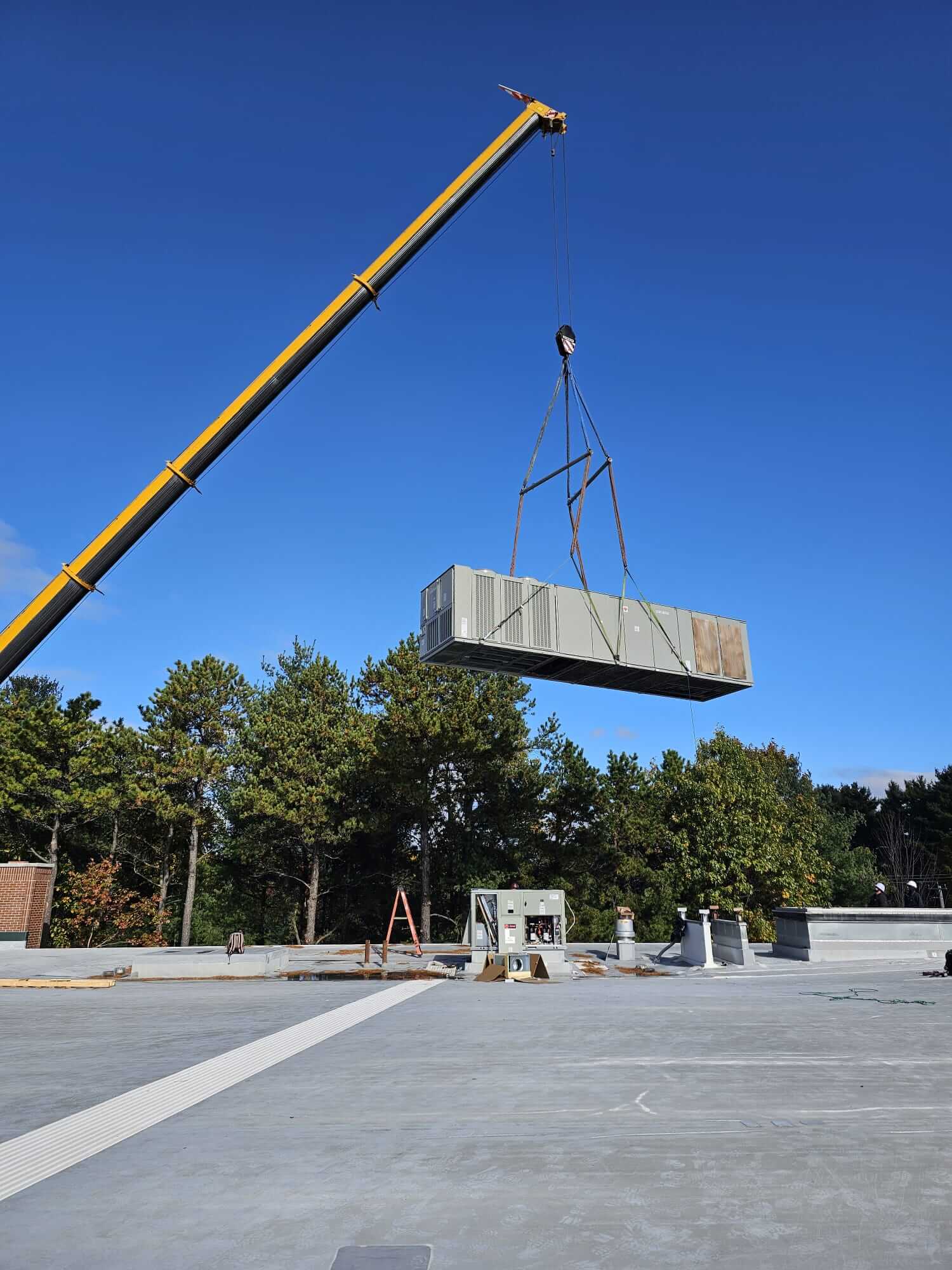
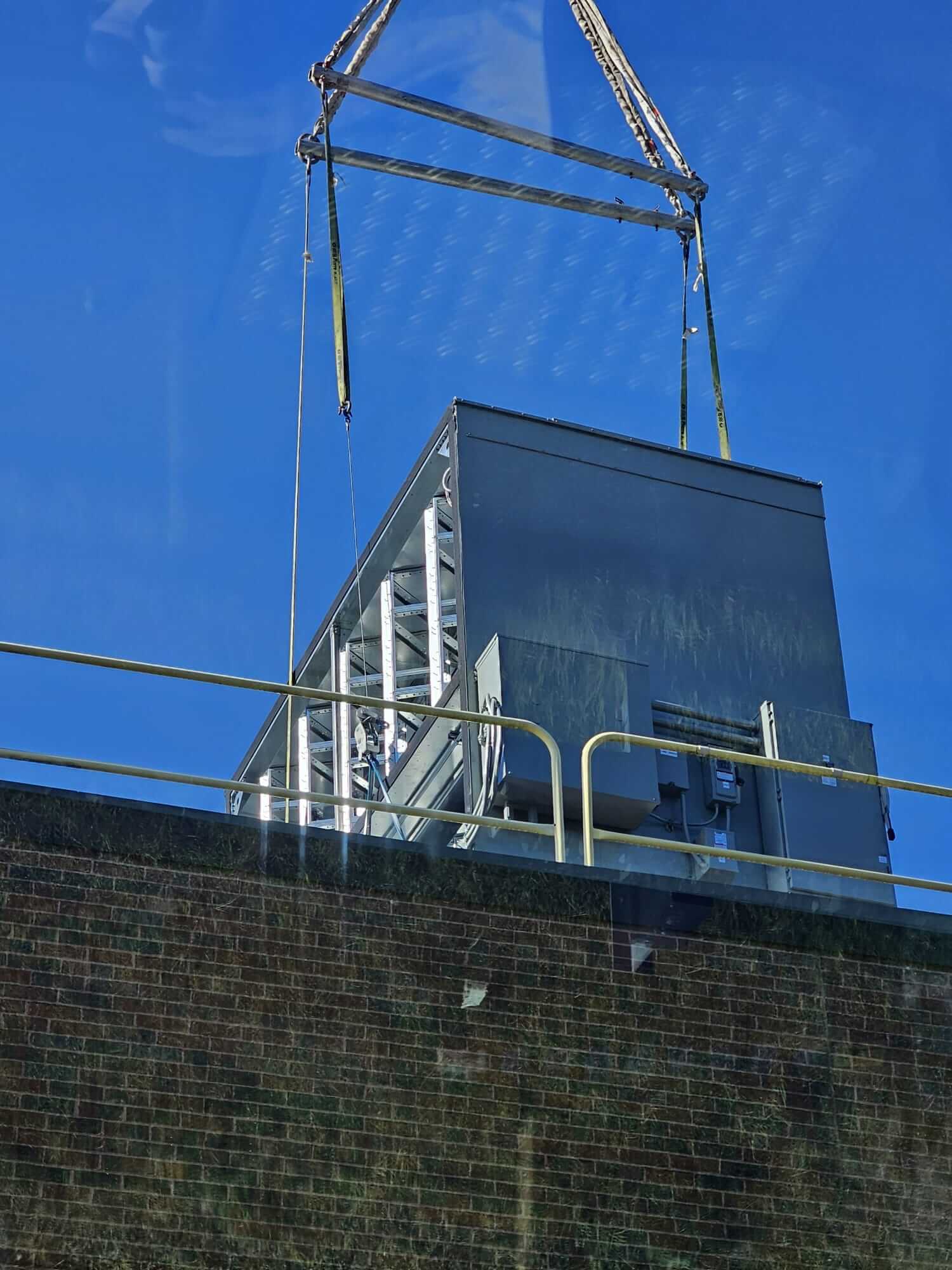
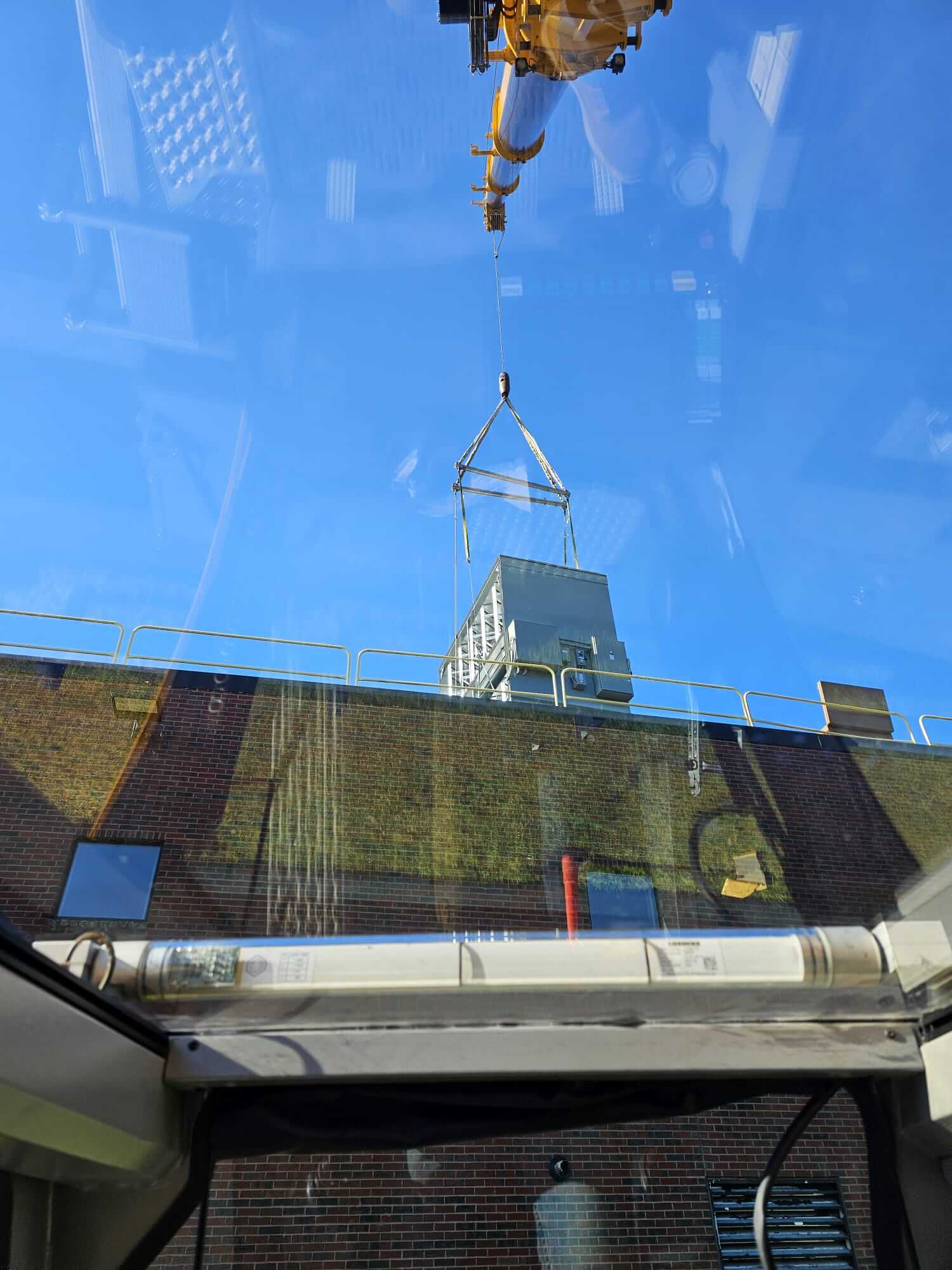
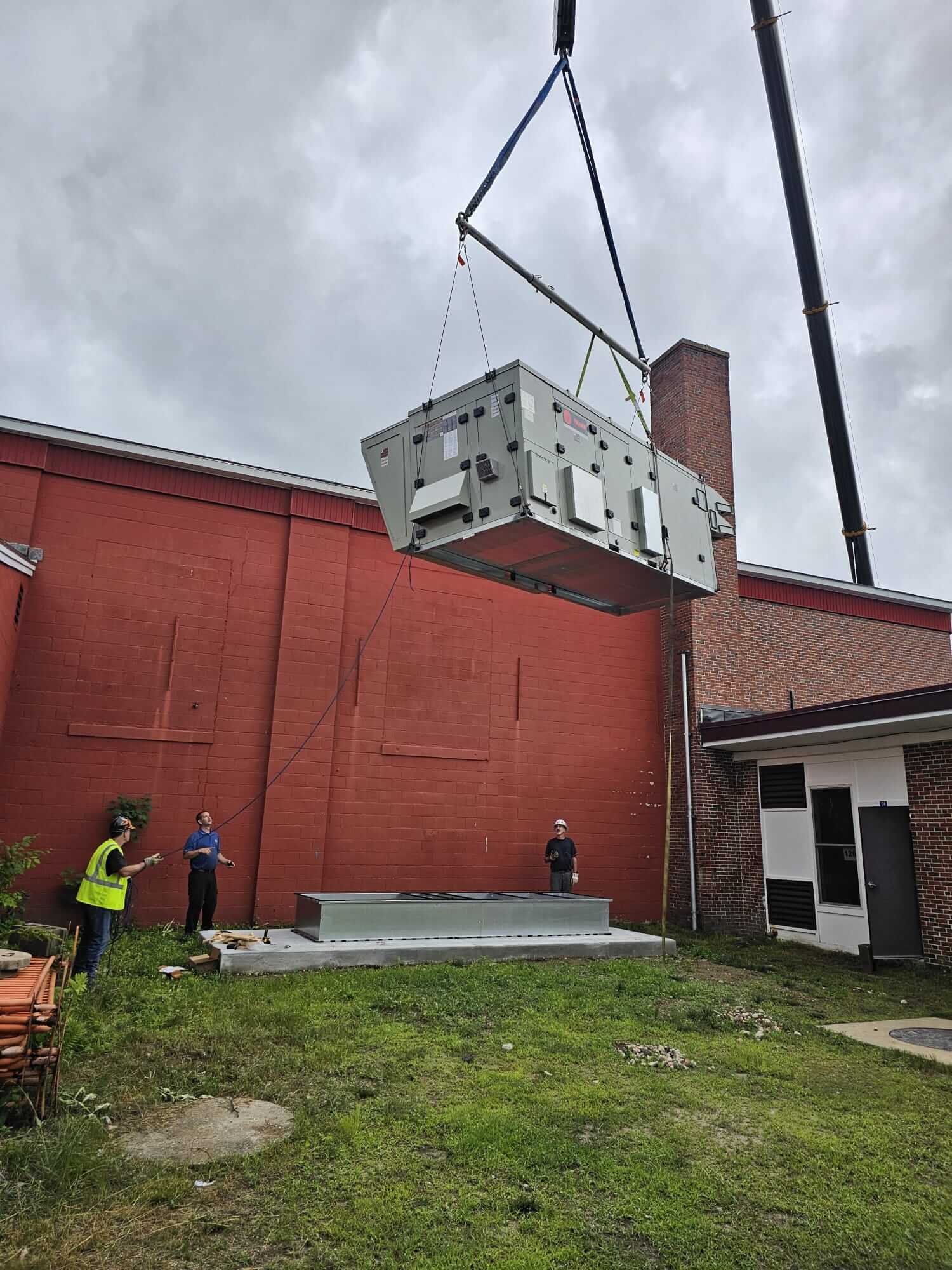
HVAC crane lifting frequently involves large rectangular equipment with designated lifting points and finished exterior panels that should not be crushed by the sling arrangement.
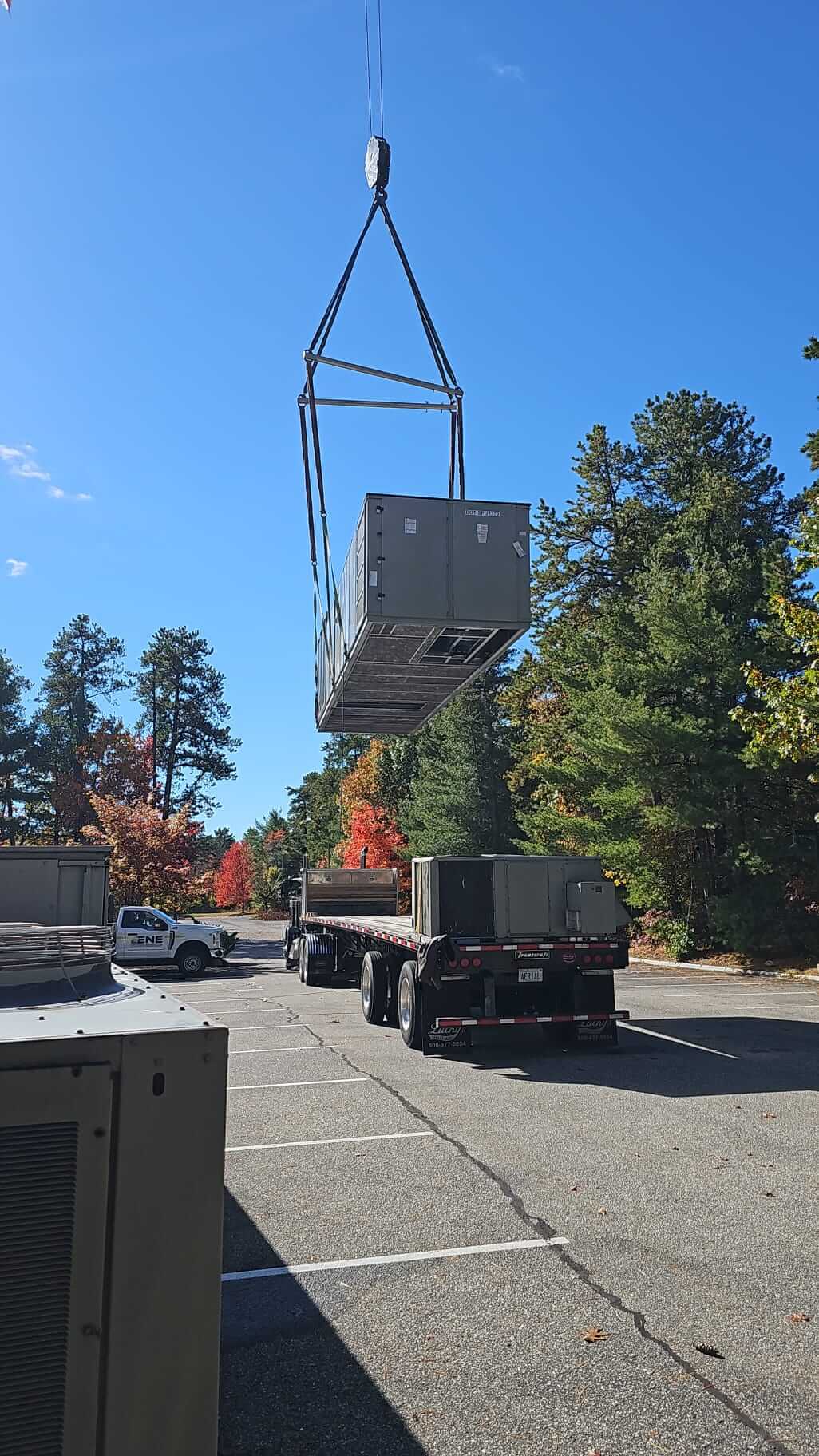
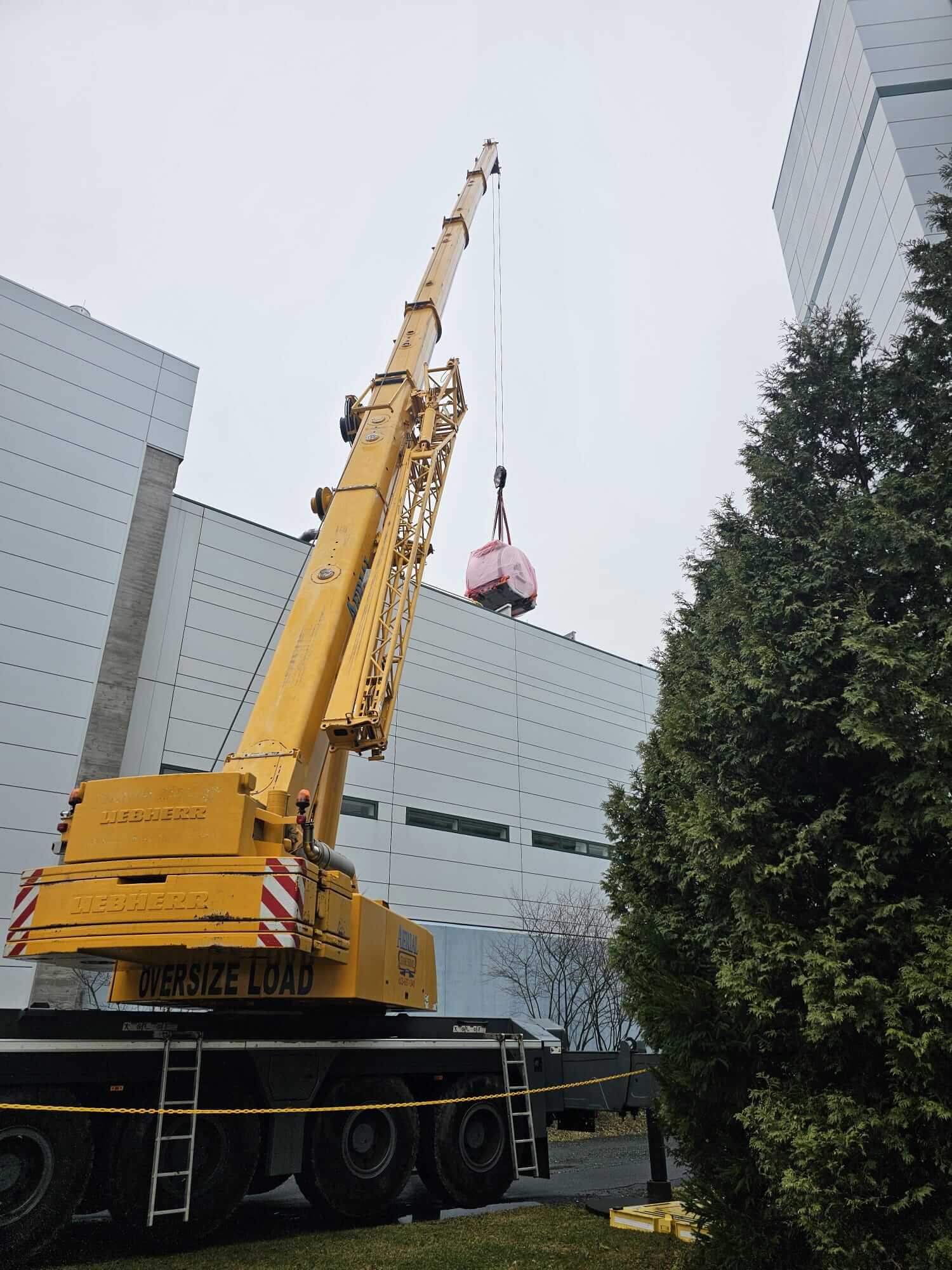
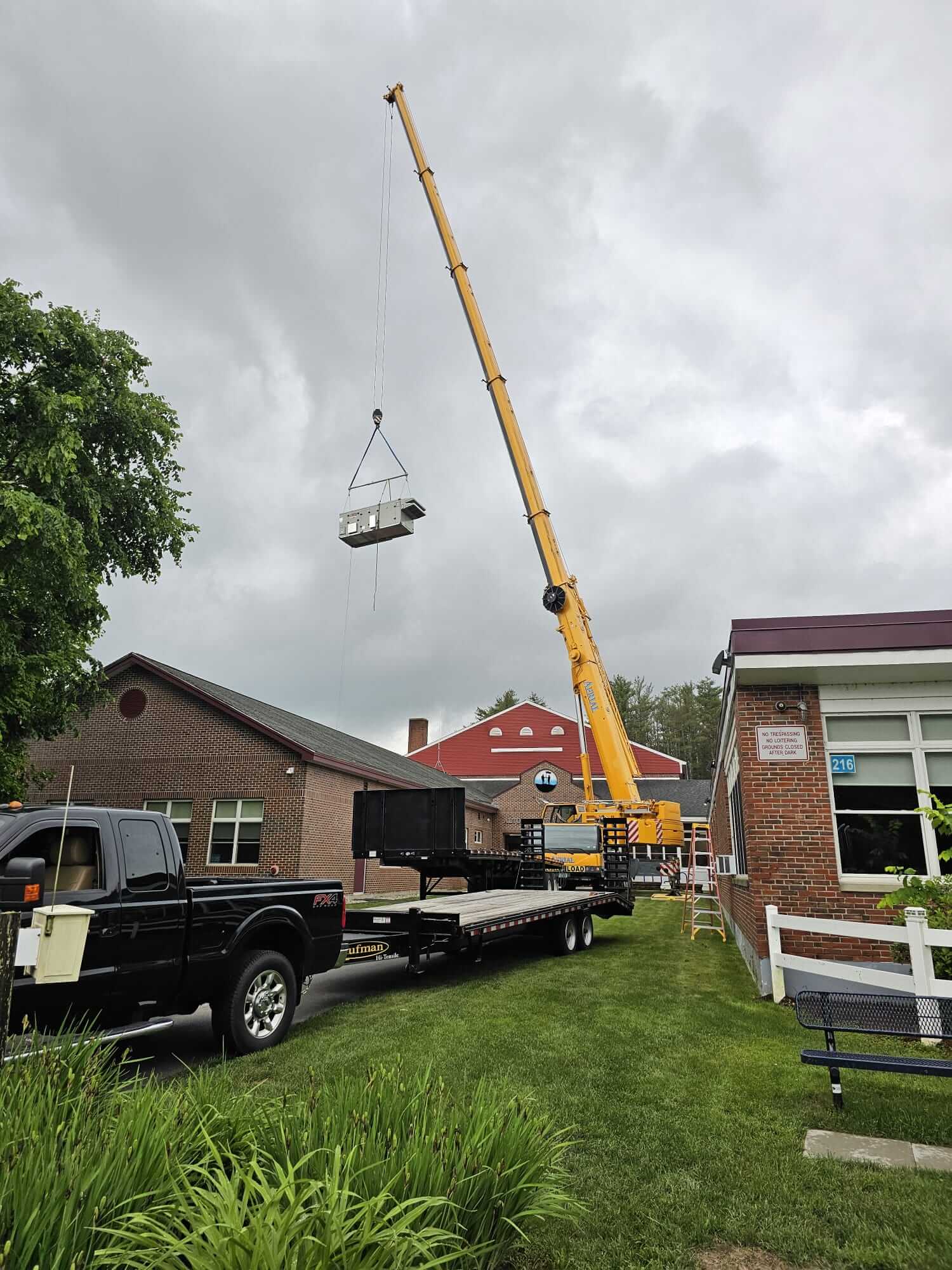
Aerial works with HVAC contractors lifting rooftop units, chillers, air handlers, cooling towers, condensers, exhaust fans, make-up air units and mechanical equipment across New Hampshire.
Three common rigging arrangements illustrate why the equipment data should arrive before the crane:
- A standard rooftop unit may use manufacturer lifting points with a spreader arrangement that keeps sling legs away from cabinet panels.
- A long air handler may require a wider spreader arrangement to control sling angle and distribute the load across approved lifting locations.
- A large chiller can have an offset center of gravity because compressors, heat exchangers and controls are concentrated on different parts of the frame.
These are common project configurations, not invented claims about specific Aerial customer projects.

Steel Erection Rigging and Load Calculations
Steel erection creates its own rigging questions. Beams, columns, trusses and fabricated assemblies can be long relative to their weight, which affects balance, tag-line control and the amount of room required to rotate the member into position.
The erection team should provide verified piece weights and lifting details. The rigging arrangement is then checked against the member’s pick points, center of gravity and orientation required at the final connection.
For structural work where employees enter the fall zone to connect or guide a load, OSHA requires the material to be rigged by a qualified rigger. OSHA defines a qualified rigger by the person’s knowledge, training, experience or recognized credentials and their demonstrated ability to rig the particular load involved.
The designation is task-specific. Someone experienced in routine steel picks is not automatically qualified for every unusual, unstable or multi-crane lifting operation.
Modular Home and Prefab Structure Rigging
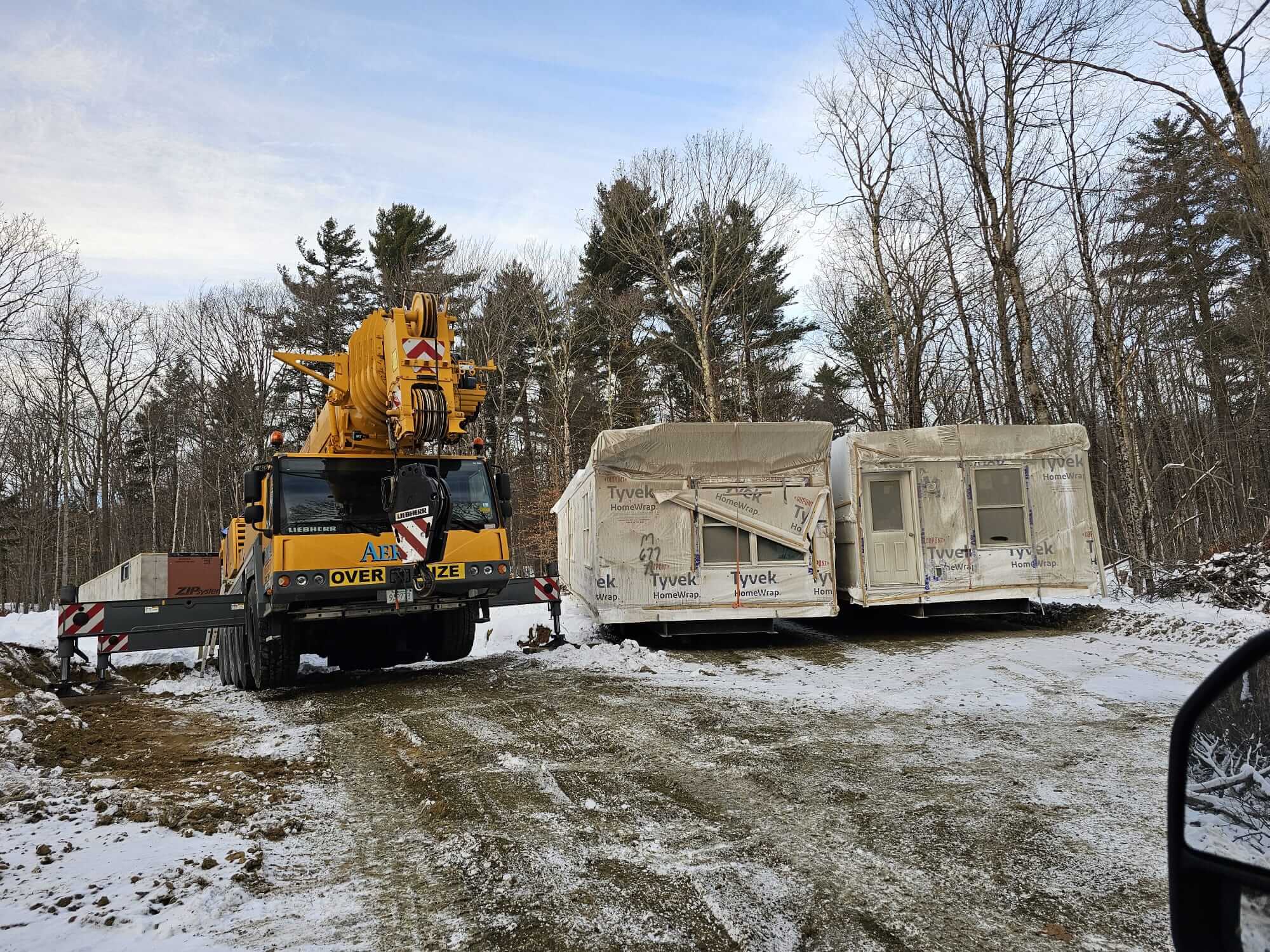
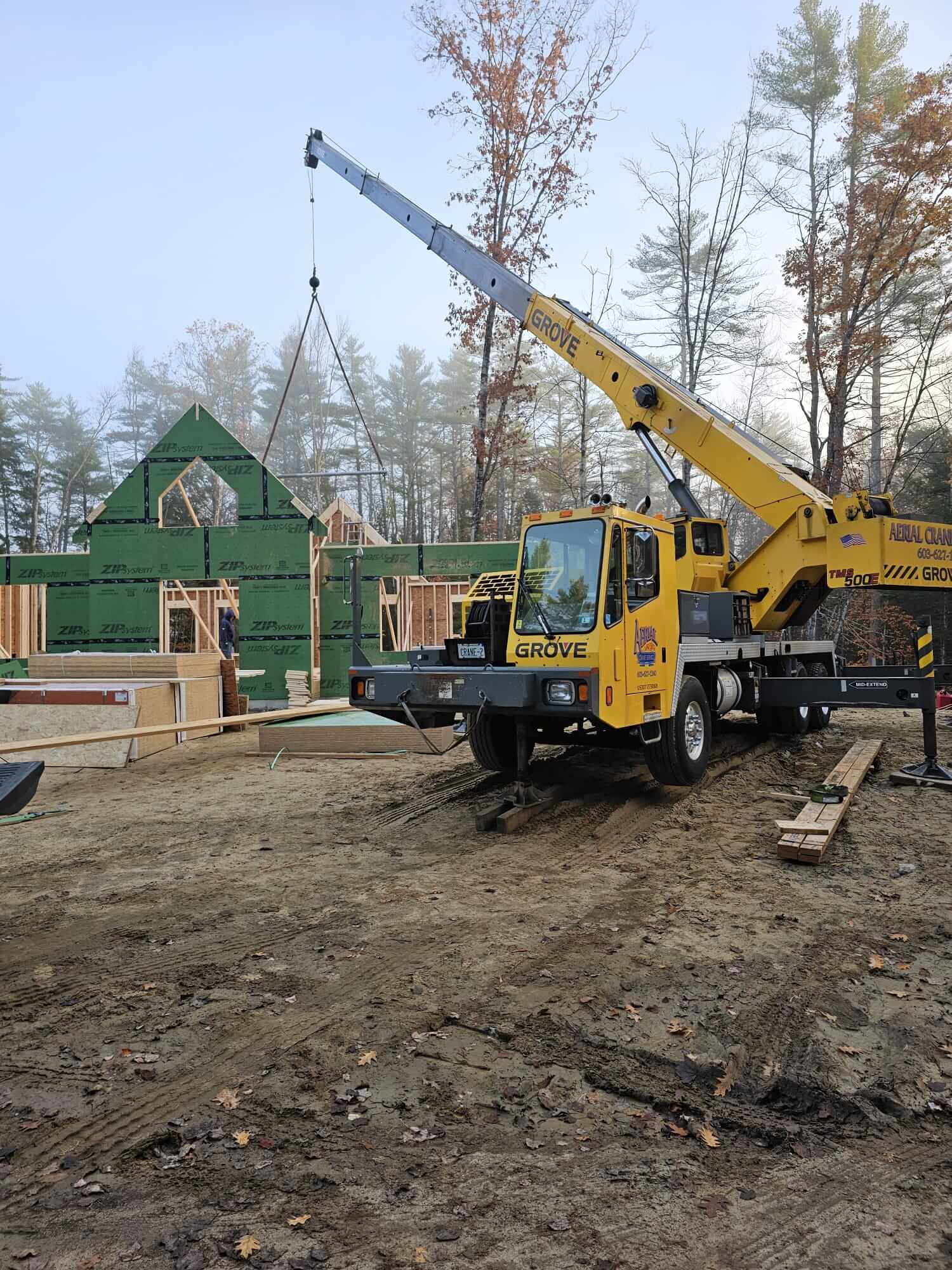
Modular home placement combines large dimensions, structural lifting points and a set sequence controlled by the foundation and delivery trailers.
Rigging needs to keep the module supported in the manner specified by the manufacturer or project engineer while maintaining clearance from walls, roof components and finished surfaces. Spreader bars and lifting beams can be used when the approved configuration needs sling legs kept apart or load forces distributed across several lifting points.
The crane, rigging and trailer sequence are planned together. A module arriving out of order can leave the correct lifting points blocked by another trailer or force unnecessary crane repositioning.
Industrial Machinery Rigging and Relocation
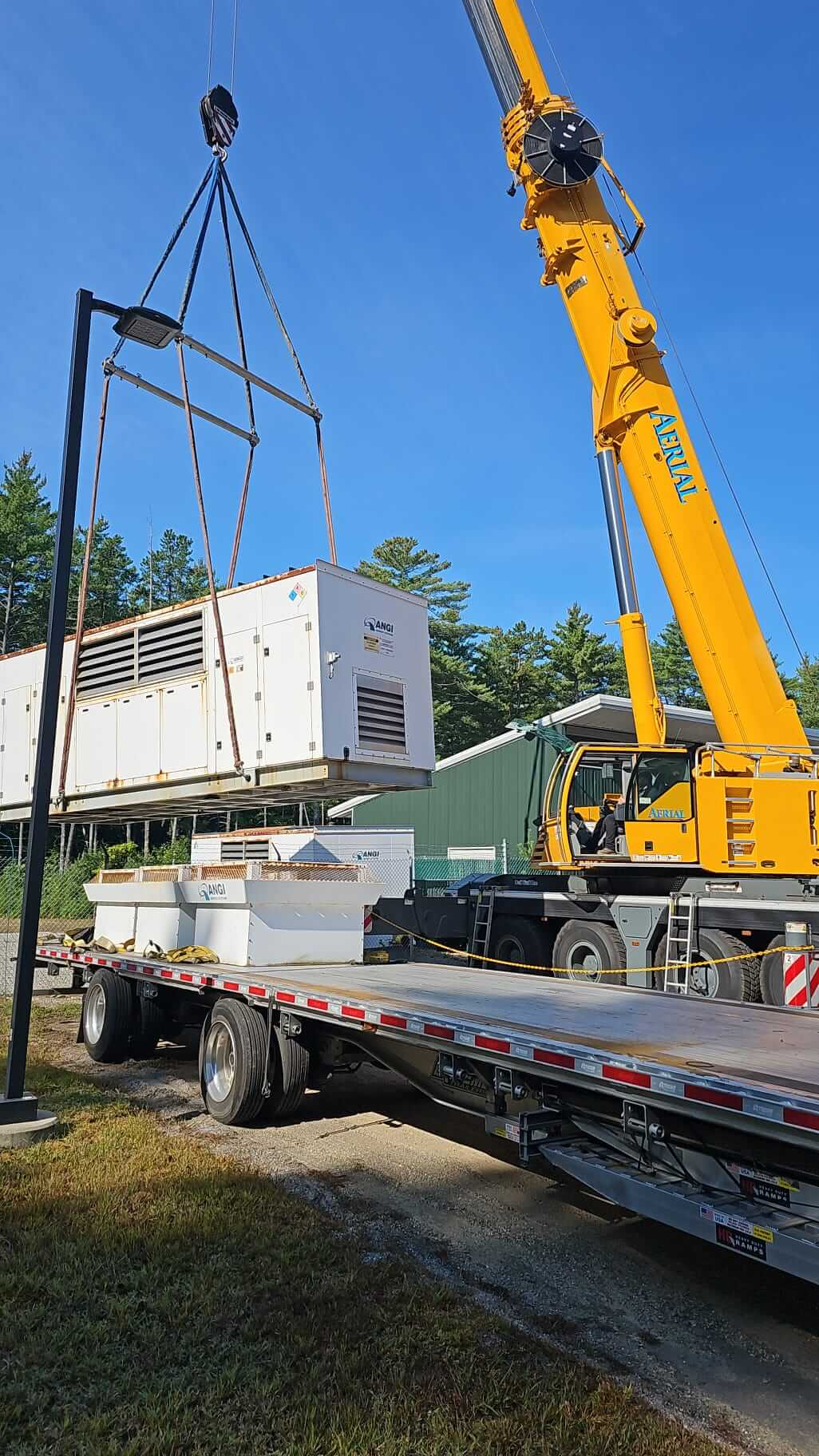
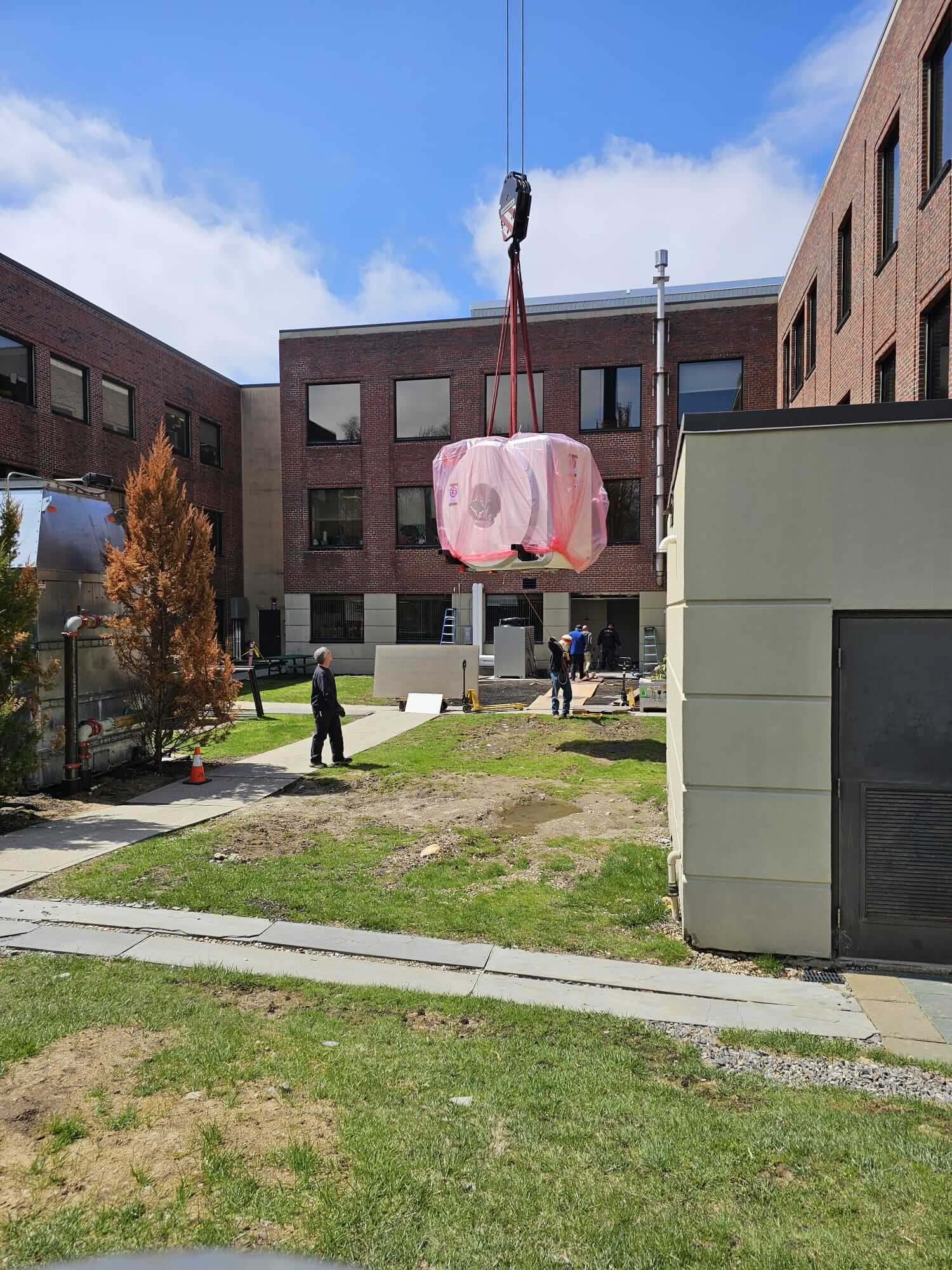
Industrial machinery rigging is different from routine construction picks because the equipment may have a high or offset center of gravity, limited approved lifting points, sensitive internal components and little clearance inside the facility.
Typical industrial loads include machinery, generators, compressors, tanks, mechanical skids, production equipment and utility components. Aerial also works with industrial facilities that need crane support for maintenance, installation and equipment replacement.
For machinery work, the rigging plan may need to account for:
- Exact shipping or operating weight
- Center of gravity
- Manufacturer lifting points
- Machine skids or frames
- Door and roof clearances
- Floor or pad conditions
- Final orientation
- Transportation and unloading sequence
- Protection of finished or calibrated equipment
Aerial’s published service centers on crane lifting and rigging. Contractors planning a full plant relocation involving disassembly, internal machine skates, electrical disconnects, alignment or commissioning should define those separate scopes before requesting the lift.
Construction Rigging vs. Industrial Machinery Rigging
Construction rigging often works with repeatable structural components such as steel beams, precast members, trusses and fabricated assemblies. The crew commonly has engineered drawings, piece marks and known connection points.
Industrial machinery moving can be less predictable. A machine may have an offset center of gravity, sensitive enclosure, inaccessible lifting eyes or strict final-placement tolerances. The rigging plan may need more information from the manufacturer and more preparation around the handling path.
In both cases, verified weights and rated lifting equipment come first. The difference is how much site planning, equipment protection and position control the load requires after it becomes suspended.
Rigging for Utility and Power Line Projects
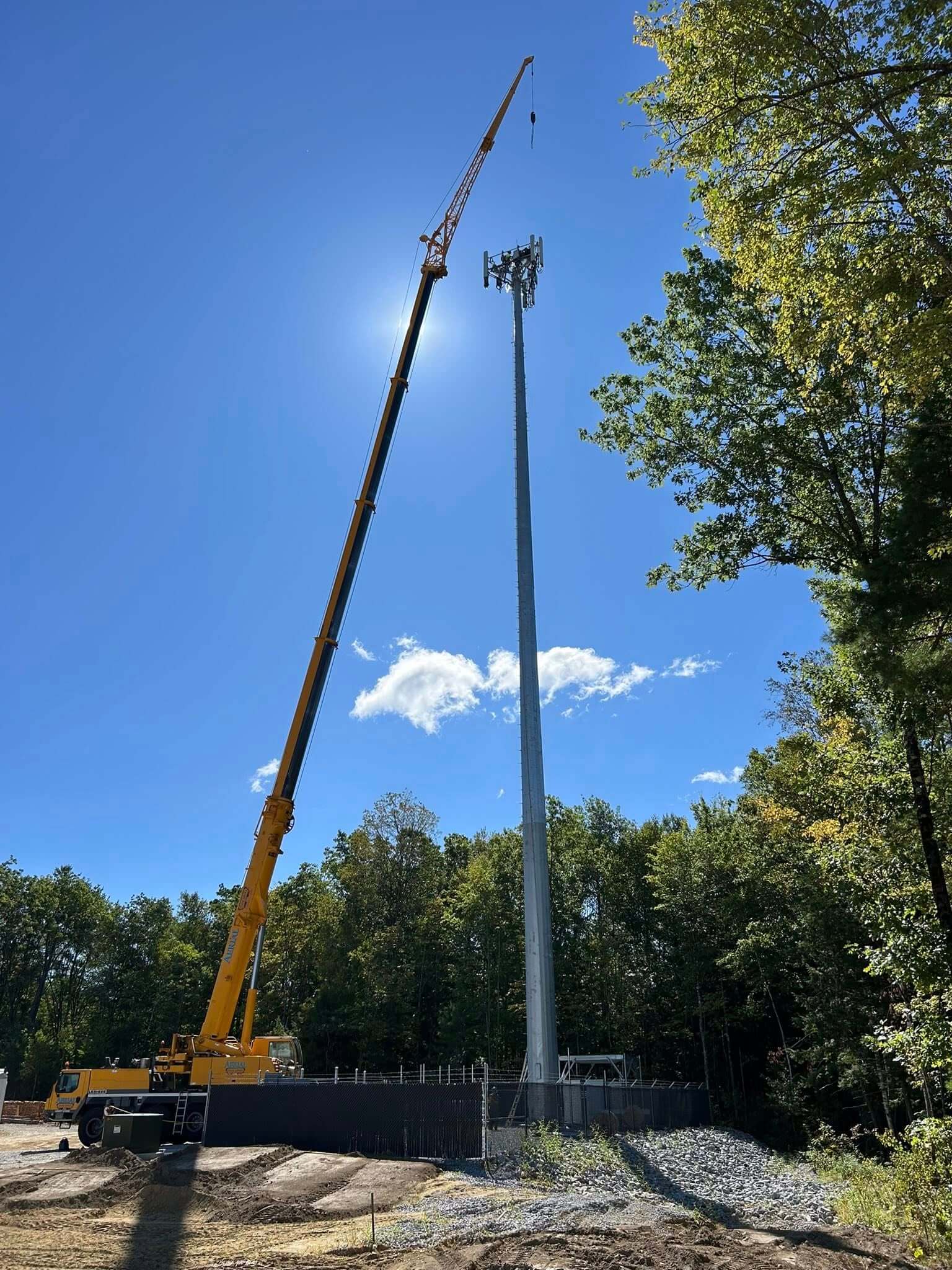
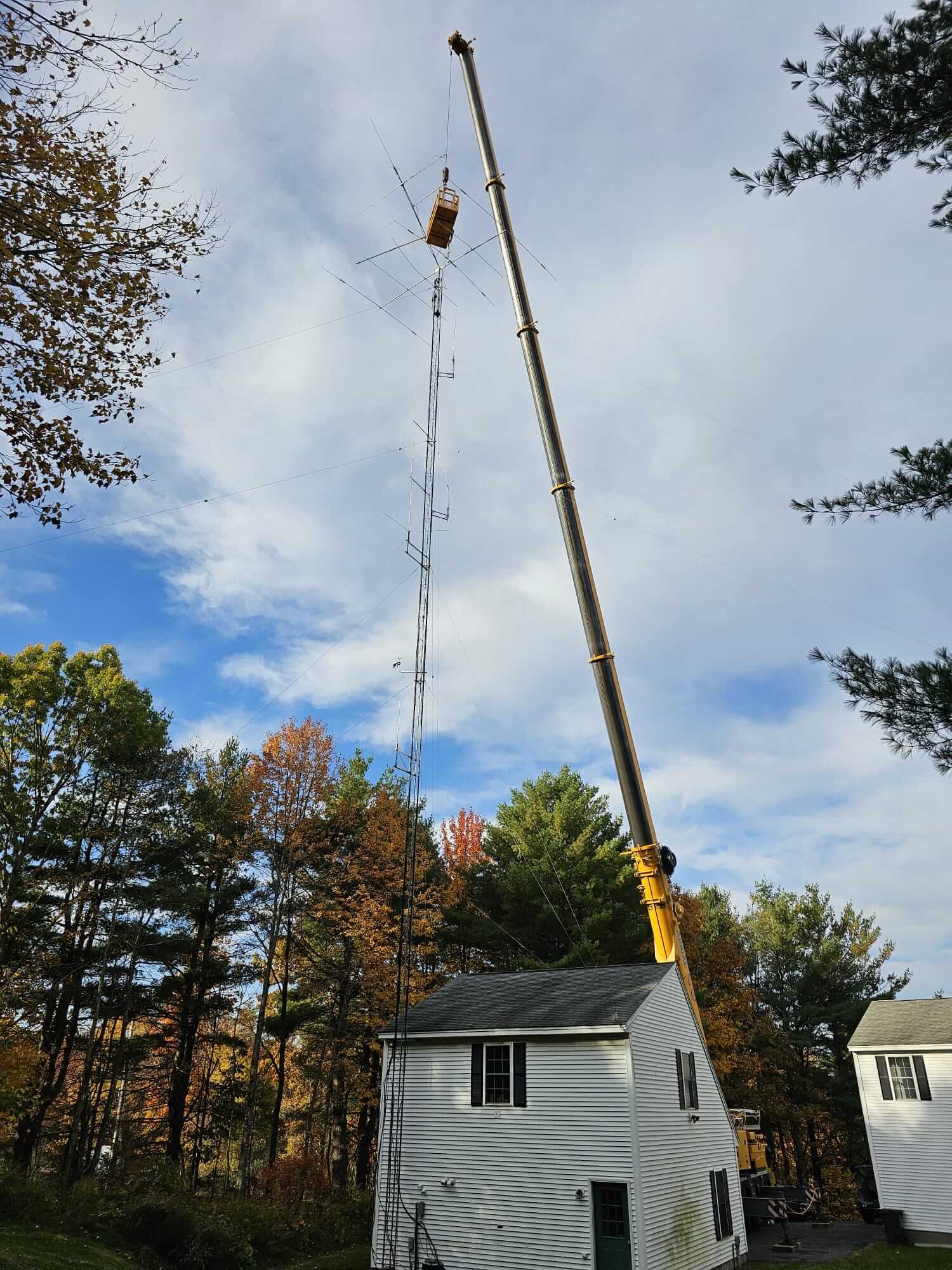
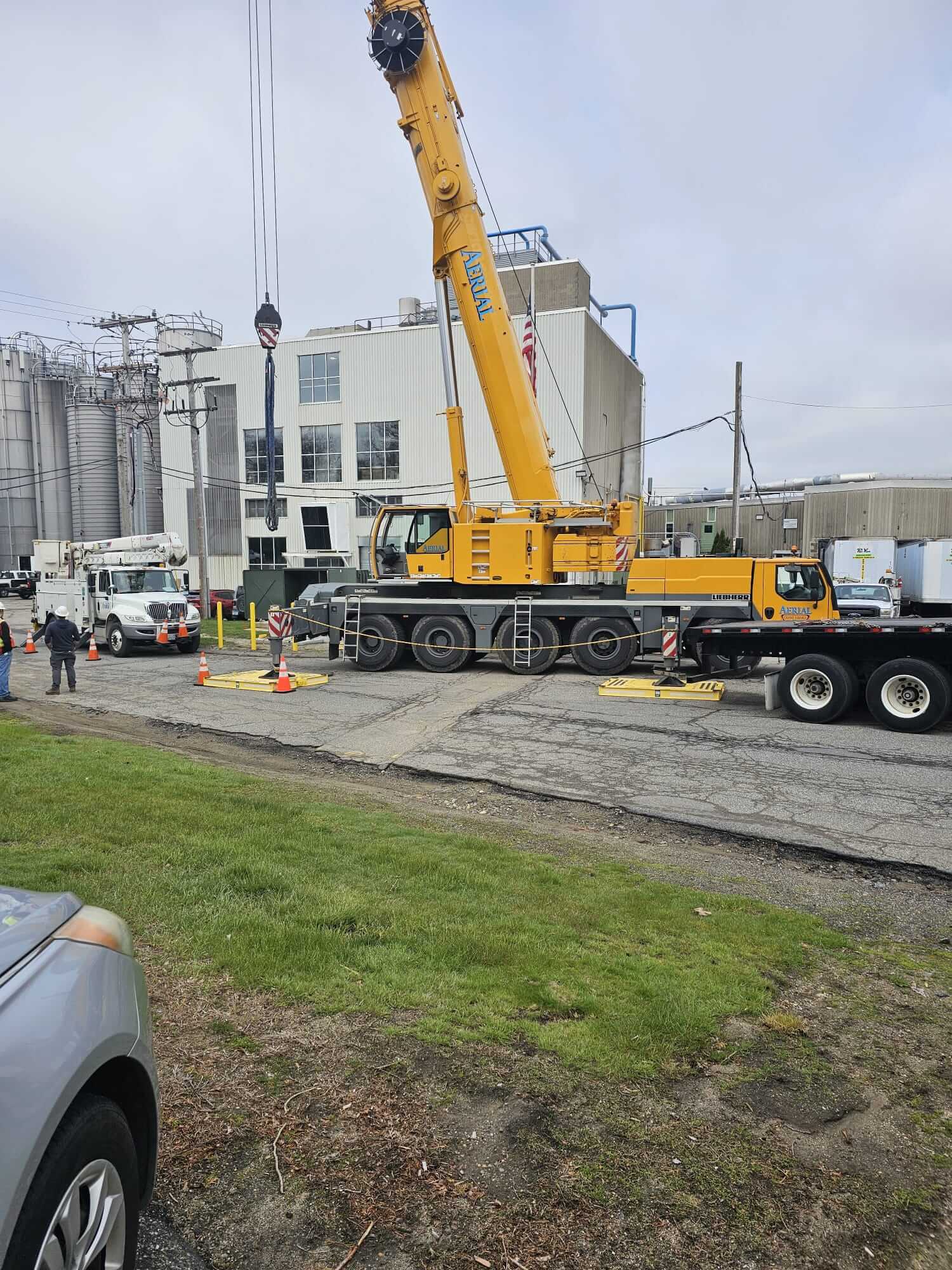
Aerial supports utility and telecom contractors and provides crane service for transformers, generators, utility components and infrastructure equipment.
Utility rigging can involve dense equipment, restricted access, energized facilities and strict placement tolerances. Electrical hazards must be addressed before crane setup and rigging begin. The controlling utility or project contractor establishes any required de-energization, approach boundaries and site controls.
Tag lines and load control can help crews control rotation and orientation from a safe position when their use is appropriate to the lift plan. They should never be treated as a way to overcome a poor center-of-gravity calculation or unstable rigging configuration.
Rigging Safety Protocols and OSHA Compliance
Aerial’s public rigging page describes lift planning, equipment selection and inspection as part of its operation. For New Hampshire construction projects, the applicable safety framework includes OSHA rules and state requirements administered by the New Hampshire Department of Labor.
Before a load moves, the rigging review should address:
- Confirmed load weight and dimensions
- Center of gravity
- Approved lifting points
- Sling type and hitch
- Sling angles
- Working load limits
- Shackles and connection hardware
- Sharp-edge protection
- Spreader bar or lifting beam requirements
- Crane load chart
- Working radius
- Ground conditions and crane setup
- Weather
- Load path
- Signal and communication method
Certified Rigger Qualifications
OSHA’s term is qualified rigger. A qualified rigger may establish qualification through recognized credentials or through extensive knowledge, training and experience combined with demonstrated ability to solve rigging problems for the specific work being performed.
Third-party certification is not mandatory for every qualified rigger under OSHA’s rule. NCCCO rigger certification provides formal Rigger Level I and Rigger Level II credentials through written and practical examinations.
Aerial Crane Service’s public website does not currently list individual NCCCO rigger credentials. If an owner, general contractor or project specification requires NCCCO Rigger I or II, request the current credentials for the personnel assigned to the project before booking.
Common Rigging Failures and How They Are Prevented
Most rigging failures begin with a mismatch between the planned load and the equipment or configuration actually being used.
| Failure Point | Prevention |
|---|---|
| Unknown or underestimated load weight | Use manufacturer documentation, drawings or verified project weights before selecting gear. |
| Incorrect center of gravity | Locate the center of gravity from equipment data and load geometry before tensioning the lift. |
| Sling angle too low | Check manufacturer angle-rated capacities and use an appropriate spreader arrangement when required. |
| Damaged or unmarked sling | Inspect before use and remove equipment with defects or unreadable required identification. |
| Sharp edge damages synthetic sling | Use proper edge protection or select another rigging method. |
| Undersized shackle or connection | Verify working load limits for every component in the load path. |
| Load slips in a basket or hitch | Balance the load and use a configuration designed for the actual geometry. |
| Shock loading | Take the load smoothly and avoid sudden movement or uncontrolled load transfer. |
| Poor communication | Establish the signal method and person directing the operator before lifting. |
New Hampshire Weather and Rigging Operations
New Hampshire weather changes both the load and the condition of the rigging equipment. Snow and ice can reduce access, conceal ground conditions and create slippery handling surfaces. Wind can make a large HVAC cabinet, structural panel or modular section difficult to control.
Cold weather also matters to sling materials. New Hampshire’s rigging rule states that natural and synthetic fiber rope slings, except wet frozen slings, may generally be used from minus 20°F to 180°F without a reduction in working load limit. Outside that range, and for wet frozen slings, the manufacturer’s recommendations apply.
Wire rope and synthetic webbing have their own temperature and environmental limitations. The sling manufacturer and applicable standards control the final operating range.
Emergency Rigging Services Across New England
Aerial Crane Service advertises 24/7 support for its crane operations. Contractors can call for urgent rigging and lifting needs involving failed equipment, utility work, storm damage, industrial downtime or unexpected construction conditions.
Aerial does not publish a guaranteed emergency response time. For an urgent job, call (603) 491-1268 immediately and send the load weight, dimensions, location and site photos. A complete request can be reviewed much faster than a call with no load information.
Emergency status does not remove the inspection, capacity and lift-planning requirements. Rigging gear still needs to be selected and inspected for the actual load.
Rigging Cost Factors and Project Estimates
For early 2026 budgeting, a contractor can use the following planning ranges for professional rigging work:
| Rigging Scope | Planning Range |
|---|---|
| Standard professional rigging crew | About $250–$500 per hour for a typical multi-person rigging crew |
| Simple single-equipment rigging or local installation | About $1,500–$3,500 |
| Full-day specialty rigging or machinery handling | About $3,500–$7,500+ |
| Industrial machinery move or difficult installation | About $5,000–$15,000+ |
| Multi-machine or multi-day industrial relocation | Often $10,000–$30,000+ |
These are industry planning ranges, not Aerial Crane Service’s published rate sheet. Aerial’s published rigging service is integrated with crane operations, so the actual quote may also include the crane, operator, mobilization and specialty support equipment.
The biggest cost drivers are load weight, crane size, working radius, crew size, duration, specialty rigging, spreader bars, mobilization, site access, road occupancy and the number of separate picks.
For a current Aerial quote, call (603) 491-1268 with the equipment weight, drawings, lifting points, project address and requested date.
Rigging Equipment Inspection and Certification Services
Aerial does not currently advertise third-party inspection or certification of customer-owned rigging equipment as a standalone service.
The rigging Aerial uses for lifting operations is inspected as part of project execution, and applicable OSHA and New Hampshire rules require pre-use inspections and removal of defective gear.
If your company needs a formal inspection certificate for its own wire rope slings, chain slings, synthetic slings, shackles or other equipment, use an inspection provider whose scope covers the specific equipment and documentation your project requires.
Rigging Training and Contractor Consultation
Aerial does not advertise a formal rigger training course for contractor employees. The company does provide project planning and coordination around the lifts it performs.
Contractors can speak with Aerial about load information, crane requirements, rigging configuration, site access, pick and set locations, scheduling and the information needed before lift day. That project consultation should not be represented as an OSHA or NCCCO certification course.
Crane Fleet for Rigging Projects
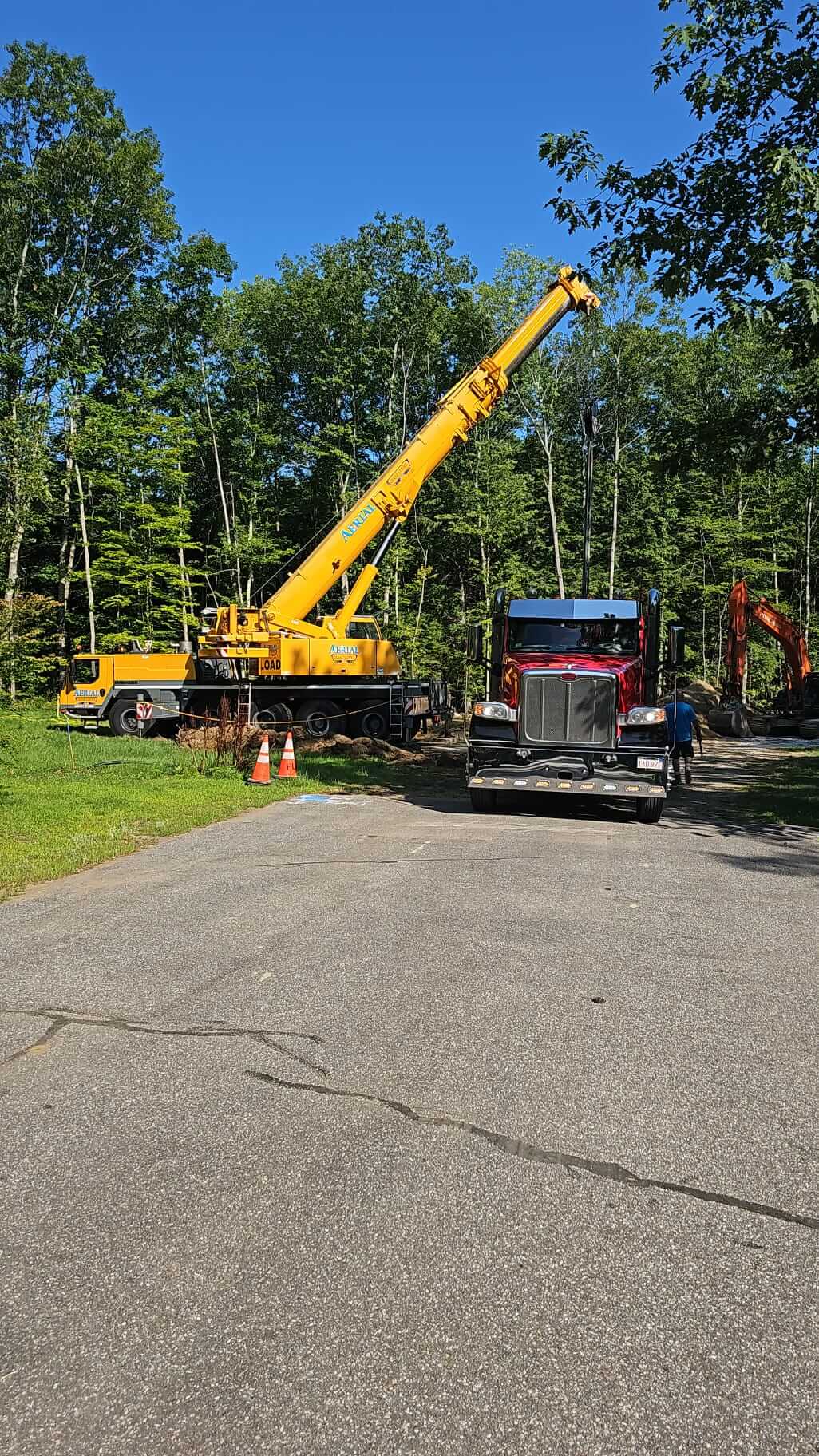
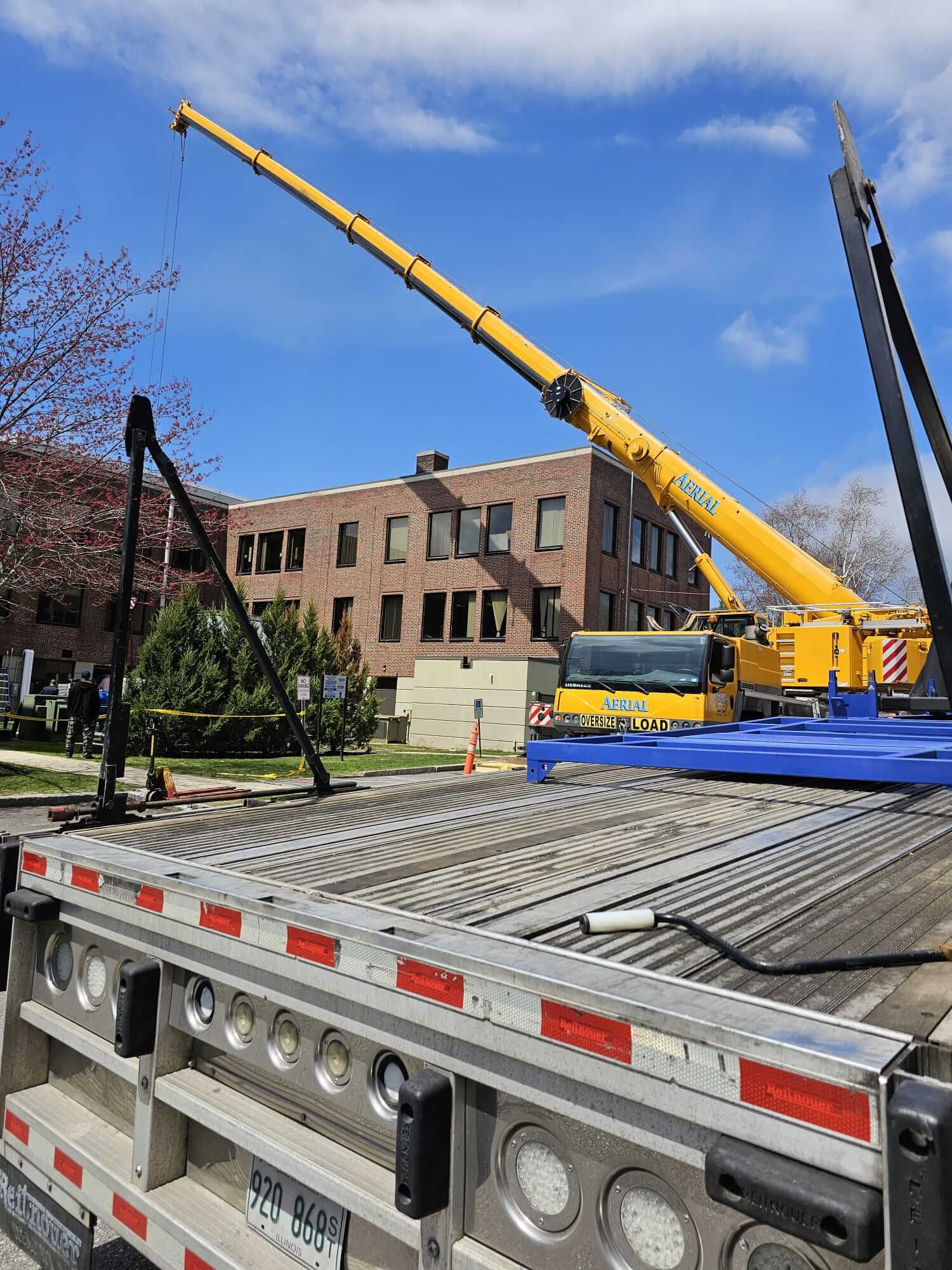
Aerial operates a fleet that covers lighter construction picks through heavier all-terrain crane work:
- Liebherr LTM 1090-4.2 – 120 US tons, 197-foot boom
- Liebherr LTM 1100-5.2 – 120 US tons, 171-foot boom
- Liebherr LTM 1130-5.1 – 145 US tons, 197-foot boom
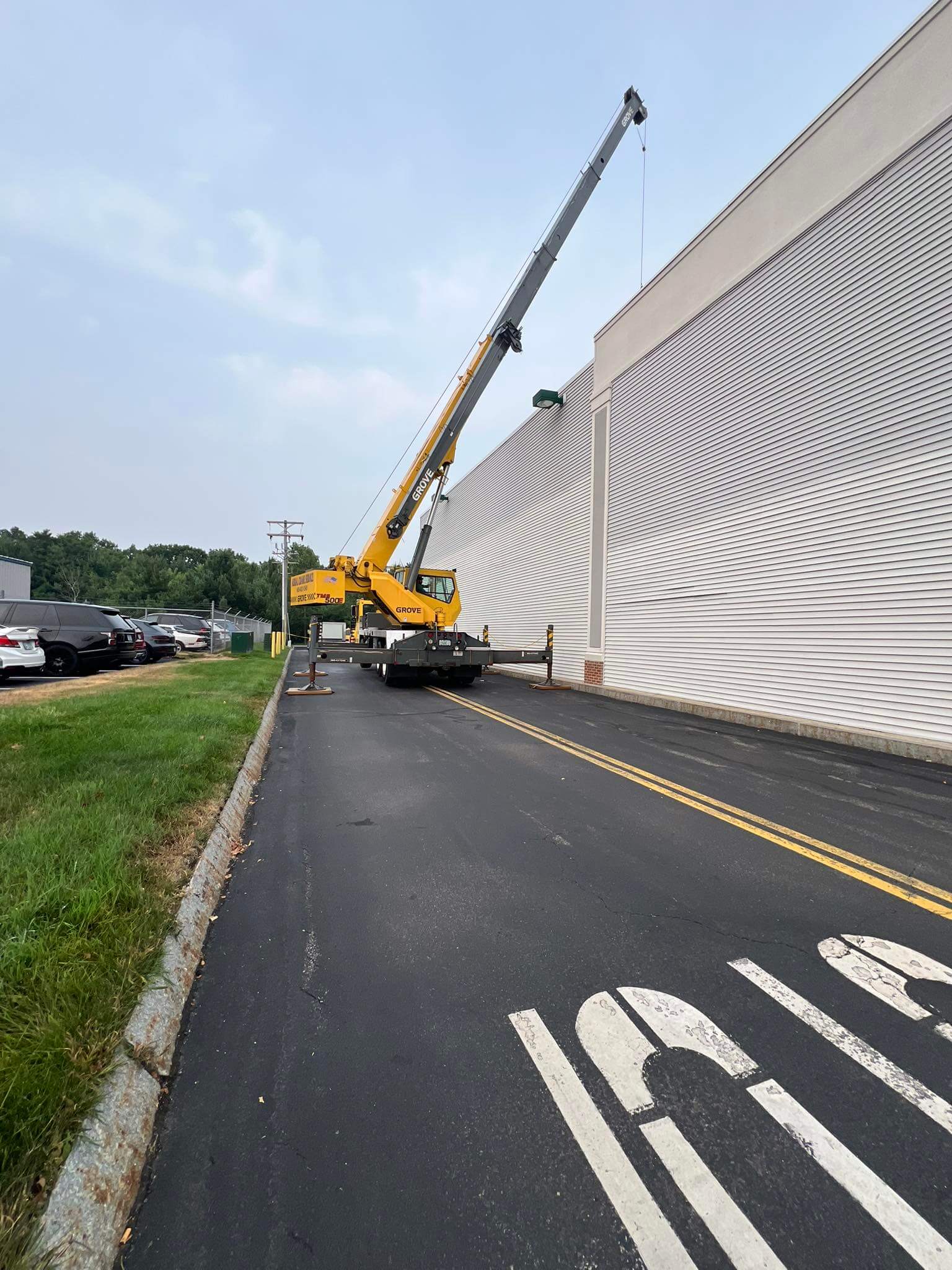
- Grove TMS500E – 40 US tons
- National 800D Boom Truck – 23.5 US tons
Contractors can also review Aerial’s mobile crane rental services, spreader bars and specialty rigging, trucks and trailers and man basket services.
Rigging Services Throughout New Hampshire
Aerial Crane Service is based in Bow, NH and provides rigging and crane support throughout New Hampshire.
Local service pages include Allenstown, Amherst, Atkinson, Auburn, Bedford, Candia, Concord, Derry, Dover, Dunbarton, Epsom, Exeter, Franklin, Goffstown, Hampstead, Henniker, Hooksett, Hopkinton, Hudson, Laconia, Litchfield, Londonderry, Manchester, Merrimack, Milford, Nashua, Northfield, Pembroke, Plaistow, Portsmouth, Raymond, Rochester, Salem, Tilton, Weare and Windham.Regional service also extends through Massachusetts, Maine and Vermont.
Call for Rigging Services in New Hampshire
If your project needs crane rigging for HVAC equipment, structural steel, machinery, generators, transformers, modular components, utilities or another heavy load, call Aerial Crane Service at (603) 491-1268.
Have the load weight, dimensions, lifting points, project address, site photos and requested lift date ready. Aerial can review the crane, rigging and support equipment required for the job.