

If you are trying to determine whether you need a crane permit in Maine, start with where the crane will sit and how it will get there.
Maine does not currently have one statewide permit that every contractor must obtain simply because a crane will be used on a job.
A project may instead involve several separate requirements.
A crane set up entirely on private property may have no standalone municipal crane-use permit.
Put the same crane partly in a public street, and a local street occupancy or traffic-control approval may be required.
Drive an overweight mobile crane over state-maintained highways, and Maine’s overlimit permit rules enter the picture.
Use a tall boom near an airport, and federal airspace notification may need to be checked.
The word “permit” only becomes useful after you identify which part of the job is being regulated.
There is no single statewide Maine crane-use permit
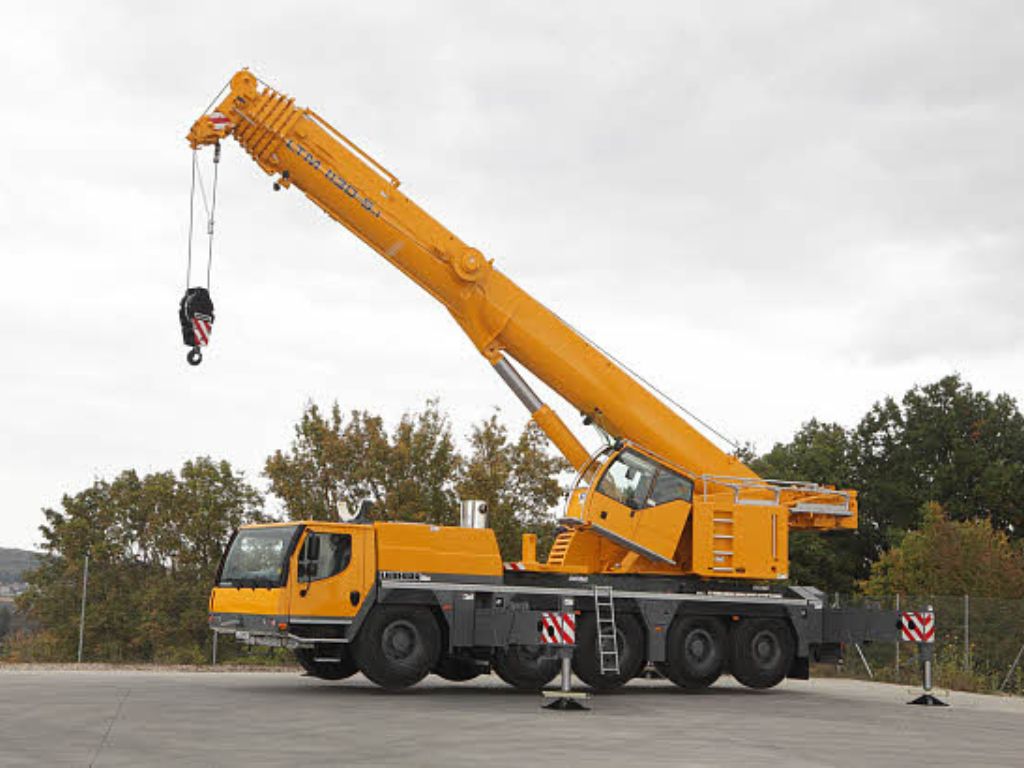
Maine law does not establish a general permit that must be issued every time a mobile crane sets up and performs a lift.
That does not mean crane work is unregulated.
The rules are divided among workplace safety, vehicle movement, municipal right-of-way control, construction permitting and other location-specific requirements.
For a contractor, the fastest way to sort this out is to separate the lift from the mobilization.
The lift is what happens after the crane arrives.
Mobilization is how the crane travels to the site.
Those two phases can trigger different rules.
Maine does not currently issue a general state crane-operator trade license
Maine considered creating a state crane-operator licensing program.
The Legislature ordered a sunrise review in 2019, and another bill in 2021 proposed a State Board of Licensure for Crane Operators.
That 2021 proposal did not become the current licensing system. Maine’s present Office of Professional and Occupational Regulation does not list crane operator among its licensed professions.
That does not eliminate operator qualification requirements.
It means you need to separate Maine occupational licensing from OSHA crane operator requirements.
OSHA operator certification still applies to covered construction work
For private-sector construction employers in Maine, federal OSHA retains jurisdiction.
Maine’s OSHA-approved State Plan covers state and local government workers.
Under OSHA’s crane rule, an employer must ensure that an operator of equipment covered by Subpart CC is trained, certified or licensed as required, and evaluated before operating assigned equipment without the training restrictions.
When no qualifying state or local government operator license applies, OSHA provides certification routes that include certification through an accredited crane-operator testing organization.
Certification is only part of the requirement.
The employer also has to evaluate whether that operator has the skills and knowledge needed for the crane configuration and hoisting activities being assigned.
A certificate by itself does not replace that employer evaluation.
OSHA certification is not your street permit
This is where permit discussions go sideways.
An operator can satisfy the applicable OSHA qualification requirements and still have no authority to place outriggers in a city street.
Operator qualification answers:
Who may operate the crane?
Street occupancy answers:
May the crane use this public space?
Overlimit permitting answers:
May the crane travel this route in this configuration?
They are different approvals.
If the crane stays entirely on private property, start with the project permits
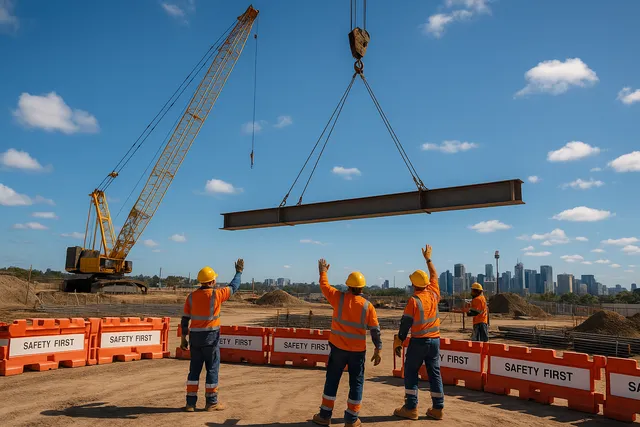
Suppose an HVAC contractor has a commercial building with a large private parking lot.
The crane can drive onto the property, set all outriggers on private ground and complete the rooftop lift without blocking a sidewalk or travel lane.
That situation is different from setting up downtown.
There may be no separate local permit whose only purpose is to authorize the crane.
The underlying construction project can still have building permits, site-plan conditions or other requirements.
You also still have OSHA requirements, power-line rules, equipment inspections and safe setup requirements.
The point is that the crane itself does not automatically generate one universal Maine permit.
If an outrigger lands in the street, the answer can change
A crane takes up more space than its carrier body.
When outriggers are deployed, mats are installed and a working radius is established, a crane positioned beside a building can occupy part of a street even when the truck initially appears to fit into a parking lane.
That brings municipal right-of-way rules into the discussion.
The same applies when the crane setup closes:
- a travel lane;
- parking spaces;
- a sidewalk;
- a shoulder;
- another portion of public right-of-way.
Check the municipality before the crane is scheduled.
Portland uses street and sidewalk occupancy permits
Portland’s current Public Works permit system lists Street Occupancy and Sidewalk Occupancy among its permit types.
The city’s permitting resources also include Traffic Control Plan requirements for certain street work.
For a crane project, that means the question is not necessarily “Where do I apply for a Portland crane permit?”
A better question is:
What public space will the crane operation occupy, and what permit does Portland require for that occupancy?
A setup that stays inside private property does not create the same street-occupancy issue as a setup using a downtown lane.
Do not assume Portland’s permit process applies to another Maine town
Kittery, York, Wells, Kennebunk, Biddeford, Saco, Scarborough, South Portland and Portland are separate municipalities.
Their street-use procedures do not have to use the same form names, fees or notice periods.
A requirement found on one city website should not be copied into another town’s lift plan.
If public property will be affected, contact the city or town that controls that right-of-way.
For projects on a state-maintained road, MaineDOT may also have a role depending on what is being proposed.
Street occupancy and road closure are not always the same scope
A crane may use curb space without closing an entire street.
Another lift may require taking a travel lane.
A larger operation may require enough working area that traffic has to be detoured.
Those situations can carry different traffic-control requirements.
Before applying for a permit, define the actual footprint of the crane:
- carrier position;
- fully deployed outriggers;
- mats;
- counterweight area;
- boom swing;
- load path;
- truck deliveries;
- rigging work area;
- pedestrian exclusion area.
The permit request needs to reflect the operation that will actually occur.
A crane setup can affect pedestrians even when the carrier is off the road
A crane parked on private property may still have a work zone that reaches toward a sidewalk.
The suspended load path, rigging operation or barricaded area may affect pedestrian movement.
That is why we look at more than where the tires are parked.
Our crane lift planning process considers access, nearby structures, traffic patterns, pedestrian activity, setup space and overhead hazards before the lift begins.
The public-space question should be answered from that full footprint.
Traffic control should be planned before permit filing
If the operation affects a street, the contractor should know what traffic will do while the crane is working.
Will one lane remain open?
Will traffic alternate through a single lane?
Will the road close?
Can pedestrians remain on the same sidewalk?
Where will trucks delivering the load stage?
A municipality may need this information before approving an occupancy.
It is much easier to build traffic control around the actual lift plan than to obtain a permit for one setup and later discover the crane needs another 15 feet of working room.
Transporting the crane creates a separate permit question
A mobile crane may be legal to operate on a jobsite while being too heavy or too large to travel a particular public route without an overlimit permit.
Maine law authorizes permits for nondivisible objects that exceed legal length, width, height or weight when traveling over state-maintained ways and bridges.
The Maine Bureau of Motor Vehicles handles the state’s Overlimit Permit program.
Permits are route-specific and time-limited, and overlimit vehicles can face routing, time-of-day, escort, signage and other movement conditions.
That permit concerns moving the crane.
It is not permission to set up the crane in the street at the destination.
Width is one of the first dimensions to check
Maine law generally limits vehicle width on a public way to 102 inches, or 8 feet 6 inches, subject to statutory exceptions.
A vehicle or load above the applicable legal width can require over-width permitting.
For large mobile cranes, transport configuration matters.
Counterweights, boom components or support equipment may travel separately depending on the machine and project.
The permit review should use the configuration that will actually be on the highway.
Height needs more context than “13 feet 6 inches”
Maine’s statute generally limits a vehicle’s permanent or temporary structural part to 13 feet 6 inches on public ways.
The overlimit rules add an important distinction: a load may extend another 6 inches under the applicable rule, making 14 feet possible in certain non-Turnpike situations.
The Maine Turnpike has different treatment and does not receive that additional 6-inch load provision.
So a contractor should not use one height number for every crane movement.
Vehicle structure, load configuration and route matter.
The general combination length is 65 feet, not 75 feet
This point is easy to misstate because Maine’s permit rules contain multiple vehicle categories.
Under the general statute, a single vehicle may not exceed 45 feet and the maximum overall length of a combination is generally 65 feet unless another provision applies.
Chapter 157 contains special rules and permitted configurations, including long-term permits with different dimension limits.
That does not make 75 feet the ordinary legal limit for every combination vehicle.
When planning crane mobilization, use the actual vehicle configuration and the section that applies to it.
Weight may be the permit trigger even when dimensions are legal
A mobile crane can remain within normal width and height while exceeding ordinary roadway weight limits.
Crane axle configurations make this especially important.
Maine’s overlimit rules address both gross weight and axle loading, with provisions for special mobile equipment and cranes.
This is why you cannot determine permit status from the crane’s maximum lifting capacity.
A “100-ton crane” designation describes lifting class or capacity.
It does not tell you the transport weight on each axle.
State permits only cover roads under state jurisdiction
A Maine overlimit permit is not a universal pass for every road between the crane yard and the jobsite.
The state’s permits apply to highways and bridges under MaineDOT jurisdiction.
If the route uses municipal roads, permission required by that local jurisdiction must be obtained separately.
This becomes particularly important near the end of the route.
A crane may travel legally for most of the trip on state highway and then turn onto a town street with its own restrictions.
Route planning has to follow the crane all the way to the setup area.
Maine’s own law recognizes municipal overlimit permits
Maine law allows county commissioners or municipal officers to grant permits for travel over ways or bridges maintained by the county or municipality.
That is another reason a state permit should not be treated as blanket authorization.
Road jurisdiction matters.
If the project is in southern Maine, identify each locally controlled road involved in the mobilization before assuming the state paperwork covers it.
The Maine Turnpike is another separate check
The Maine Bureau of Motor Vehicles states that the Maine Turnpike has its own size and weight limits.
Certain Turnpike movements require a Turnpike permit in addition to the BMV overlimit permit needed for non-Turnpike highways.
If the planned crane route uses I-95 on the Turnpike, that belongs in mobilization planning.
Do not discover the requirement while the crane is already en route.
Overlimit permits can control when the crane travels.

Permit planning can affect scheduling.
Overdimensional moves may face restrictions during certain nighttime periods, legal holidays and summer weekends, and movements remain subject to road and bridge postings.
Extreme dimensions or weights can also trigger pilot vehicles or police escorts.
That means the permit affects more than paperwork.
It can determine when the crane can reach the site.
A street permit should be part of the lift schedule
Suppose an HVAC contractor schedules a rooftop unit for 8:00 a.m.
The crane is available.
The rooftop crew is ready.
The equipment delivery is booked.
But the municipal street occupancy approval is still pending.
The lift is not ready.
For downtown or roadside projects, permit timing should be part of the same schedule as crane mobilization, equipment delivery and building access.
This is particularly relevant for our work with general contractors, where a delayed lift can affect several trades at once.
A permit does not tell you where the crane can safely sit
Municipal approval to occupy a space does not mean the ground is suitable for outriggers.
Those are different questions.
Before setup, we evaluate ground conditions, underground features, drainage, recently disturbed areas and available space.
A paved parking lot may conceal:
- a utility vault;
- a basement;
- an underground tank;
- recent trench backfill;
- a stormwater structure.
A street occupancy permit cannot determine whether that structure can support outrigger reactions.
Ground support still has to be addressed in the lift plan.
Building permits and crane permits are not interchangeable
A general contractor may already have a building permit for the project.
That does not automatically include permission to close a public street.
Likewise, a street occupancy permit does not approve the underlying building work.
The contractor should review both scopes.
This distinction matters during steel erection, rooftop HVAC replacement, modular construction and other jobs where the crane is only one part of a larger permitted project.
Power lines create safety requirements, not a generic Maine crane permit
A lift near overhead electrical lines requires separate planning.
OSHA Subpart CC contains requirements for crane operations near power lines, including work-zone assessment and minimum-clearance procedures.
Those obligations do not become satisfied because the municipality issued a street permit.
During lift planning, we identify overhead hazards and the possible boom and load paths before selecting the crane position.
If utility coordination is needed, it should happen before setup.
Airport proximity can add a federal notice requirement
There is another permit-like process contractors sometimes miss entirely.
A crane is a temporary structure for FAA airspace purposes.
FAA Form 7460-1 specifically includes Crane among the structures for which Notice of Proposed Construction or Alteration may be submitted.
Notice can be required when the structure meets Part 77 thresholds, including structures more than 200 feet above ground level and certain lower structures based on their height and distance from an airport.
That means a crane does not have to sit on airport property for FAA rules to matter.
A tall boom several miles away can still require review depending on the location.
FAA notification is not the same as a Maine crane permit
The FAA process protects navigable airspace.
It does not authorize street occupancy.
It does not issue Maine overlimit transportation permits.
It does not replace the local building permit.
This is another example of why “Do I need a crane permit?” needs to be broken into smaller questions.
The same lift can involve more than one authority for completely different reasons.
Public projects may have another layer of requirements
A lift for a municipal building, roadway, school or other public project may be subject to contract documents and site-specific requirements beyond the permits discussed here.
The owner may require:
- specific lift-plan documentation;
- traffic-control procedures;
- insurance documentation;
- operator credentials;
- rigging documentation;
- submittal review;
- work-hour restrictions.
Those are contract requirements rather than a universal Maine crane permit.
Review the project specifications before scheduling.
Private projects can have owner requirements too
Industrial plants, hospitals, utilities and large commercial facilities frequently control crane work through their own site rules.
A facility may require a submitted lift plan before granting access.
Another may classify certain operations as critical lifts under its internal policy.
A permit from the city does not override those owner requirements.
Our planning process starts with both the regulatory environment and the conditions imposed by the jobsite.
Does every crane lift need a written lift plan?
The phrase “lift plan” can refer to different levels of documentation depending on employer policy, project requirements and the complexity of the work.
We plan the lift before our crane is dispatched.
Our safe crane lift planning process reviews:
- load weight;
- dimensions and center of gravity;
- lifting points;
- lift radius;
- boom requirements;
- crane setup;
- ground conditions;
- rigging;
- overhead hazards;
- traffic and pedestrian exposure;
- communication;
- weather.
That planning also tells us whether the proposed setup creates a permit question.
Permit review should happen before crane selection is finalized
Sometimes the permit changes the lift.
A contractor may initially plan to set a crane in the street immediately beside a building.
Then the city limits the available occupancy area.
That can force the crane farther from the load.
Once the radius increases, the crane capacity at that radius changes.
The project may need a larger crane or a different setup.
This is why permitting and crane selection should not happen in isolation.
The allowable setup footprint can affect the equipment choice.
Street closure can change lift radius too
Closing one lane versus the full road can produce very different setup options.
If keeping a lane open pushes the crane farther away from the building, the boom length and required capacity may increase.
A permit condition can therefore influence:
- crane model;
- counterweight configuration;
- outrigger position;
- lift radius;
- load path;
- project duration.
The permit is part of constructability.
Confirm the load delivery position as part of the same plan
A crane cannot pick a load from a location occupied by active traffic unless that area is also managed.
If an HVAC unit arrives on a tractor-trailer, ask where the trailer will stop.
If structural steel arrives in several loads, ask where those trucks will stage.
If a modular section arrives on an oversize transporter, its permit and delivery route may be a separate issue from the crane’s permit.
The crane setup and the delivery setup need to work together.
Winter conditions can change the setup without changing the permit
A municipal permit may identify a specific street area for crane setup.
Snowbanks can reduce the usable width.
Frozen ground can conceal drainage structures.
Ice changes access and worker footing.
A plowed snow pile may occupy the space where an outrigger was expected to go.
The permit may still be valid.
The planned setup may no longer be.
Conditions on the day of the lift still control whether the operation can proceed safely.
What information should you gather before calling the municipality?
You can get a better permit answer when you provide the actual crane footprint.
Start with:
- job address;
- lift date;
- estimated duration;
- whether the crane can stay on private property;
- street or sidewalk space that may be occupied;
- expected lane closure;
- crane dimensions when set up;
- outrigger footprint;
- delivery-truck location;
- pedestrian impacts;
- proposed traffic-control area.
The city or town can then tell you which permit category applies.
Calling and asking only “Do cranes need a permit?” leaves out the information that determines the answer.
What information should you gather for crane mobilization?
Transportation permitting requires a different set of facts.
You need the crane or transporter configuration, including:
- overall width;
- structural height;
- overall length;
- gross weight;
- axle weights;
- axle spacing;
- proposed route;
- state roads;
- municipal roads;
- Maine Turnpike use;
- bridges or posted restrictions.
The lifting capacity printed on the side of the crane is not enough to determine transportation permit requirements.
Who usually applies for the permit?
There is no one answer that applies to every project.
The general contractor may handle street occupancy.
A crane company or carrier may handle overlimit transportation paperwork for its equipment.
A building owner may be responsible for another project permit.
FAA filings can involve the project sponsor or representative.
Contract documents may assign these duties differently.
Before the lift date, identify the permit by name and identify who owns the filing.
“Someone else was handling it” is not a useful plan on the morning of the lift.
How early should you check crane permits?
Check them while the crane setup is still flexible.
For a simple private-property lift, the answer may be quick.
A lane closure, downtown setup, overlimit route, police escort or FAA review can require more coordination.
Permit lead times also vary by agency and municipality.
We do not recommend assuming that a notice period from one Maine city applies everywhere else.
Ask the issuing authority based on the actual job location.
A permit approval does not replace the pre-lift meeting
Once the administrative pieces are complete, the crew still needs to execute the lift.
Before the load leaves the ground, the lift team needs to understand the sequence, communication, hazards, crane position and load path.
Our planning guidance also calls for monitoring weather and changing conditions throughout the operation.
The permit gets the crane into the approved space.
The lift plan governs what happens there.
A quick permit checklist for Maine crane projects
Before scheduling the lift, work through these questions:
- Will any part of the crane setup occupy public street, sidewalk or right-of-way?
If yes, contact the municipality or road authority. - Will the crane exceed legal roadway weight or dimension limits while traveling?
If yes, review Maine overlimit permitting and the route jurisdictions. - Will the route use the Maine Turnpike?
Check the Turnpike’s separate requirements. - Will municipal roads be used by an overlimit crane?
A state permit does not automatically authorize those roads. - Will the boom height or airport proximity trigger FAA Part 77 notice?
Check before the crane is erected. - Is this covered construction work?
Confirm OSHA operator qualification, evaluation and other Subpart CC requirements. - Does the project owner have its own lift-plan or crane-work requirements?
Review the contract and site rules.
That is a much more reliable approach than searching for one statewide “crane permit Maine” form.
How we plan crane work in Maine
At Aerial Crane Service, we provide crane lifting for contractors and project teams in southern Maine, particularly across York and Cumberland counties.
Our Maine work includes HVAC lifts, construction and steel work, precast, modular home setting, generators, transformers, roofing materials, industrial equipment and other specialty lifts.
Before mobilizing, we review the load, radius, site access, ground conditions, setup area and hazards that affect crane selection.
For more information about our regional work, see our crane service in Maine page.
General contractors should bring the crane company in before the street plan is locked
For a general contractor, one of the easiest mistakes is finalizing staging, fencing and traffic control before confirming the crane footprint.
The crane may need more radius.
Counterweights may need assembly room.
The load delivery truck may need space beside the crane.
Outriggers may land outside the footprint shown on an early logistics plan.
Bringing us into the planning process early gives the project team better dimensions before the municipal permit or construction logistics plan is finalized.
Need crane service in Maine?
If your project requires a crane in Maine, send us the job address, load information, proposed lift location and expected schedule.
If the crane may need to use a street or sidewalk, tell us that early.
We can review how the setup, access and lift plan affect the job and flag permit questions that should be confirmed with the applicable town, city or transportation authority.
Aerial Crane Service works throughout southern Maine as part of our New England service area.
Call us at (603) 491-1268 to discuss the lift.
The first question is not simply whether Maine requires a crane permit.
It is which part of your crane operation needs approval, who controls that space, and whether the planned setup still works once those conditions are known.